Best Sump Pump Alarms 2026: High-Water Warnings Before the Basement Floods
Affiliate Disclosure: This article contains affiliate links. If you buy through these links, we may earn a commission at no extra cost to you. Our editorial opinions are our own and are not influenced by affiliate relationships. Read our full disclosure policy →
Contents
Quick Answer
If you are home when it matters, buy the Level Sense — a 120 dB siren on a 15-foot float switch with a rechargeable battery rated for a week of backup and 40 hours of siren, which matters because basement flooding and power cuts arrive in the same storm. If you might not be home, buy the YoLink LoRa sensor instead: it sends the alert to a phone over long-range radio rather than relying on someone hearing it. And be clear about what you are buying — an alarm tells you the water is rising. It does not move any of it.
Float Switch or Water Sensor? They Fail Differently
There are two ways to detect a sump problem, and they answer slightly different questions. Getting this right matters more than brand.
The Two Detection Methods
🎈 A float switch
- Sits in the pit at a set height and trips when water reaches it
- Tells you the pit level is above where it should be
- Directly answers: is the pump keeping up?
- Needs correct positioning — too high and the warning comes late
💧 A water-contact sensor
- Detects water where water should not be
- Can go on the floor beside the pit, or into it
- Triggers on as little as 1/32 inch of water
- Tells you it has already overflowed, not that it is about to
The practical difference: a float switch in the pit gives you warning while the water is still contained, which is earlier. A contact sensor on the floor gives you certainty that something has gone wrong, which is later but unambiguous. Basement Watchdog’s sensor sits on a 6-foot wire that can be dropped into the pit or mounted on a wall, so it can do either job depending on where you put it.
If you can only have one, put a float-based alarm in the pit. The whole value of this product category is the gap between “the pump has stopped keeping up” and “the basement is wet,” and that gap is where you still have options.
This Is Not the Same as a Leak Detector
The two products get shelved together and solve genuinely different problems, which is worth sorting before you buy either.
A water leak detector is a small puck you place under a dishwasher, a water heater, a washing machine or a sink. It is watching for a failure in a specific appliance, and the water arrives from a pipe. The volumes are small, at least initially, and the response is to shut off a valve.
A sump alarm is watching a pit that is supposed to have water in it, for the condition where the water stops leaving. The volumes are potentially enormous, the water is arriving from groundwater rather than plumbing, and there is no valve to close. YoLink’s own positioning is instructive here: the same sensor is marketed for sump pits, condensate pans, toilets, tanks and cisterns — a level sensor, not a leak puck.
Most basements with a sump want both. The leak detector covers the water heater in the corner; the sump alarm covers the pit. If the basement is finished and stores anything irreplaceable, it is worth asking what is down there at all — a fire-rated safe on a basement floor is protected against one hazard and squarely exposed to another.
An Alarm Does Not Pump Water
This is the honest limitation, and it decides whether the purchase is worth anything to you.
A sump alarm is a notification device. When it sounds, somebody has to act — reset a tripped breaker, clear a jammed float, unblock a discharge line, or start bailing. If nobody is home to act, an alarm converts a flood into a flood you have a recording of.
What Actually Determines the Outcome
Detection
the alarm, which is what this article covers
Notification
reaching you, not just the room
Backup power
storms cause both floods and outages
A pump
the only thing that actually removes water
An alarm covers one of four. Budget the other three deliberately.
That is why the phone-alerting option in this roundup is more than a convenience feature, and why backup power appears in every serious product here. The scenario these devices exist for is a storm: heavy rain raises the water table at the same moment the power goes out and stops the pump. A mains-powered alarm without a battery is silent in precisely that scenario — the only one that matters.
If your basement genuinely floods, the real answer is a battery backup pump alongside the primary one, with the alarm as the thing that tells you the backup is now carrying the load. Buying an alarm alone is reasonable; believing it prevents flooding is not.
The Four Picks Side by Side
Basement Watchdog Water Alarm — the sensitive early warning
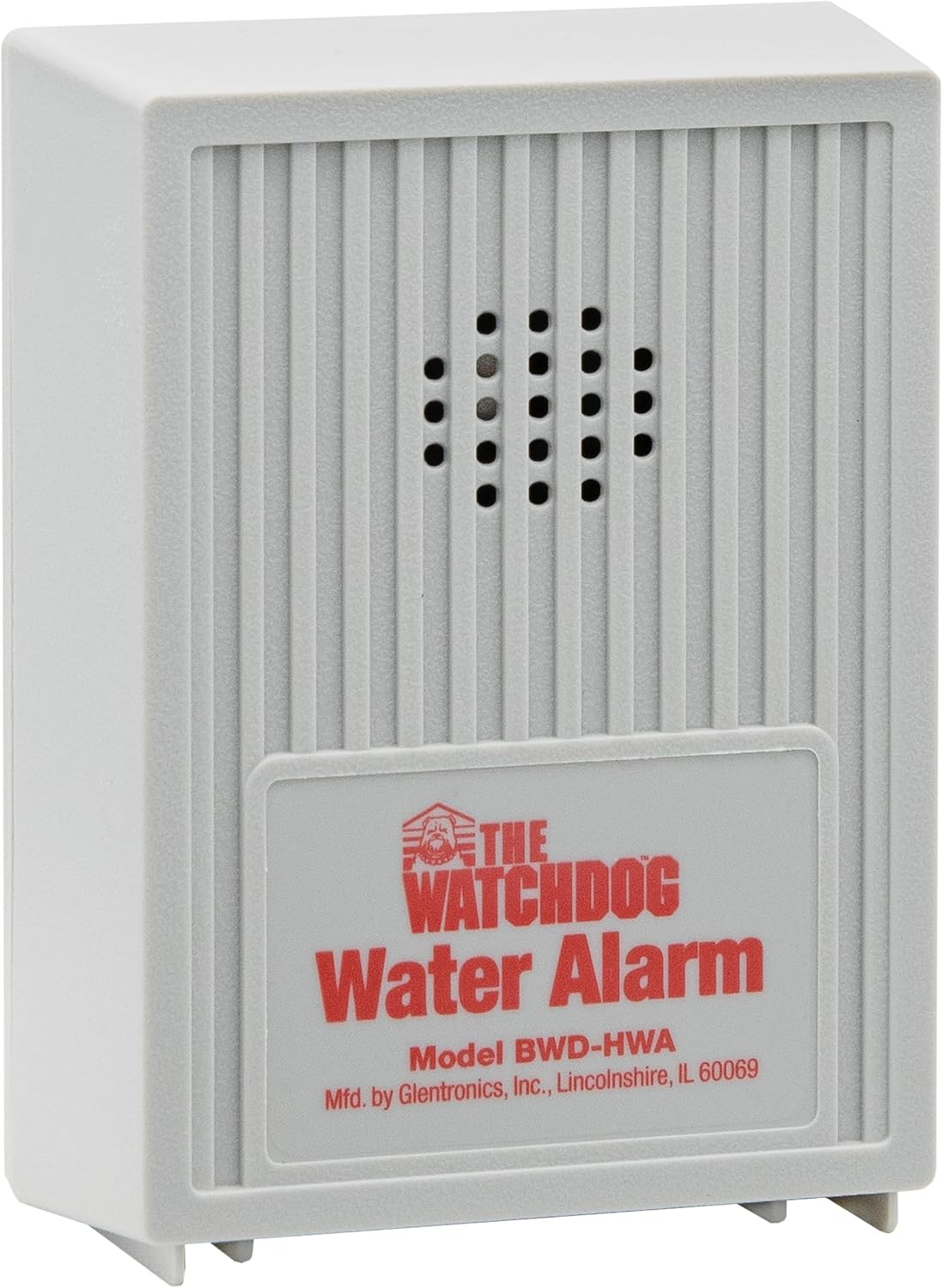
Key specs: 110 dB alarm with a detachable sensor on a 6 ft wire that can drop into a sump pit or mount on a wall; detects as little as 1/32 inch of water; solid-state circuitry; accepts more than 100 ft of additional wire for remote sensing
Basement Watchdog is the established name in this corner of the market, and this unit’s distinguishing spec is sensitivity: it detects as little as 1/32 of an inch of water. That is early enough to catch a slow overflow before it spreads across a floor. The detachable sensor sits on a 6-foot wire so it can be dropped into the pit or mounted on a wall, and it accepts more than 100 feet of additional wire — genuinely useful if the pit is at the far end of a basement from anywhere you would hear a 110 dB alarm.
✅ Pros
- Detects as little as 1/32 in of water
- Detachable sensor, usable in the pit or on the floor
- Extendable past 100 ft of wire for remote sensing
- 110 dB, audible through a house
- Established brand with published support material
❌ Cons
- Contact sensing on the floor warns later than a pit float
- No phone alert — someone has to be home
- Extension wire is not included
- Quieter than the Level Sense
Level Sense Sump Pump Alarm — loudest, with a real backup battery
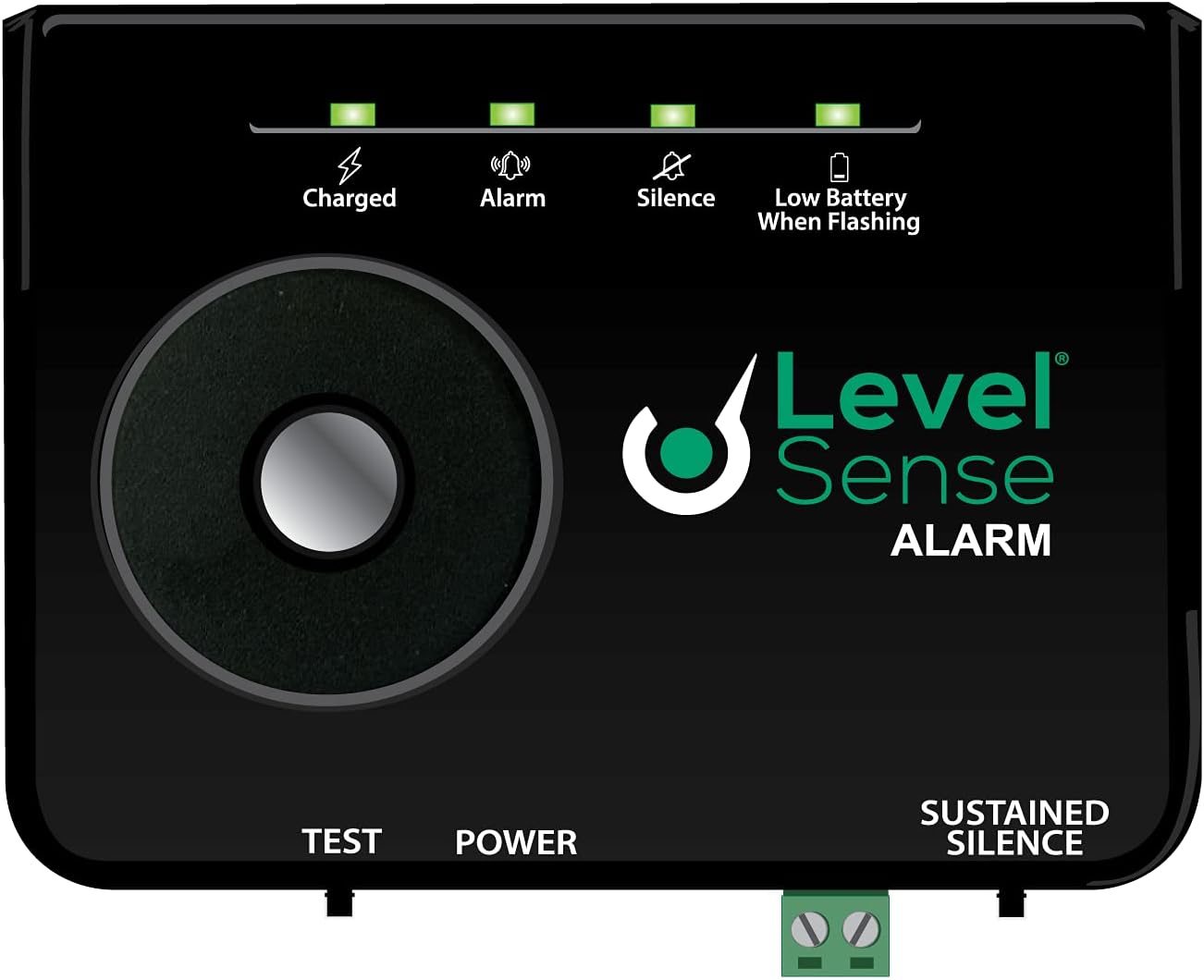
Key specs: 120 dB siren with a 15-foot float switch; integrated rechargeable LiPo battery rated for up to a week on backup power and 40 hours of siren, rather than a disposable 9V cell
The pick for a household that is usually home, and the reason is power rather than volume. Its integrated rechargeable LiPo battery is rated for up to a week on backup power and 40 hours of siren, explicitly positioned against the disposable 9V designs common in this category. That matters because the failure you are guarding against is usually a storm, and a storm takes the power out at the same time it raises the water. A 15-foot float switch gives real flexibility in where the sensing happens relative to where the siren sits, and at 120 dB it is the loudest here.
✅ Pros
- Rechargeable battery rated ~1 week backup, 40 hours of siren
- 120 dB, loudest of the four
- 15-foot float switch for flexible placement
- Float sensing warns earlier than floor contact
❌ Cons
- No phone notification — local siren only
- A rechargeable cell eventually degrades and is not user-swappable like a 9V
- Float positioning has to be right, or the warning comes late
- More to install than a simple contact sensor
YoLink LoRa Smart Water Level Sensor — the one that reaches your phone
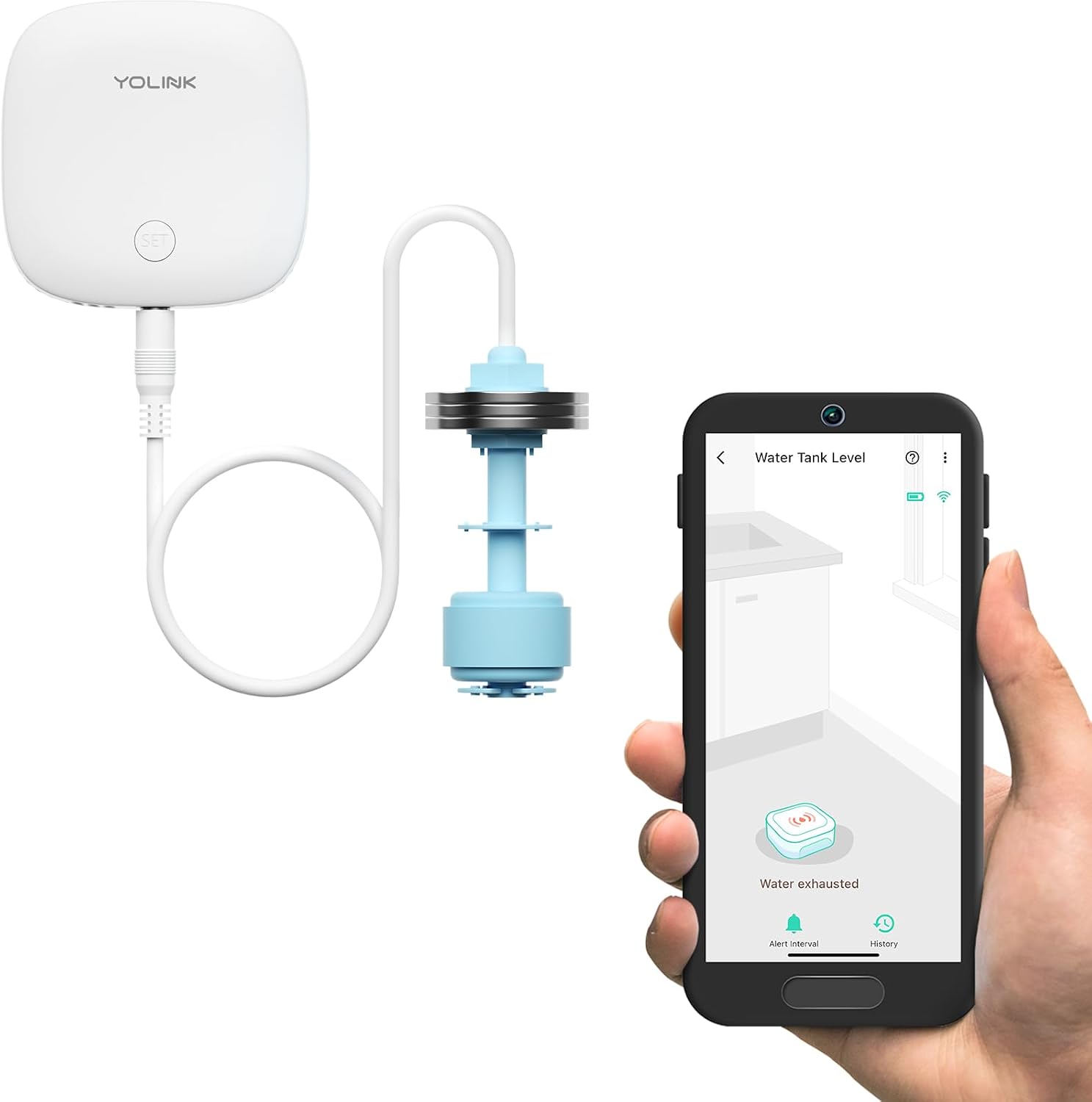
Key specs: Wireless battery-powered float-switch sensor using long-range LoRa rather than Wi-Fi; sends phone alerts; usable as a sump pump alarm, condensate pan overflow alarm, toilet leak alarm, or high and low level detector for tanks and cisterns
Buy this if the basement might flood while nobody is standing in it, which for most people is the actual risk. It sends alerts to a phone using LoRa rather than Wi-Fi, and that choice is the point: LoRa is long-range and low-power, which suits a sensor sitting in a concrete basement where Wi-Fi is often weakest. The same sensor is positioned for a wide range of level-monitoring jobs — sump pits, AC condensate pans, running toilets, tanks, ponds and cisterns — so it is genuinely a water level sensor rather than a single-purpose alarm.
✅ Pros
- Phone alerts, so it works when nobody is home
- LoRa rather than Wi-Fi, better through basement walls
- Handles high and low level detection across many applications
- Battery powered, so a mains outage does not silence it
❌ Cons
- Requires the YoLink hub ecosystem rather than working standalone
- A phone alert depends on your phone being seen and acted on
- No loud local siren of its own like the Level Sense
- More setup than a self-contained alarm
Sump Alarm High Water Alarm — for septic and outdoor use
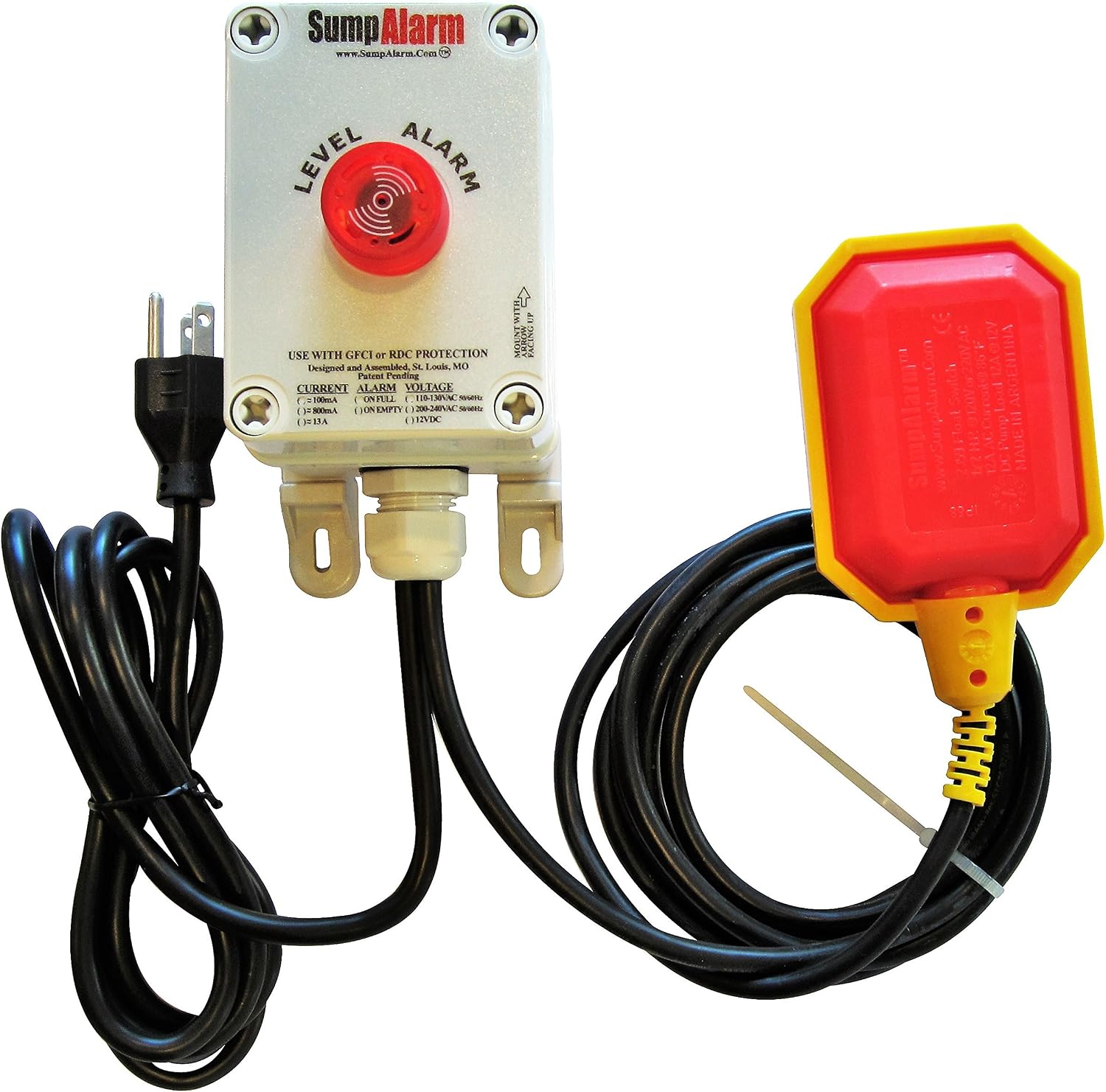
Key specs: Weatherproof high water level alarm for sump pump and septic applications; 90 dB siren with a red LED indicator; designed for early warning of rising water rather than for detecting a leak on a floor
The specialist of the group. It is a weatherproof high water level alarm designed for sump pump and septic applications, which is the case the other three do not cover well — a septic tank alarm often has to live outdoors, exposed, rather than in a dry basement. A 90 dB siren with a red LED indicator is quieter than the others, but the LED matters for an outdoor unit you check visually rather than hear from the house. If your problem is a septic system rather than a basement, this is the one built for it.
✅ Pros
- Weatherproof, suited to outdoor and septic installations
- Red LED indicator for visual checking
- Covers both sump and septic applications
- Purpose-built for high water level rather than adapted
❌ Cons
- 90 dB, the quietest of the four
- No phone alerting
- Outdoor placement means you may never hear it from indoors
- Smaller review base than Basement Watchdog
Power Is the Whole Problem
If you take one thing from this article beyond the picks, take this: think about what happens to each device when the power goes out, because that is the scenario it exists for.
The Failure Sequence You Are Guarding Against
1
Heavy rain raises the water table
Groundwater arrives faster than usual and the pit fills more often. Nothing has failed yet.
2
The power goes out
The same storm takes the line down. The primary pump stops. The pit now fills with nothing removing water.
3
The level passes the alarm point
A battery-powered alarm sounds. A mains-only one does not, which is why backup power is not optional here.
4
Somebody has to act
Start a backup pump, bail, or move what is on the floor. The alarm has bought time and nothing else.
Every step assumes the alert reached a person who could act on it.
A basement that floods is also a room worth thinking about as a whole. The space holding the sump usually holds the panel and the water heater too — which is to say the fuel-burning appliances a carbon monoxide detector should be watching, in a room people rarely enter.
This is also the argument for pairing the alarm with something that keeps working independently. The same reasoning that makes battery backup essential on a smoke detector applies here, and the same logic that makes remote alerts valuable on a leak detector applies more strongly, because the volumes are larger and the response window is longer.
One more practical note for anyone who has sealed their sump pit as part of a radon mitigation system: you have removed the ability to simply look in and check. That makes an alarm considerably more valuable than it was, because visual inspection is no longer available to you.
Final Recommendation
Buy the YoLink LoRa water level sensor if the house is ever empty. A siren in an unoccupied basement achieves nothing, and LoRa’s range through concrete is the right radio choice for this specific placement. The hub requirement is the price of the only feature that matters when you are away.
Buy the Level Sense if someone is essentially always home. The rechargeable backup rated for about a week covers the storm-plus-outage case properly, and 120 dB on a 15-foot float is the strongest local-alarm package here.
Add the Basement Watchdog as a floor sensor beside the pit if you want a second, independent warning — 1/32 of an inch of detection catches an overflow the float missed. Choose the Sump Alarm specifically for a septic or outdoor installation.
What would change our answer: if your basement has actually flooded before, do not spend this budget on an alarm at all. Put it toward a battery backup pump, and buy the alarm afterwards as the thing that tells you the backup has taken over. Detection without capacity to respond is the wrong order for a house with a known problem.
SafeBode does not yet run an in-house product testing program. This guide is built from manufacturer specifications, official support documentation, current retail listings and verified buyer feedback rather than hands-on testing, and we say so plainly rather than implying testing we have not done.
Frequently Asked Questions
What does a sump pump alarm actually do?
It warns you that the water level in the pit has risen above where it should be, which usually means the pump has failed, lost power, or cannot keep up. It does not pump anything — somebody still has to act on the warning.
Float switch or water sensor, which is better?
A float switch in the pit warns earlier, while the water is still contained. A contact sensor on the floor warns later but unambiguously. If you can only fit one, the float gives you more time to do something about it.
Is a sump alarm the same as a water leak detector?
No. A leak detector watches for water escaping an appliance or pipe. A sump alarm watches a pit that is supposed to contain water, for the case where the water stops leaving. Most basements benefit from both.
Do I need one that alerts my phone?
If the house is ever unoccupied, yes — a local siren in an empty basement accomplishes nothing. If someone is essentially always home, a loud local alarm with battery backup is simpler and needs no hub.
Why does battery backup matter so much?
Because the situation you are guarding against is usually a storm, which raises groundwater and cuts power at the same time. A mains-only alarm is silent in exactly the scenario it was bought for.
Where should the sensor go?
In the pit, at the level that means the pump is not keeping up — not so high that the warning arrives as the water reaches the floor. A second sensor on the floor beside the pit gives you an independent backup warning.
Will one work with a septic system?
Some are built for it. The Sump Alarm pick here is weatherproof and designed for both sump and septic applications, which matters because septic alarms often have to sit outdoors rather than in a dry basement.
How loud does the alarm need to be?
Loud enough to be heard from where people actually are, which usually means two floors up with a door closed. The picks here run from 90 dB to 120 dB; if the pit is far from the living space, prefer the louder end or a model with a remote sensor on a long wire.
Does an alarm replace a backup pump?
No, and this is the most important limitation. An alarm buys you time to act. If nobody is available to act, or the water is arriving faster than you can bail, only a second pump actually changes the outcome.
Sources
Show sources (5)
- [1] Basement Watchdog — product and support information, www.basementwatchdog.com
- [2] Basement Watchdog — 110 dB Water Alarm, current retail listing specifications (ASIN B000JOK11K)
- [3] Level Sense — Sump Pump Alarm with float switch, current retail listing specifications (ASIN B075613VY5)
- [4] YoLink — LoRa Smart Water Level Monitoring Sensor, current retail listing specifications (ASIN B0C3KXCY8B)
- [5] Sump Alarm — High Water Alarm, current retail listing specifications (ASIN B00GM9FD0A)


