Best Pool Alarms 2026: Surface, Immersion, Gate and Door
Affiliate Disclosure: This article contains affiliate links. If you buy through these links, we may earn a commission at no extra cost to you. Our editorial opinions are our own and are not influenced by affiliate relationships. Read our full disclosure policy →
Contents
Quick Answer
Buy a certified alarm, and buy the door alarm before the pool alarm. The PoolGuard DAPT-2 is UL Listed to UL 2017 and sounds within seven seconds even if a child closes the door behind them — it catches the child before they reach the water, which is a fundamentally better moment than catching them after. Pair it with the Poolguard PGRM-2, NSF certified to ASTM F2208 and designed to detect an intrusion comparable to a one-year-old. And hold the hierarchy in mind: drowning is the leading cause of death for children ages 1–4, and it usually happens when multiple barriers have already failed. An alarm is the last of those barriers.
An Alarm Is the Last Layer, Not the First
This is the part that has to come before any product recommendation, because buying an alarm as a substitute for the layers underneath it is the mistake that makes a household less safe rather than more — it converts genuine vigilance into a feeling that the problem is handled.
The scale is worth stating plainly. Drowning is the leading cause of death for children aged 1 to 4, and the second leading cause of unintentional injury death for children aged 5 to 14. More than 4,000 people die from unintentional drowning in the U.S. each year. Crucially, these incidents typically occur when multiple safety barriers fail at once — a lapse in supervision, limited swimming ability, and an absent or ineffective pool barrier together.
Why the Layer Order Matters
#1
cause of death for children ages 1–4
#2
cause of unintentional injury death, ages 5–14
4,000+
unintentional drowning deaths a year in the U.S.
Multiple
barriers usually have to fail at once
An alarm is valuable precisely because it is one more barrier — not because it replaces the others.
The practical implication for what you buy: the earlier in the sequence a device intervenes, the better. A fence stops the approach. A door alarm catches the exit from the house. A pool alarm catches entry into the water — which is the last possible moment to intervene. That ordering is why the door alarm is the recommendation here despite being the less obvious purchase. The same reasoning drives child safety door locks indoors: stop the approach rather than detect the arrival.
The Two Certifications That Actually Mean Something
Unlike most consumer safety products, this category has real, specific standards, and they are the single most useful filter when comparing listings. There are two, and they cover different devices.
Look for One of These on the Listing
🌊 ASTM F2208 — pool alarms
- The standard for alarms that detect entry into the water
- Poolguard PGRM-2 is NSF certified to it
- The Lifebuoy BCONE states F2208 certification
- Pool Patrol PA-30 states ASTM certification
🚪 UL 2017 — water hazard door alarms
- The standard for entrance door alarms guarding a water hazard
- PoolGuard DAPT-2 is UL Listed to it
- A different device and a different standard from the above
- Covers the door between the house and the pool, not the pool
Why this matters more here than in most categories: a pool alarm’s whole job is detecting a small, quiet entry into water that is also being moved by wind, rain, filtration and swimmers. That is a genuinely hard sensing problem, and “we tested it ourselves” is not a substitute for a standard. Many listings in this category cite no certification at all. Those are the ones to skip, regardless of price or rating.
Four Types of Pool Alarm, Doing Four Different Jobs
| Type | What it detects | Where it sits | Main weakness |
|---|
| Surface wave | Waves from something breaking the water surface | Floating or mounted at the pool edge | Wind, rain, fountains and swimmers all make waves |
| Subsurface / immersion | Pressure change from displaced water | Mounted on the pool wall below the waterline | Needs correct installation depth; less suited to odd pool shapes |
| Entrance door alarm | A door between house and pool opening | On the door itself | Only covers the doors you fit it to |
| Gate alarm | The pool fence gate opening | On the gate | Useless if the fence has other gaps |
| Wearable | A specific child entering water | On the child’s wrist | Only protects the child actually wearing it |
These are not the same product family as a general household door alarm, which reports an intrusion rather than meeting a water-hazard standard. Two of these deserve to be understood as a pair rather than as alternatives. A door or gate alarm tells you that a child has left the house or entered the pool enclosure — a warning delivered while there is still time to walk outside. A surface or immersion alarm tells you something has entered the water. The second is a rescue trigger; the first is a prevention trigger. Households with young children and a pool want both. If you already run a hub-based system, note that generic door and window contact sensors are not a substitute here — they are not built or certified for this job.
The Four Picks Side by Side
Poolguard PGRM-2 In-Ground Pool Alarm — the certified default
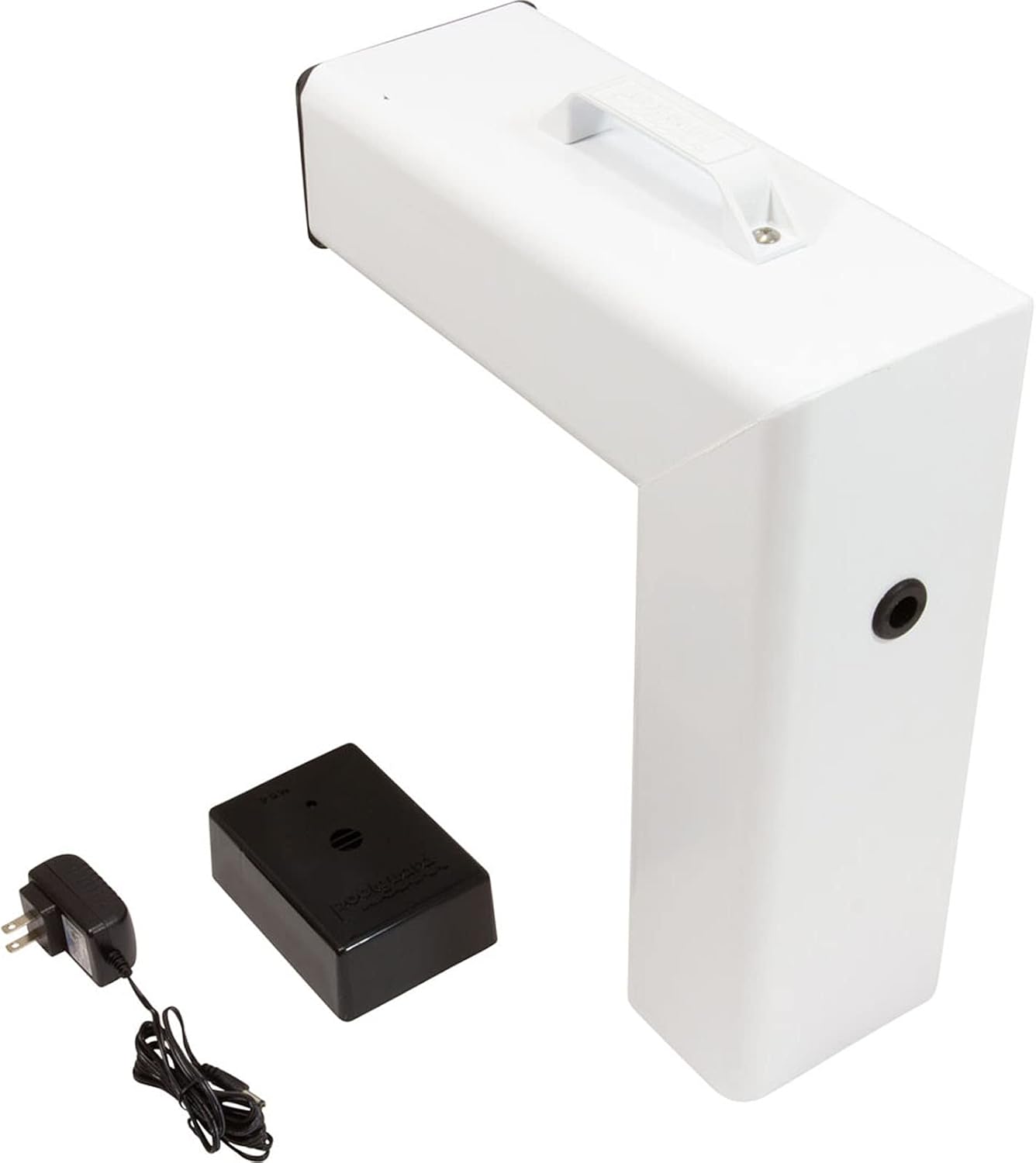
Key specs: NSF certified to ASTM F2208; designed to detect an intrusion comparable to a one-year-old child entering the water; covers pools up to 20 x 40 feet or 800 square feet; 85 dB horn at 10 feet plus an in-house remote receiver with a range up to 200 feet; battery powered; three-year warranty; made in the USA
If you are buying one alarm for the water, this is it. The specification that matters is not the horn volume but the sensitivity claim: it is designed to detect an intrusion comparable to a one-year-old child entering the water. That is the correct benchmark for this product, because a device tuned to notice an adult diving in is not solving the problem anyone buys a pool alarm for. It is NSF certified to ASTM F2208, which is the standard to look for. The in-house remote receiver, with a range up to 200 feet, is the other genuinely important part — an 85 dB horn at the poolside is no use if everyone is indoors with the television on.
✅ Pros
- NSF certified to ASTM F2208, the relevant standard
- Sensitivity benchmarked to a one-year-old entering the water
- In-house receiver up to 200 feet, so the alert reaches indoors
- Three-year warranty and made in the USA
❌ Cons
- Covers pools up to 20 x 40 feet or 800 sq ft — larger pools need more units
- Triggers after entry into the water, the last possible moment
- Battery powered, so it needs a check schedule like any life-safety device
- Surface-based detection is inherently susceptible to weather and swimmers
PoolGuard DAPT-2 Water Hazard Door Alarm — the one that catches them earlier
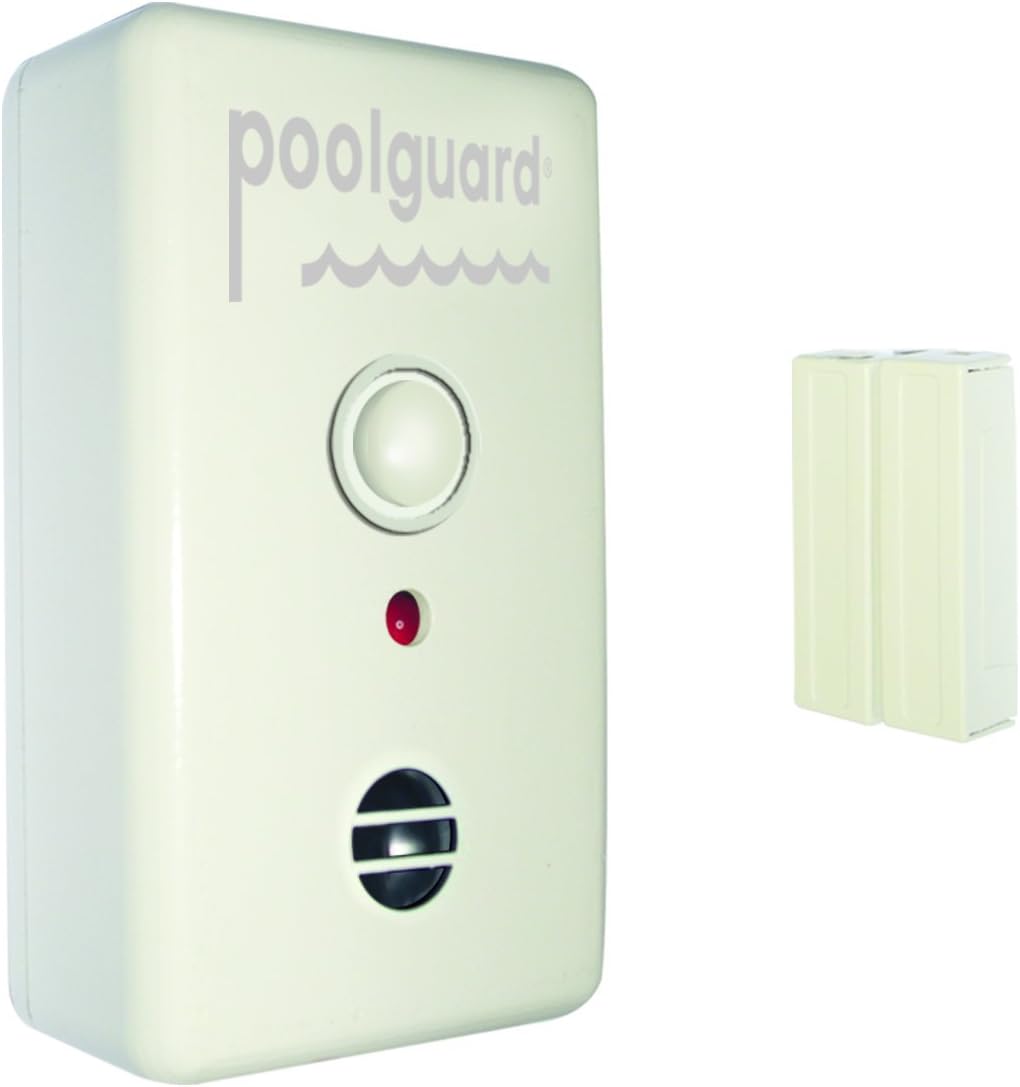
Key specs: UL Listed to UL 2017 for water hazard entrance door alarms; sounds within 7 seconds even if a child passes through and closes the door behind them; adult pass-through feature; 85 dB horn at 10 feet; battery powered; outdoor wireless transmitter pass-through; made in the USA
The most useful product in this guide, and the one most people do not think to buy. It is UL Listed to UL 2017, the standard specifically covering water hazard entrance door alarms. Two design details make it work in a real household. First, it sounds within seven seconds even if the child goes through and closes the door behind them — closing the door is exactly what defeats a naive contact sensor. Second, the adult pass-through feature lets adults use the door without triggering it, which is the difference between a device that stays armed and one that gets switched off in week two because it is maddening.
✅ Pros
- UL Listed to UL 2017, the correct standard for this device
- Alarms even if the door is closed behind the child
- Adult pass-through, so it survives daily use without being disabled
- Intervenes before the child reaches the water, not after
❌ Cons
- Only protects the doors you actually fit it to
- Does nothing about a gate, a neighbor’s pool, or a child already outside
- Battery powered, needing the same check discipline as a smoke alarm
- Adult pass-through can be misused by an older child who has watched it work
BCONE Pool Alarm by Lifebuoy — the connected option
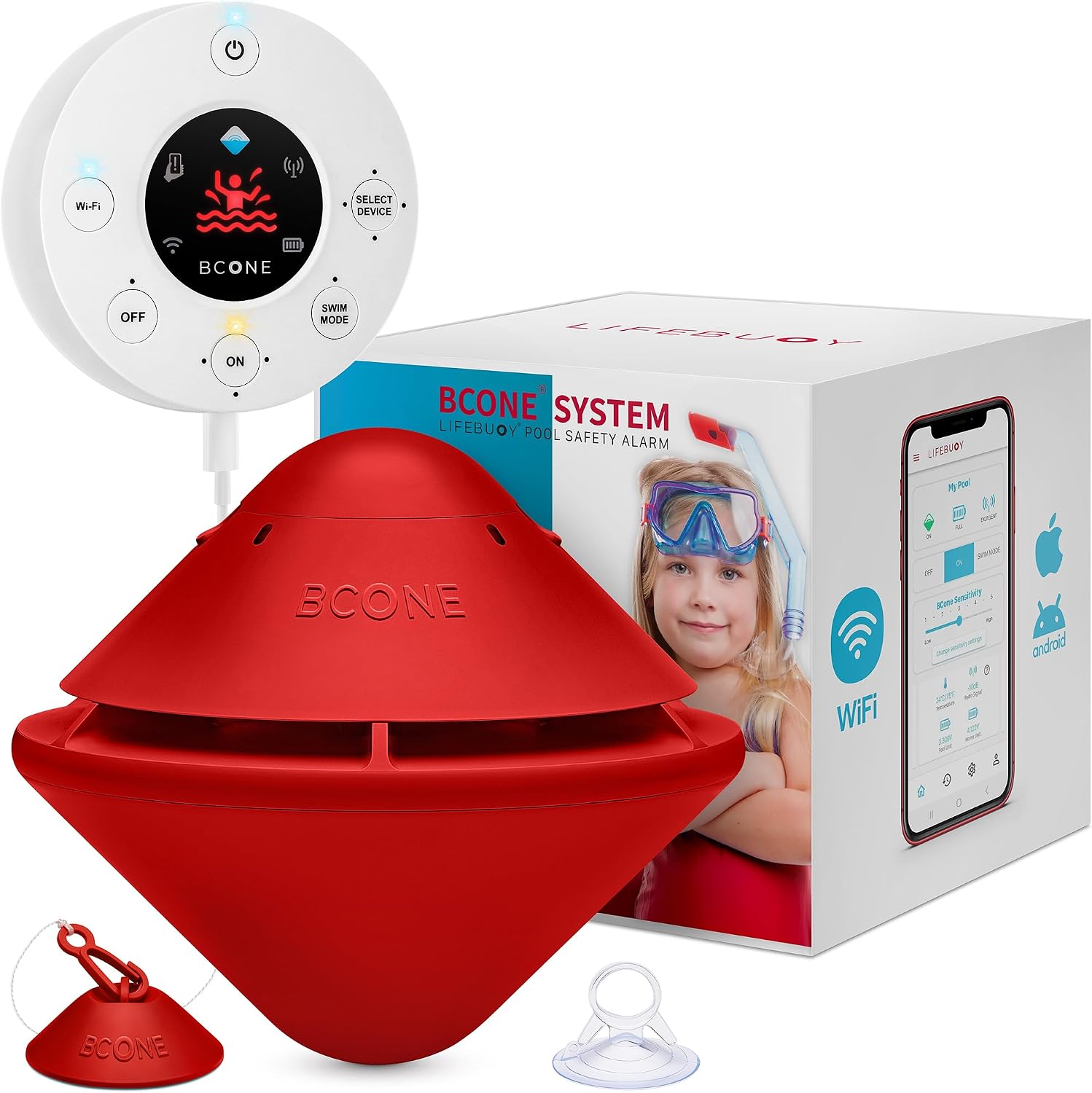
Key specs: ASTM F2208 certified floating alarm with smartphone app control plus Alexa and Google Assistant connectivity; alarms on both the pool unit and a home unit; up to four pool units can connect to one home unit; works in pools, spas and garden ponds
Choose this if the alert has to travel further than a horn carries, or if you have more than one body of water. It is ASTM F2208 certified, and it adds smartphone app control plus Alexa and Google Assistant connectivity — so an alarm reaches a phone rather than depending on someone being within earshot. Up to four pool units can connect to a single home unit, which is the feature that matters for a large pool, a pool plus a spa, or a property with a garden pond as well. It alarms on both the pool unit and the home unit, so it does not rely solely on the phone.
✅ Pros
- ASTM F2208 certified
- App plus Alexa and Google Assistant, so alerts travel
- Up to four pool units on one home unit
- Works in pools, spas and garden ponds
❌ Cons
- App-connected devices add a network dependency to a life-safety alarm
- Smaller review base than the Poolguard units
- Convenience features can encourage relying on a phone that is on silent
- Still triggers only once something is in the water
Pool Patrol PA-30 — the budget surface alarm
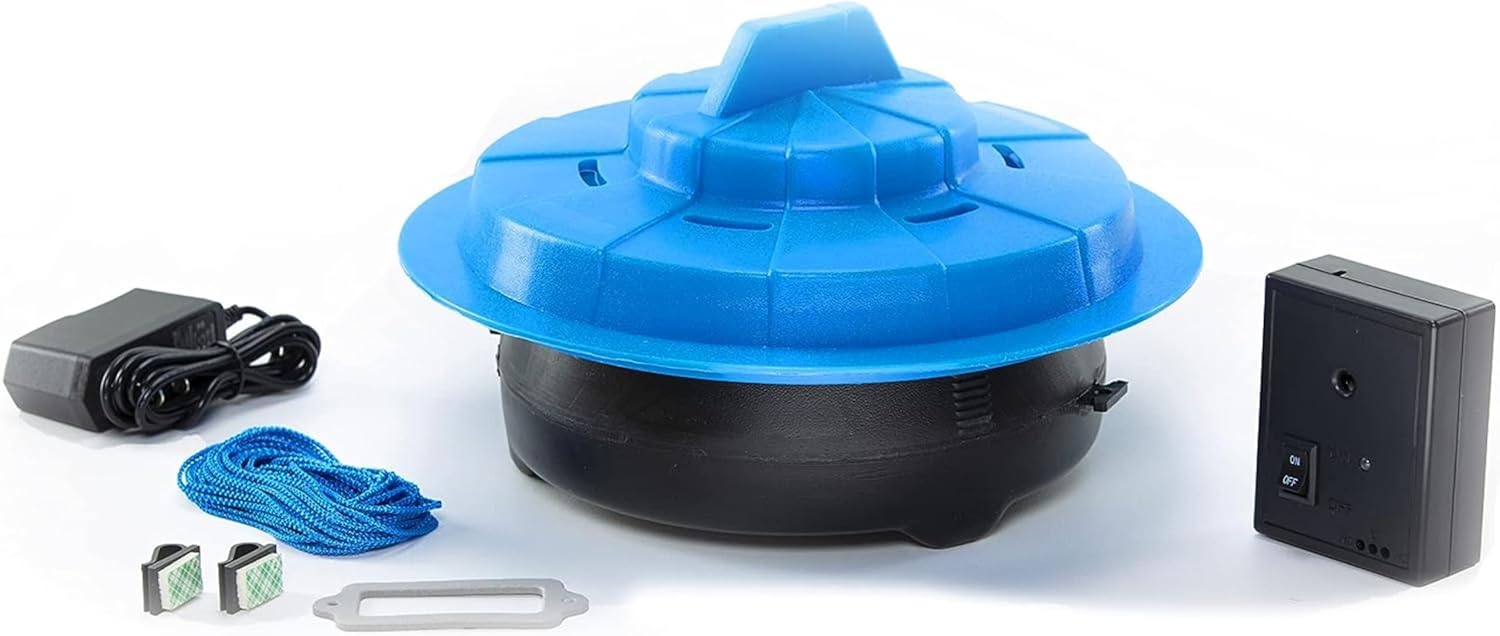
Key specs: ASTM-certified surface wave alarm; installs without damage to the pool structure or surface; runs on a 9V battery, not included; multiple units can be used in larger pools; manufacturer notes it may not suit pools with fountains or waterfalls and does not recommend it for saltwater pools
The cheapest ASTM-certified route here, and it earns a place for one practical reason: it installs without damaging the pool structure or surface, which matters for renters, for vinyl liners, and for anyone not wanting to drill a finished pool edge. Multiple units can be combined on a larger pool. The manufacturer is unusually candid about its limits, and those limits are the reason it is fourth rather than first: it may not be compatible with in-pool fountains or waterfalls because of the water movement they create, and it is not recommended for saltwater pools. Check both before ordering.
✅ Pros
- ASTM certified at the lowest price of the four
- Installs with no damage to the pool structure or surface
- Multiple units can cover a larger pool
- Simple 9V operation with nothing to pair or configure
❌ Cons
- Not recommended for saltwater pools
- May not work with fountains or waterfalls running
- 9V battery not included
- No remote receiver, so the alert stays at the poolside
The False Alarm Problem, Honestly
Customer ratings across this entire category run lower than in most product groups, and it is worth understanding why rather than treating it as a reason to skip the purchase. A pool alarm has to distinguish a small child slipping into water from wind, rain, a pool cleaner, a filtration return, a dog, and a leaf. Every one of those moves water. The sensitivity that catches a toddler is the same sensitivity that reacts to weather.
The consequence is predictable and dangerous: alarms that cry wolf get switched off. This is the same failure pattern documented for household alarms generally in our piece on why alarms keep going off — the device is not the problem, the response to nuisance triggers is. Three things reduce it materially: choosing a certified unit rather than an uncertified one, matching the alarm type to your pool (no surface alarm on a pool with a waterfall running), and using a door or gate alarm as the primary layer so the water alarm is not carrying the whole load.
The other half of the answer is not a product at all. The Red Cross’s water safety guidance centers on supervision and swimming ability alongside barriers, and no alarm substitutes for a designated adult watching. An alarm buys seconds. Somebody has to be there to use them. A poolside standalone motion siren is not an equivalent product either — it is built to deter an adult, not to detect a child in water.
Final Recommendation
Buy the PoolGuard DAPT-2 door alarm first, on every door between the house and the pool. It is UL Listed to the standard written for this exact device, it alarms even when the door is closed behind a child, and it intervenes while there is still time to walk outside rather than to run. The adult pass-through is what keeps it armed after the novelty wears off.
Add the Poolguard PGRM-2 for the water itself. NSF certification to ASTM F2208 and a sensitivity benchmark set at a one-year-old are the two things worth paying for in a pool alarm, and the in-house receiver means the alert reaches people who are indoors.
Choose the BCONE by Lifebuoy instead of the PGRM-2 if you have more than one body of water or a pool larger than the Poolguard’s stated coverage — four pool units on one home unit solves a problem the others cannot. Choose the Pool Patrol PA-30 only on a simple freshwater pool with no fountain or waterfall, and only if the budget is binding.
What would change all of this: if you do not yet have a compliant four-sided fence with a self-closing, self-latching gate, buy that before any alarm. Barriers prevent; alarms only notify. Drowning incidents typically involve several failed barriers at once, and the alarm is the one you want to need least.
SafeBode does not yet run an in-house product testing program. This guide is built from manufacturer specifications, official support documentation, current retail listings and verified buyer feedback rather than hands-on testing, and we say so plainly rather than implying testing we have not done.
Frequently Asked Questions
Do pool alarms actually work?
Certified ones detect what they are specified to detect — the Poolguard PGRM-2 is benchmarked to an intrusion comparable to a one-year-old entering the water. What they cannot do is prevent entry, which is why they belong behind a fence and a door alarm rather than instead of them.
What certification should a pool alarm have?
ASTM F2208 for alarms that detect entry into the water, and UL 2017 for entrance door alarms guarding a water hazard. They are different standards for different devices. Listings citing neither are the ones to skip.
Is a door alarm better than a pool alarm?
It intervenes earlier, which usually makes it more valuable. A door alarm catches a child leaving the house; a pool alarm catches them entering the water. If you are only buying one, the door alarm gives you more time.
Will a pool alarm work on a saltwater pool?
Not always — the Pool Patrol PA-30, for example, is explicitly not recommended for saltwater. Check each product’s stated compatibility, because saltwater and water features both affect how surface-based sensing behaves.
Do pool alarms false alarm in wind and rain?
Surface-detection alarms can, because wind, rain and water features all move the surface the alarm is watching. Matching the alarm type to your pool and choosing a certified unit both reduce it, and a door alarm carrying the primary load means the water alarm is not the only thing standing between a child and the pool.
Can I hear a pool alarm from inside the house?
Not reliably from the poolside horn alone, which is why the in-house remote receiver on the Poolguard matters and why the app-connected option exists. An alarm nobody hears is not a layer of protection.
Do I still need a fence if I have a pool alarm?
Yes. A fence prevents access; an alarm only reports it. Drowning typically happens when several barriers fail together, so the alarm is meant to be the last of several rather than the only one.
What size pool can one alarm cover?
It varies by model — the Poolguard PGRM-2 states coverage up to 20 by 40 feet or 800 square feet. Larger or irregular pools generally need more than one unit, and some systems are designed to link multiple units to a single indoor receiver.
Are wearable pool alarms worth it?
They protect the specific child wearing one, which is genuinely useful for a household with one young child and useless for visiting children who are not wearing anything. Treat them as an addition to fixed barriers rather than a replacement.
Sources
Show sources (6)


