Best Sliding Window Locks 2026: Securing the Window Burglars Check First
Affiliate Disclosure: This article contains affiliate links. If you buy through these links, we may earn a commission at no extra cost to you. Our editorial opinions are our own and are not influenced by affiliate relationships. Read our full disclosure policy →
Contents
Quick Answer
For most horizontal sliding windows the Prime-Line U 9819 is the right first purchase: an aluminum track stop with a thumbscrew that pins the sash closed or at a set ventilation gap. If a broken pane and a reaching arm is the worry, that thumbscrew is exactly what they reach for — step up to the Prime-Line U 9928 keyed sash lock. If a small child is the reason you are here, the Cardinal Gates Window Warden holds the sash to a 4 in. maximum opening. If you rent and cannot drill, a telescoping bar in the track is the answer — the blocking principle a police department recommends with nothing more than a dowel. One rule outranks all four: on a bedroom window, whatever you install has to open from inside without a key or a tool.
The Latch Your Window Came With
Walk over to a horizontal sliding window and look at how it locks. You will find a small lever or a plastic thumbscrew on the top rail of the moving sash — SafeHome’s window lock guide describes exactly that, noting that most sliding windows use a lever or a thumbscrew to engage the locking mechanism, and that sliding windows are the norm in most modern neighborhoods and homes. That single part, usually die-cast zinc or molded nylon screwed into a hollow sash, is doing all of the work.
Nothing about it is designed to resist force. Push in on the outside of a slider while lifting and the sash flexes, the keeper flexes with it, and the latch skips its catch — no tools, no noise, no glass. That is why every product below works by physically blocking travel instead of asking the factory latch to be stronger than it is. And windows are not a fringe entry point: Security.org, citing a University of North Carolina study of convicted burglars, reports that most burglars enter through the main entry points — side and front doors, and first-floor windows. Doors get the hardware budget. The slider behind the shrub gets a nylon thumb latch and a curtain.
Two Very Different Sliding Windows, One Weak Latch
↔ Horizontal slider
- Sash rolls sideways in a bottom track, like a small patio door
- Latch is a lever or thumbscrew on the moving sash
- Defeated by flexing the sash, or lifting it out of the track
- A stop in the track blocks travel whatever the latch does
↕ Double-hung / vertical slider
- Lower sash slides upward; some models drop the upper sash too
- Latch is the crescent-shaped cam lock on the meeting rail
- Defeated by prying the rail until the cam clears its keeper
- A keyed sash lock through both sashes blocks it directly
Both styles are covered here. Where a pick suits only one, the product section says so. If your real problem is the full-height glass door, our guide to securing a sliding glass door and our patio door lock roundup cover the heavier hardware that job needs — a bar sized for a 30 in. sash will not span a patio slider.
Four Locks, Four Different Jobs
The category looks bigger than it is. Search for window locks and you get hundreds of listings, most of them the same aluminum thumbscrew stop sold under a dozen brand names nobody has heard of. Underneath there are only four mechanisms, and picking the wrong one costs more than picking the wrong brand of the right one. SafeWise’s aftermarket lock testing sorts the field the same way, by stop locks, track locks, bar locks and locking pins.
| Mechanism | How it stops the window | Allows a vent gap? | Best when |
|---|
| Track stop (thumbscrew) | Clamps to the track so the sash cannot travel past it | Yes, move and retighten | One lock has to handle closed and cracked-open |
| Keyed sash lock | Bolts sash to frame; releases only with its key | No, unless a second sits at the gap | A reach-through is your real worry |
| Opening limiter (WOCD) | Catches the sash at a fixed maximum opening | Yes, that is the point | A young child lives in or visits the house |
| Blocking bar | Fills the empty track so the sash cannot move | No, closed-only | You rent, or refuse to drill a window frame |
Read that as a decision, not a ranking. Most households end up with two of these, not one: a stop or limiter on the windows that get opened, and something harder on the one or two genuinely reachable from the ground.
Measure the Track Before You Buy Anything
The most common reason one of these gets returned is that it does not physically fit. Window hardware is unforgiving about dimensions in a way door hardware is not: no standard sash thickness, no standard track width, no standard hole spacing.
Four Measurements, Then Buy
1
Track rail width
Measure the raised rail the sash rides on. Prime-Line rates the U 9819 for a rail up to 1/8 in. wide; wider rails need a different stop.
2
Hole centers
For a sash lock, measure center to center between the existing screw holes. The U 9928 is a 2 in. hole-center part; a 2-1/4 in. window needs another model.
3
Empty track length
With the window shut, measure the open track from sash to jamb. That is the bar length you need, and it is almost never the window’s full width.
4
Height above the floor
On a bedroom window, an opening control device has to sit no more than 70 in. above the finished floor to stay code-legal.
Write all four down before opening a single product page. Three of the four picks below fail outright on the wrong measurement.
One check that is not a measurement: what the sash is made of. A screw holds far less well in hollow vinyl than in wood or reinforced aluminum, and vinyl is what most replacement windows are. If your sashes are thin vinyl, favor the track-based devices.
Prime-Line U 9819 Aluminum Sliding Window Lock — best overall
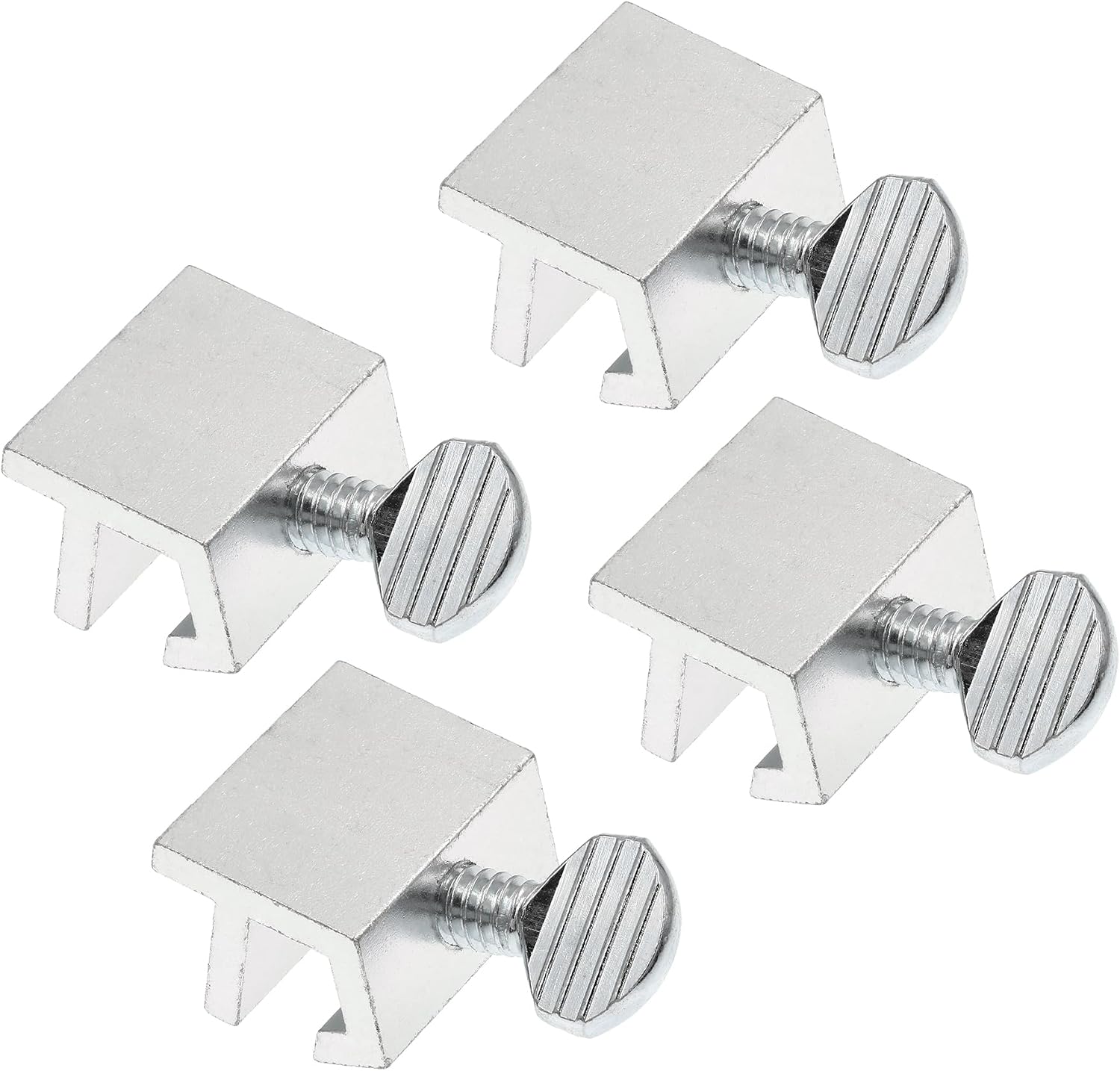
Key specs: Extruded aluminum track stop with a steel thumbscrew for horizontal sliding windows; secures the sash closed or in the ventilating position; fits a rail up to 1/8 in. wide; 4-pack, natural aluminum finish
This is the default answer for a horizontal slider, and the reason is one line in Prime-Line’s own product description: the lock secures a sliding window in the closed or the ventilating position. Slide the stop along the track to wherever you want the sash to halt, tighten the steel thumbscrew, and the window has a hard mechanical limit that owes nothing to the factory latch — shut against the sash for a full lock, or set back a few inches for air. It installs with no drilling and is the current Amazon best seller here. Prime-Line sells the identical lock in white as model U 9823 if bare aluminum will look wrong on your frames.
✅ Pros
- Handles closed and ventilating positions with one part, which no other pick here does
- No drilling or screws into the sash — it clamps to the track, so it suits renters
- Aluminum body and steel thumbscrew rather than the nylon most factory latches use
- Four in a pack, and it moves with you leaving no holes behind
❌ Cons
- Rated for a rail up to 1/8 in. wide — measure yours, because a wider rail is a hard incompatibility, not a tight fit
- The thumbscrew is hand-tightened, so anyone who can reach the track can loosen it — the reach-through problem the keyed pick below solves
- Horizontal sliders only; it does nothing for a double-hung window
- Bare aluminum shows against a white frame unless you buy the white U 9823
Prime-Line U 9928 Keyed Sash Lock — best against a reach-through
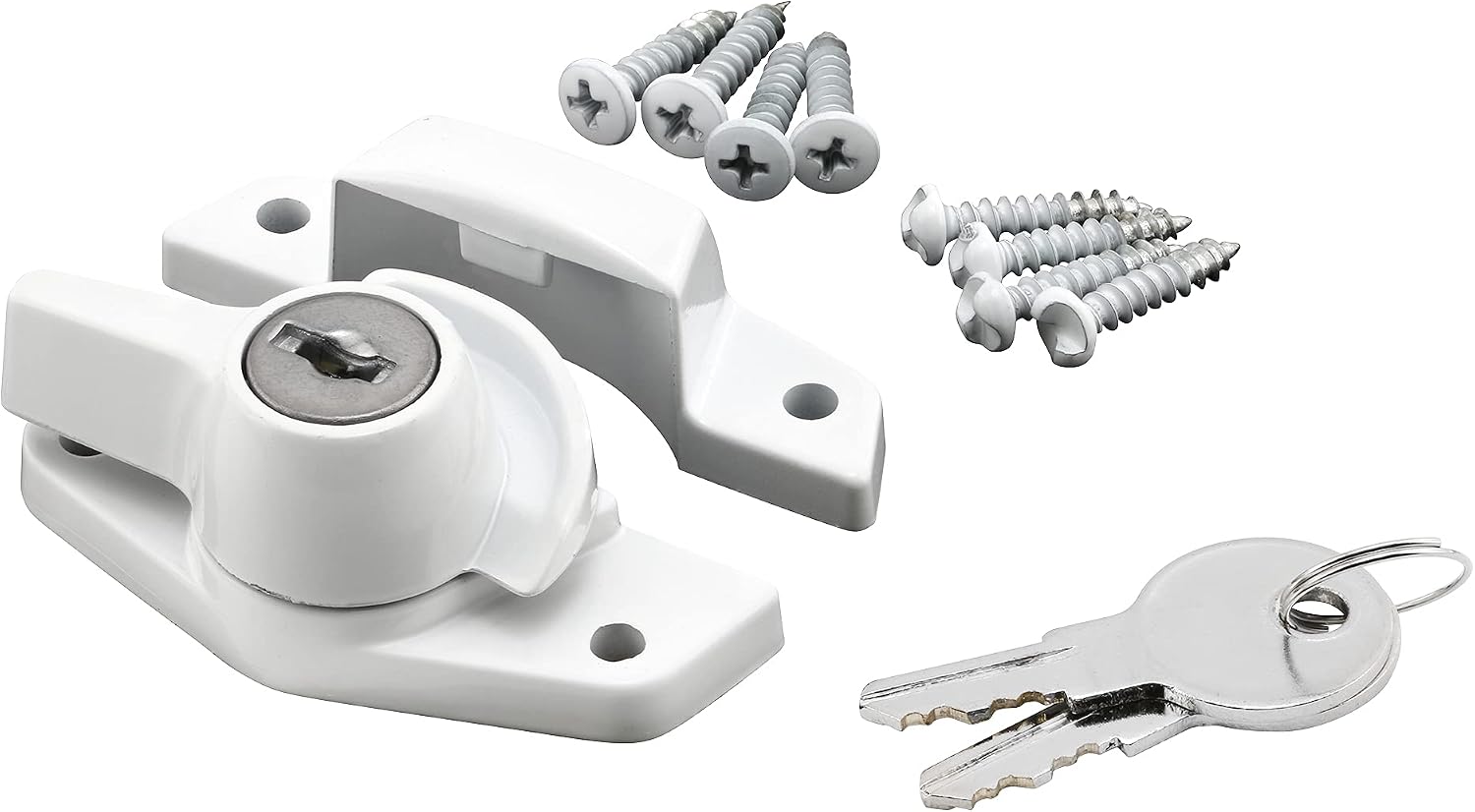
Key specs: Zinc diecast keyed sash lock with keeper, white; fits horizontal and vertical sliding windows in aluminum, wood or vinyl; 2 in. hole centers; unlocks only with its key, and each lock is keyed differently
Every other pick here shares one weakness: it can be undone by a hand. A thumbscrew loosens, a bar lifts out, a limiter is built to be released by an adult. That is fine until someone breaks a small pane and reaches through, at which point your lock is a control they now have. A keyed sash lock closes that path. Prime-Line’s catalog is explicit that the U 9928 can only be unlocked with a key, and that it fits horizontal and vertical sliding windows in aluminum, wood or vinyl — so unlike the track stop above, this works on a double-hung window too. SafeHome rates keyed locks an extremely secure option for the same reason.
✅ Pros
- Cannot be released by hand through a broken pane — the exact gap the other three leave
- Listed for both horizontal and vertical sliders, in aluminum, wood or vinyl
- Heavy zinc diecast body rather than the nylon a factory latch usually is
- Replaces the existing sash lock instead of adding a visible second device
❌ Cons
- Each lock is keyed differently, so a whole-house rollout means a fistful of keys
- Not appropriate on a bedroom egress window — an escape opening has to open from inside without a key
- 2 in. hole centers only; a window drilled for 2-1/4 in. centers needs another model
- The most mixed buyer feedback of the four, mostly about screw purchase in thin vinyl
That second bullet is not a technicality, and it is why this is not our overall pick. A keyed lock on a bedroom window makes the room harder to escape from in a fire in exchange for making it harder to enter. Use it on ground-floor windows that are not sleeping-room escape openings, and keep the key on the same hook as your door keys rather than in a drawer upstairs.
Cardinal Gates Window Warden — best for a child in the house
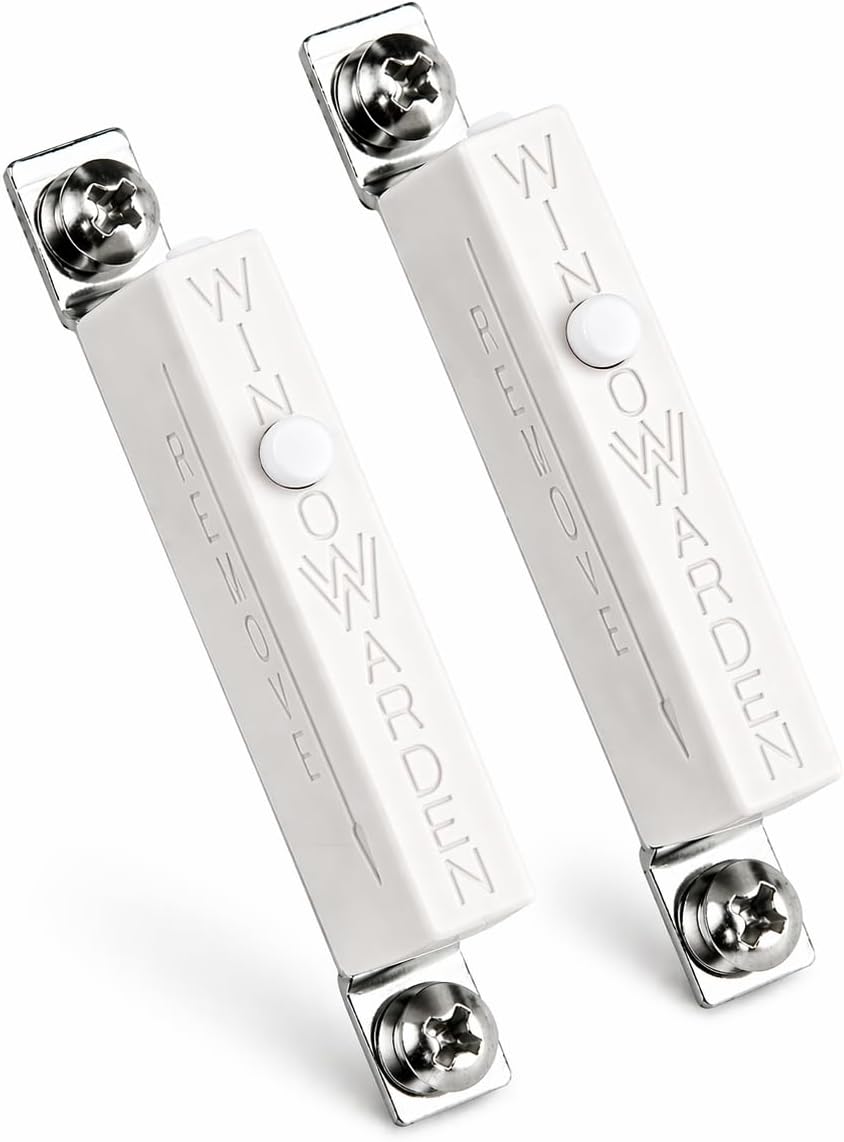
Key specs: Screw-mounted opening limiter, off-white, 2- and 6-packs; holds the sash to a maximum 4 in. opening; fits most double-hung and sliding windows and sliding doors, but not casement, awning or hopper windows; removable by an adult
If a toddler is the reason you searched for a window lock, you are shopping for a window opening control device rather than security hardware, and the number that defines that category is four inches. Cardinal Gates states plainly that the Window Warden allows a window to open to a maximum of 4 in. and prevents it opening further, that it fits most double-hung windows, sliding windows and sliding doors, and that it installs with screws but can be removed by an adult for full window access, cleaning or an emergency. Pair it with the rest of your child safety lock setup rather than treating it as a security product: it stops a fall, but a determined adult defeats it in seconds by design.
✅ Pros
- A specific stated limit — a 4 in. maximum opening, not a vague “restricts” claim
- Names the window types it fits and the ones it does not, which most sellers do not
- Removable by an adult, so it does not permanently trap the window shut
- Sold in 2- and 6-packs, so a nursery-plus-hallway job is one order
❌ Cons
- Cardinal Gates lists compliance with ASTM F 2090-10 sections 8.5 through 8.9 and the 2009 International Residential Code section R612.4 — specific clauses of specific editions, not blanket certification to the current standard
- Explicitly not for casement, awning or hopper windows
- Screw-mounted, so it leaves holes — a real problem in a rental
- A safety device that happens to add friction, not a security device
The Numbers That Set the Rules Here
4 in.
Maximum opening a Cardinal Gates Window Warden allows
70 in.
Highest an opening control device may sit above the floor on an egress window
0
Keys or tools allowed to open a required escape window from inside
~10%
Rise in burglaries between June and August, when windows sit open
Sources: UpCodes on Residential Code R310.1.1, SafeWise burglary data, Cardinal Gates product specifications.
Adjustable Window Security Bar, 17-50 in. — best with no drilling
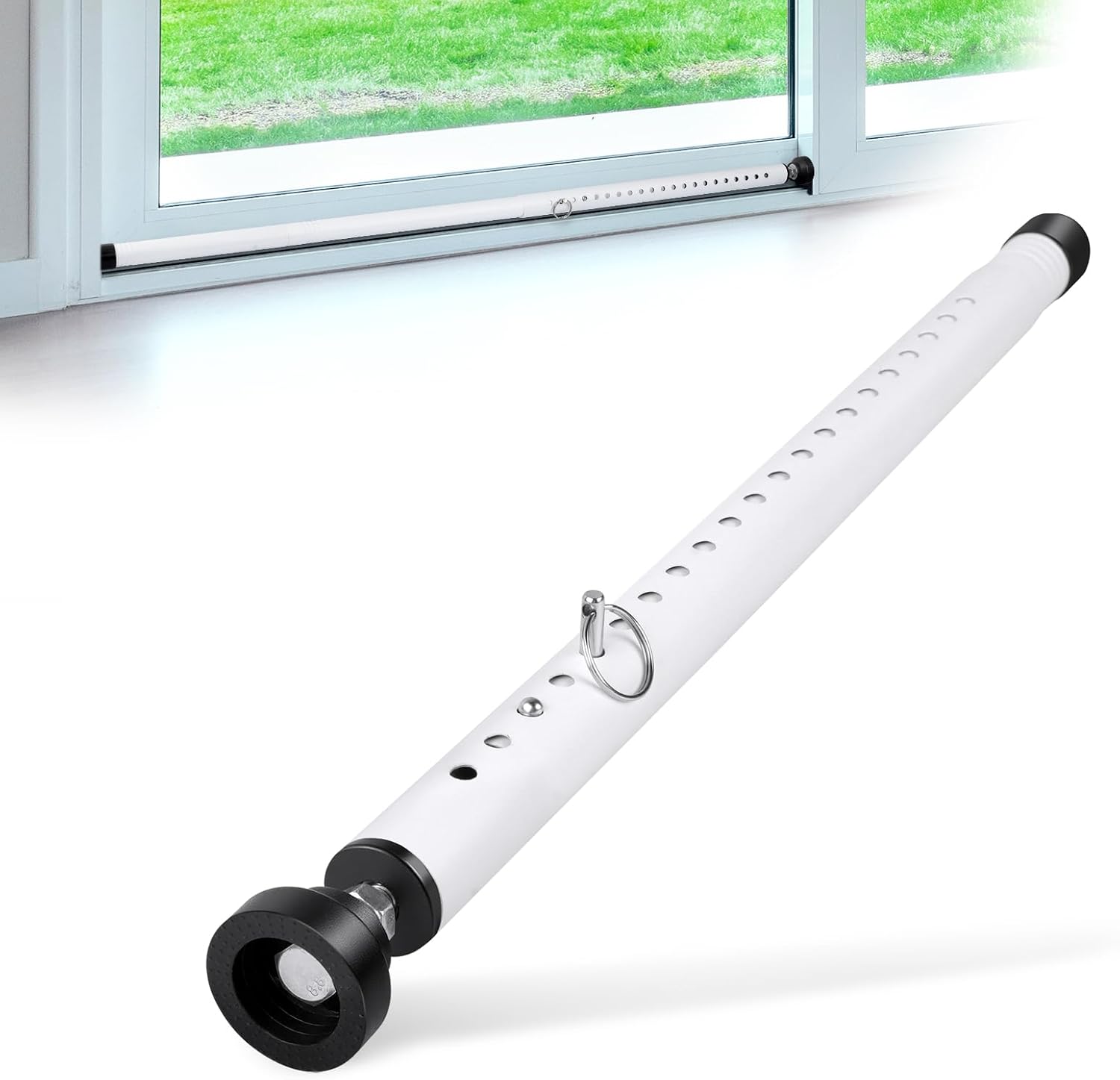
Key specs: Telescoping metal blocking bar adjustable from 17 to 50 in. with rubber end tips; drops into the inside track of a horizontal slider or sliding door; no drilling, no fasteners, removes in one motion
The oldest advice here is also free, and a police department will give it to you: the Baltimore Police Department’s burglary prevention guidance tells residents to use a blocking device on all sliding windows and doors, and says outright that a broomstick or dowel in the inside track is sufficient. A telescoping bar is that broomstick with a length adjustment and rubber tips. This one spans 17 to 50 in., which is why it earns the slot over the more heavily reviewed bars here — most start at 20 in. because they are built for patio doors, and will not fit an ordinary bedroom slider’s empty track. Being honest: this is a generically branded product with a much thinner review history than the Prime-Line and Cardinal Gates picks, and we recommend it on fit and mechanism, not on a track record. For the same idea sized for a doorway, see our door security bar guide; renters doing a whole apartment should start with our no-drill renter security guide.
✅ Pros
- Zero installation and zero damage — nothing screws into the sash or the frame
- Blocks the full track, so there is no small part to shear or strip
- The 17 in. minimum genuinely fits window tracks, not just patio door tracks
- Obvious through the glass, which is deterrence in itself
- You can test the idea free first with a cut dowel, as police guidance describes
❌ Cons
- Closed position only — it cannot hold a ventilation gap the way a track stop can
- Generic branding and a thin review base; the mechanism is proven, the maker is not
- Has to be lifted out to open the window, so it is easy to leave off after airing a room
- Useless on a double-hung window, which has no horizontal track to fill
The Ventilation Compromise Nobody Spells Out
Here is the part these roundups skip. A ventilation lock is not a security product with a convenience feature. It is a security compromise with a number attached. Set a track stop to hold a four-inch gap and you have deliberately left a four-inch opening in the building envelope, all night, on a window very likely reachable from the ground. That gap is too small for an adult to climb through, which is the point. It is not too small for a hand, an arm, a hooked wire or a cut screen. Everything within arm’s reach — a laptop on the desk under it, keys in a bowl on the sill, the thumbscrew itself — is now reachable. That is a reasonable cost upstairs and a bad one on the ground-floor window nearest an unlit side passage.
The timing makes it worse rather than better. SafeWise’s burglary data ties warmer temperatures to an increase in break-ins, with burglaries rising roughly 10 percent between June and August and June recording more than any other month surveyed. The season you most want that four-inch gap is the season the risk is highest.
Where a Vent Gap Is Fine, and Where It Is Not
✔ Reasonable to leave cracked
- Second floor or higher, with no roof, porch or fence to climb from
- Windows overlooked by a neighbor or a street with real foot traffic
- Rooms with nothing of value within arm’s reach of the opening
- Any window you will actually close before leaving the house
✘ Close it and lock it fully
- Ground-floor windows screened by a fence, hedge or side passage
- Any window reachable from a flat garage roof, a trash bin or an AC unit
- Windows above a desk, a key hook, a nightstand or a countertop
- Anything left open while the house is empty or everyone is asleep upstairs
If the compromise is worth it on a window, add a second layer rather than pretending the gap is harmless. A contact sensor on that sash tells you if it travels past the stop — our door and window sensor guide covers the options, and most alarm panels have a “vent” or partial-open mode for exactly this. That turns an unmonitored four-inch opening into a monitored one.
The Egress Rule That Overrides Every Purchase Here
This is the one section here where the answer is not a preference. Residential code section R310 requires an operable emergency escape and rescue opening in every sleeping room, in basements and in habitable attics, and R310.1.1 states those openings must be operational from inside without the use of keys, tools or special knowledge.
The consequences are immediate. A keyed sash lock on a bedroom window is a code problem and, far more importantly, a real problem at three in the morning in smoke, when the person trying to get out is a nine-year-old who does not know where the key is. A bar in the track is fine, because lifting it out needs no key and no tool, and a thumbscrew stop is fine for the same reason. Code also makes room for the child safety category: R310.1.1 permits opening control and fall prevention devices complying with ASTM F2090 on escape windows, provided they sit no more than 70 inches above the finished floor. That is the standard Cardinal Gates cites its Window Warden against, and it is why a device limiting a window to four inches is still legal there — the standard requires it to release for a full escape opening.
How to Apply the Rule Room by Room
1
Identify every sleeping room
Bedrooms, plus any basement or attic room someone sleeps in. Each needs one working escape opening.
2
No keyed locks on those windows
A required escape opening must operate from inside without keys, tools or special knowledge. This is the hard line.
3
Limiters are allowed, within limits
ASTM F2090 opening control devices are permitted on escape windows, no higher than 70 in. above the floor.
4
Keyed hardware goes elsewhere
Bathroom, hallway, basement utility and garage windows carry no escape requirement. That is where a keyed sash lock belongs.
Local amendments vary. Your building department, not a product listing, is the authority for your address.
What a Window Lock Cannot Do
Every product on this page secures the latch path. None of them secures the glass, and that distinction is worth stating plainly rather than leaving a reader to discover it.
The reason this is still a sensible purchase is behavioral rather than mechanical. SafeHome makes the point directly: breaking a well-constructed window is surprisingly hard work, it is loud, and the person doing it is likely to be badly cut, which is why a burglar who finds a window locked usually moves on. A lock converts a silent, ten-second, no-damage entry into a noisy, visible, injury-risking one.
If the glass itself is the concern — a ground-floor window in a high-risk spot, or a large pane beside a door handle — the answer is a different category. Our window security film and bars guide covers what actually slows a breach attempt, and is honest that film buys time rather than preventing entry. To know a breach happened at all, a glass break sensor triggers on the frequency signature of shattering glass whether or not the sash ever moves — exactly the event a contact sensor misses.
A lock also cannot tell you anything, and the honest failure mode of every product here is a household member who opened the window and never reset the stop. Catching that needs sensors, or a camera aimed at the window rather than the front path — our camera placement walkthrough covers which windows earn one.
Final Recommendation
Start with the Prime-Line U 9819 Aluminum Sliding Window Lock. For a horizontal slider it is the only pick here that solves both problems you actually have — locking the window shut, and holding it at a chosen ventilation gap — with one part, no drilling and nothing left behind if you move. Do the ground floor first, and measure that 1/8 in. rail before you order.
Choose differently in three situations, and only these three. If a young child is the reason you are here, buy the Cardinal Gates Window Warden instead and treat the four-inch limit as the specification you are purchasing. If one window is genuinely reachable and a broken pane worries you, put the Prime-Line U 9928 Keyed Sash Lock on that window and nowhere near a bedroom. And if you rent, or your sashes are thin vinyl that will not hold a screw, skip the drilling and drop the Adjustable Window Security Bar, 17-50 in. into the track — or cut a dowel to length first and test the idea for free, which is what police guidance actually recommends.
Two things would change that advice. A house of double-hung windows rather than horizontal sliders makes the track stop the wrong shape, and the keyed sash lock the default on every non-bedroom window. And a latch that is broken rather than weak has to be repaired or replaced first, because no add-on compensates for a sash that no longer closes square. If windows are one part of a wider plan, our DIY alarm system guide covers what monitoring adds on top of good hardware.
SafeBode does not yet run an in-house product testing program. This guide is built from manufacturer specifications, official support documentation, current retail listings and verified buyer feedback rather than hands-on testing, and we say so plainly rather than implying testing we have not done.
Frequently Asked Questions
Do window locks actually stop a burglary, or just slow it down?
They change the method rather than guaranteeing an outcome. A blocked window cannot be slid open quietly, so entering means breaking glass — noisy, visible and likely to cause injury. Most burglaries are opportunistic, and that trade is usually enough to send someone to an easier target. Nobody should expect one to defeat a prepared attacker.
Can I put a keyed lock on my bedroom window?
You should not. Residential building code requires a sleeping room’s emergency escape opening to operate from the inside without a key, a tool or special knowledge, and a keyed sash lock fails that test by design. Use keyed hardware on bathroom, hallway, basement utility and garage windows instead.
Will a sliding window lock also fit a double-hung window?
It depends on the mechanism. A keyed sash lock or a screw-mounted opening limiter generally fits both, since both bolt to the sash and the frame. A track stop and a telescoping bar do not, because a double-hung window has no horizontal track for them to occupy.
Are these safe to install in a rental?
The track stop and the telescoping bar are, because neither drills into anything — they clamp to or sit in the track and come out cleanly when you move. The keyed sash lock and the opening limiter both mount with screws and leave holes, so those need the landlord’s agreement in most leases.
How many should I buy for a typical house?
Count only the windows an adult could reach and climb through: ground-floor windows, anything above a flat garage roof or a porch, and basement windows at grade. In most houses that is four to eight, not every window in the building.
What if my window latch is broken rather than just weak?
Fix or replace the latch first. Every product here adds a second, independent block to a window that already closes and latches properly. If the sash no longer pulls square, a stop or bar will hold it in place but the window will still leak air, and a screw-mounted lock may not line up at all.
Is a bar in the track really as good as a purpose-built lock?
For holding a window fully closed, yes — same blocking principle, and police crime-prevention guidance has recommended a dowel in the track for decades. What it cannot do is hold a ventilation gap, and it has to be lifted out every time the window opens. A bar living on the windowsill protects nothing.
Should I lock the screen too?
A screen is not a security device and a screen latch is not a lock — both are built to keep insects out and pop free under modest pressure. Treat the screen as something that delays a hand by a second or two, and put the real security on the sash behind it.
Sources
Show sources (9)
- [1] UpCodes — “R310.1 Emergency Escape and Rescue Opening Required,” including R310.1.1, Residential Code 2021, up.codes/s/emergency-escape-and-rescue-opening-required
- [2] Baltimore Police Department — “Burglary Prevention Tips,” baltimorepolice.org/safetytips/burglary-prevention-tips
- [3] SafeHome.org — “Window Locks Guide,” safehome.org/security-systems/window-locks/
- [4] SafeWise — “10 Surprising Home Burglary Facts and Stats,” safewise.com/home-security-systems/learn/burglary-stats/
- [5] Security.org — “What To Do in a Home Invasion,” citing the University of North Carolina offender study, security.org/home-security-systems/home-break-in/
- [6] Prime-Line — catalog listing for U 9819, “Aluminum Sliding Window Security Lock, for 1/8 In. Wide Rail (4 Pack),” primelineparts.com
- [7] Prime-Line — catalog listing for U 9928, “Diecast Keyed Sash Lock, 5/8 In., White,” primelineparts.com
- [8] Cardinal Gates — “Window Warden” product page and specifications, cardinalgates.com/products/window-warden
- [9] SafeWise — “The Best Aftermarket Window Locks,” safewise.com/blog/top-aftermarket-window-locks/


