Where to Hide a Spare Key: Why Every Classic Spot Fails
Affiliate Disclosure: This article contains affiliate links. If you buy through these links, we may earn a commission at no extra cost to you. Our editorial opinions are our own and are not influenced by affiliate relationships. Read our full disclosure policy →
Contents
Quick Answer
Do not hide a spare key. Every classic spot — under the mat, over the frame, in a flowerpot, under a rock — is on a list a stranger can check in under two minutes, and they check the ones nearest the door first. If you need outside access, use a mounted combination lockbox or a keypad lock, both of which let you revoke access with a code change. If you are going to hide one regardless, put it far from the door, on metal, in a waterproof magnetic case like the Nite Ize Hideout — and make it a key to something that is not your front door.
Hiding Is a Strategy That Only Works Against People Not Looking
There is a specific reason hiding a key fails, and it is not that people are unimaginative about where they put it. It is that the search space is small and the searcher knows it.
A hidden key has to satisfy two conflicting requirements. It has to be findable by you, quickly, possibly in the dark, possibly by a family member you described it to over the phone. And it has to be unfindable by a stranger. The first requirement forces the key into the small set of places that are memorable and near the door. That set is exactly the set anyone looking would check, and it is short enough to exhaust in a couple of minutes.
So the honest framing is this: hiding a key does not protect against someone searching for a key. It protects against someone who is not searching at all. That is a genuinely lower bar than most people assume they are clearing, and it is why every recommendation in this article moves toward removing the hidden key rather than hiding it better.
Every Classic Spot, and Why It Fails
| The spot | Why people choose it | Why it fails |
|---|
| Under the doormat | Closest possible spot to the door | The first place anyone checks. There is no second opinion on this one. |
| Above the door frame | Out of sight, needs height | Second on the list, and a hand run along a ledge finds it without looking |
| Under a flowerpot or planter | Feels concealed, close to hand | Third on the list, and the pot nearest the door is the obvious one to lift |
| Under a rock by the path | Blends in, feels natural | The one loose rock among fixed ones reads as odd, and rain rusts keys |
| Inside a light fixture or mailbox | Not obvious at a glance | Both are standard checks, and a mailbox may not even be legally yours to use |
| On the wheel arch of a parked car | Away from the house | A well-known trick, and it also puts the house key with the car |
Notice the pattern in the middle column. Every reason to choose a spot is a reason it is predictable: near the door, memorable, reachable. The properties that make a hiding place usable are the same properties that make it guessable, which is the structural problem with the whole approach rather than a failure of imagination.
There is also a second-order problem people rarely think through. A key found and copied is a key you never know about. Unlike a broken window or a forced door, this failure leaves no trace, and it means the door alarm or camera you rely on may record a person walking in with what looks like legitimate access. The value of a lockbox over a hidden key is partly that a code can be changed the moment you suspect anything.
A Word About Fake Rocks and Hollow Sprinkler Heads
Diversion products — a plastic rock, a hollow sprinkler head, a fake electrical box — are the obvious upgrade on hiding a bare key, and they are better than nothing. But understand what you are buying: concealment by looking ordinary, in a yard where a stranger spending two minutes will pick up the rock that does not match the others.
They work best where there are genuinely many similar objects to blend into, and worst in a tidy front garden where one plastic rock sits alone by the step. The same logic governs the wider category of diversion safes indoors: the concealment is only as good as the clutter around it. A single decoy in an otherwise bare setting draws the eye rather than deflecting it.
If You Are Going to Hide One Anyway
Plenty of people will hide a key regardless, and there are better and worse versions of that. These are the rules that actually change the odds.
Doing It Less Badly
1
Move it away from the door
Distance is the single biggest improvement. A key 40 feet away in a side yard is outside the two-minute search that covers the entrance.
2
Put it on metal, not in soil
A magnetic case on a steel surface stays put and stays dry; a key in dirt corrodes and the disturbed ground shows.
3
Make it a lower-consequence key
A side gate, a shed, a garage side door. A front-door key concentrates everything into one small object outdoors.
4
Write down where it is, once
Somewhere secure and shared with the people who need it. A hiding place nobody else knows is a lockout waiting to happen.
These reduce risk. None of them makes a hidden key a good idea.
Nite Ize Hideout Magnetic Key Box — the least-bad hider
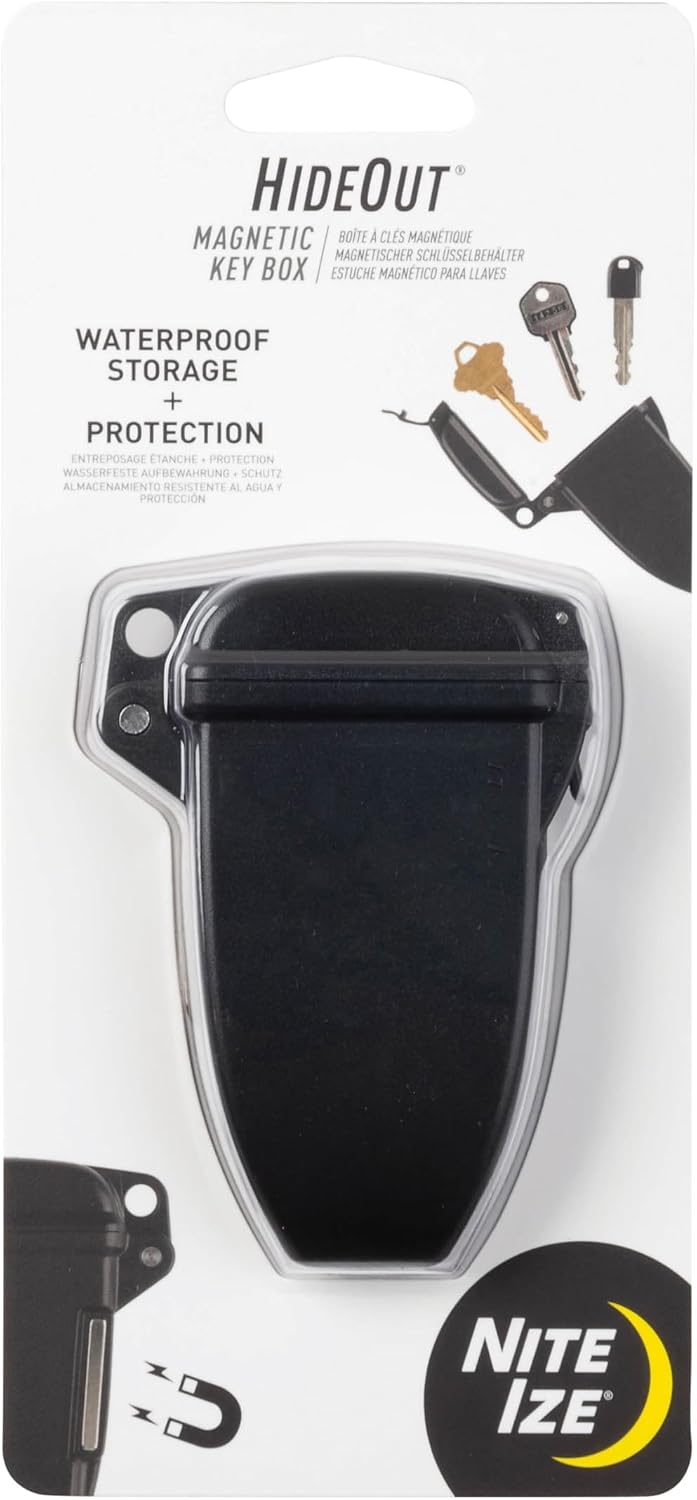
Key specs: Magnetic key hider with an IPX7 waterproof rating; powerful neodymium magnet; attaches to a steel surface; sized for keys and small items
If a magnetic case is the route you are taking, this is the one, and the reason is water. A hidden key spends months outdoors through rain, snow and temperature swings, and the common failure is not discovery — it is opening the case to find a corroded key that will not turn, or a case whose seal has failed and filled with water. The Hideout carries an IPX7 waterproof rating and uses a neodymium magnet strong enough to hold on a steel surface. That combination is what makes it still work on the night you actually need it, which is the only night it matters.
✅ Pros
- IPX7 waterproof rating — the failure mode this category actually has
- Strong neodymium magnet holds securely to steel
- Roomy enough for a key plus a small item
- Durable enough to leave outdoors for long periods
❌ Cons
- Still a hidden key, with all the structural problems above
- Needs a steel surface, which limits where it can go
- Anything magnetic is findable by someone running a hand along metal
- No access log and no way to revoke access short of retrieving it
Master Lock 207D Magnetic Key Holder — the classic, with one warning
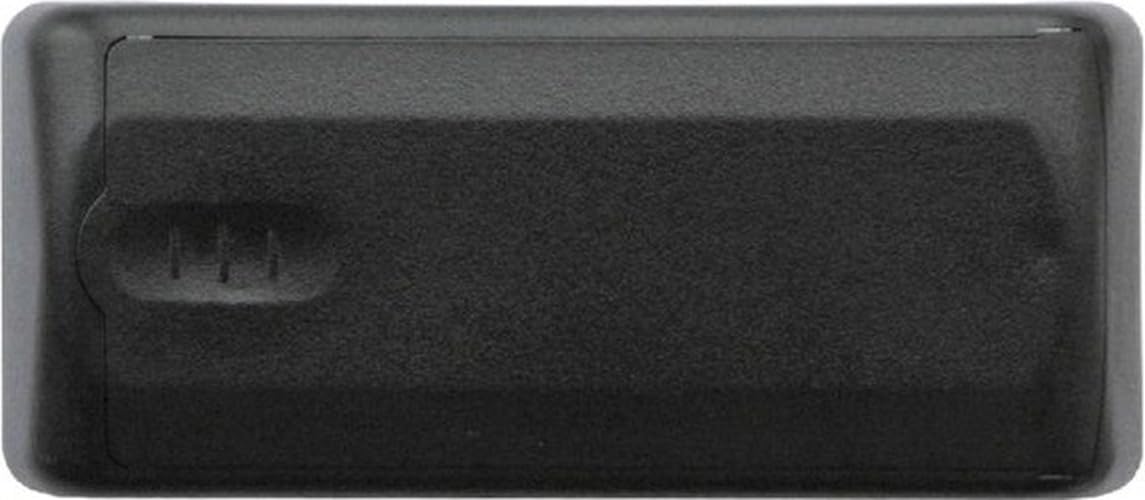
Key specs: Magnetic key holder for one to two keys; attaches to any steel surface; durable plastic body with a sliding cover that has a built-in stop so the cover cannot be dropped or lost; manufacturer states it is not intended for use on cars
The long-standing default in this category: a plastic body holding one or two keys, attaching to any steel surface, with a sliding cover that has a built-in stop specifically so the cover cannot be dropped and lost — a small detail that matters when you are opening it one-handed in the dark. The warning is worth stating plainly because it contradicts what most people use these for: Master Lock states it is not intended for use on cars. Road vibration, heat and spray are a different environment from a static steel surface, and a case that falls off in traffic has failed in the worst way.
✅ Pros
- Sliding cover with a stop so it cannot be dropped
- Established brand with published product documentation
- Attaches to any steel surface
- Simple enough that there is nothing to go wrong mechanically
❌ Cons
- Explicitly not intended for use on cars
- No stated waterproof rating, unlike the Nite Ize
- Holds only one to two keys
- Same structural problem: a found key is a copied key with no trace
The Three Better Answers
Each of these solves the underlying problem — getting someone in without you being there — rather than solving the surface problem of where to put a piece of metal.
Replace the Hidden Key Entirely
🔐 A mounted combination lockbox
- Bolted to masonry, away from the door it opens
- Access granted and revoked by changing a code
- Weather-rated with a cover over the mechanism
- Works for renters who cannot change the lock
🔢 A keypad or smart lock
- No physical key outside at all
- Codes can be issued per person and removed later
- Nothing to find, because nothing is hidden
- Needs a lock change, so usually owner-only
The lockbox route is covered in detail in our guide to key lockboxes, including the mounting decision that does most of the work. The keypad route is covered in keypad door locks, and it is the stronger answer if you own the property — a code you can delete beats a key you have to retrieve.
The third answer is the cheapest and the most overlooked, and it gets its own section because people dismiss it too quickly.
The Free Option Most People Overlook
Give the spare to a person. A neighbor you trust, a nearby relative, a friend two streets over. It costs nothing, there is no object outdoors to find, and it fails safe — if the relationship ends, you get the key back or rekey the lock, and you know you have done it.
The objection is always availability: what if they are out? That is real, and it is the reason this pairs well with a lockbox rather than competing with it. Neighbor holds the front-door key; lockbox holds a side-gate or garage key as the fallback. The high-value key is with a person and the low-value key is in the box, which is the right way round and the opposite of what most households do.
There is a second benefit that has nothing to do with keys. A neighbor who holds your spare is a neighbor who notices an unfamiliar van in your driveway, and that kind of informal watchfulness is the thing organized programs like a neighborhood watch are trying to formalize. Handing someone a key is a small act that creates a real one.
What to Actually Do
Give the spare front-door key to a trusted neighbor, and put nothing outside. That is the free answer, it removes the object entirely, and it is better than every product in this article. Do that first and see whether you have a remaining problem at all.
If you need unattended access — a cleaner, a contractor, a dog walker, or yourself after a lockout — mount a combination lockbox rather than hiding a key. It is the only option here that lets you revoke access without retrieving anything, and our lockbox guide covers which to buy and where to put it.
If you are going to hide one regardless, buy the Nite Ize Hideout for its waterproof rating, put it well away from the door on a steel surface, and make it a key to a gate or shed rather than the house. That is the least-bad version of an approach we would rather you skipped.
What would change this: if you own the property and can change hardware, none of the above is the right long-term answer. A keypad lock removes the hidden key, the lockbox and the neighbor dependency in one purchase, and the ongoing ability to issue and delete codes is worth more than any hiding place.
SafeBode does not yet run an in-house product testing program. This guide is built from manufacturer specifications, official support documentation, current retail listings and verified buyer feedback rather than hands-on testing, and we say so plainly rather than implying testing we have not done.
Frequently Asked Questions
Where is the safest place to hide a spare key outside?
There is no safe place, only less-bad ones. Distance from the door does more than cleverness: a key 40 feet away in a side yard sits outside the quick search that covers an entrance. Better still, do not hide one — use a mounted lockbox or leave it with a neighbor.
Do burglars really check under the doormat?
It is the single most predictable spot, and the reason is structural rather than anecdotal: a hidden key must be quick for you to reach, which forces it near the door, which is exactly where anyone looking would start.
Are fake rocks any good for hiding keys?
They work by blending in, so they only work where there is something to blend into. In a tidy front garden a single plastic rock stands out rather than disappearing. They are better than a bare key and much worse than a lockbox.
Is a magnetic key holder safe to use on a car?
Master Lock explicitly states its magnetic key holder is not intended for use on cars. Vibration, heat and road spray are a harsher environment than a static steel surface, and a case that detaches while driving fails in the worst possible way.
What is better than hiding a spare key?
In order: give it to a trusted neighbor, fit a keypad or smart lock so there is no physical key at all, or mount a combination lockbox. All three let you control access in a way a hidden key never does.
Can I keep a spare key in my mailbox?
It is a standard place to check, so it offers very little concealment. In the U.S. a residential mailbox is also intended for mail rather than for storage, which is another reason to choose somewhere else.
How do I let a cleaner or contractor in without giving them a key?
A mounted combination lockbox with a code you change afterwards, or a keypad lock with a code issued to that person and deleted when the job ends. Both give you a revocable permission rather than a copy of your key.
Will a hidden key affect my home insurance?
Policies vary and this is worth checking with your own insurer rather than assuming. The general principle insurers care about is whether entry was forced, and a key left outside can complicate that question.
What key should I put in an outdoor box if I use one?
The lowest-consequence one that still solves your problem — a side gate, a garage side door, a shed. Putting a front-door key in a box mounted near the front door concentrates all of the risk in one small object.
Sources
Show sources (3)
- [1] Master Lock — Support and product documentation, www.masterlock.com/support
- [2] Master Lock — 207D Magnetic Key Holder, current retail listing specifications (ASIN B003WXGLS2)
- [3] Nite Ize — Hideout Magnetic Key Box, current retail listing specifications (ASIN B078KXVXFR)


