How to Build a Home Fire Escape Plan Your Family Will Follow
Affiliate Disclosure: This article contains affiliate links. If you buy through these links, we may earn a commission at no extra cost to you. Our editorial opinions are our own and are not influenced by affiliate relationships. Read our full disclosure policy →
Contents
Quick Answer
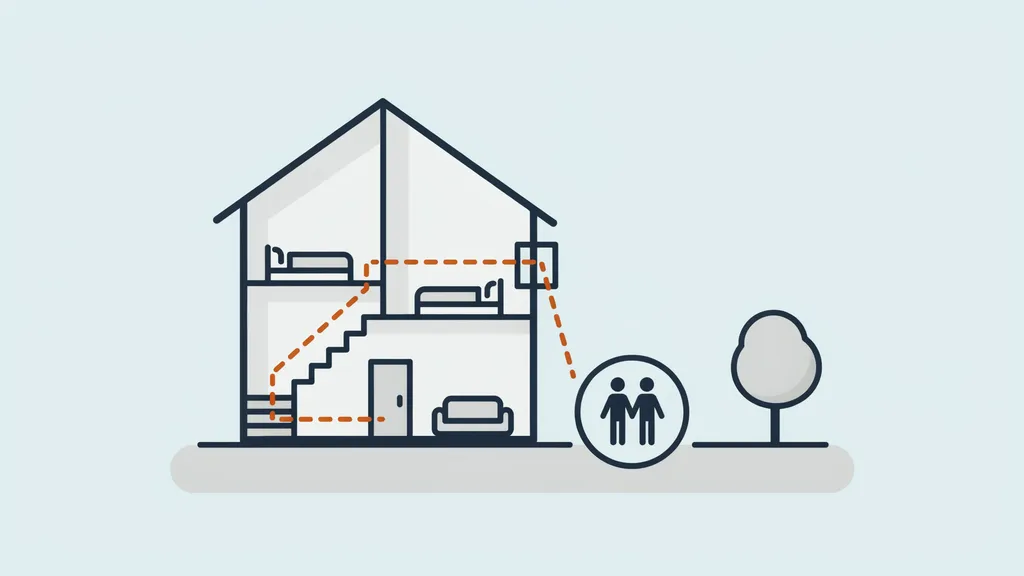
Draw a floor plan, mark two ways out of every room, pick one meeting place in front of the house, and practice it with everyone who lives there. That is the entire plan, and it takes an evening. The reason to do it rather than assume you would improvise: residents could have less than two minutes to escape a home fire once the smoke alarm sounds. Two minutes is not enough time to make decisions — it is only enough time to execute ones you already made.
The Number That Should Shape the Whole Plan
Most people picture a house fire as something that grows over ten or fifteen minutes, giving you time to gather people, find shoes, grab a laptop. The U.S. Fire Administration’s own figure is that residents could have less than two minutes to escape once the smoke alarm sounds, and that it takes only minutes for thick, black smoke to fill a home.
Sit with what two minutes actually rules out. It rules out getting dressed. It rules out going upstairs to check on someone if you are downstairs, which is the instinct that gets people killed. It rules out finding a phone. Most importantly, it rules out working anything out on the spot — you cannot reason your way through an unfamiliar dark hallway full of smoke in the time available.
The Constraints You Are Planning Against
Under 2 min
possible escape time once the alarm sounds
Minutes
for thick black smoke to fill a home
#1
cooking is by far the leading cause of home fires
2 ways
out of every room, per fire authority guidance
A plan is not about being organized. It is about removing decisions from a window too short to make them in.
This is also the honest answer to “do I really need to write this down?” You do not need the paper. You need the thinking to have already happened, and writing it down is simply the cheapest way to force that thinking and to make it shared rather than private.
Why Most Escape Plans Fail
Households that have a plan often still have a bad one, and the failure modes are predictable. Almost all of them come from planning for the convenient case.
The Difference Between a Plan and a Real Plan
❌ What most people have
- One route: down the stairs and out the front door
- A vague idea of meeting “outside” somewhere
- It exists in one adult’s head and has never been said aloud
- Never rehearsed, so nobody has walked it in the dark
✅ What the guidance actually asks for
- Two ways out of every room
- One specific meeting place in front of the home
- Practiced with everyone who lives in the home
- Rehearsed as a drill, so the route is muscle memory
The single-route problem is the big one. A plan that depends on the staircase assumes the fire is not between you and the staircase — and a stairwell is exactly where smoke and heat go first, because both rise. The second route from an upstairs room is almost always a window, and that is precisely why escape ladders exist as a product category. Buying one and leaving it in a closet is not a plan; storing it in the room it serves, and having someone actually deploy it once, is.
Building the Plan, Room by Room
The Evening It Takes
1
Sketch the floor plan
One rough drawing per level. It does not need to be to scale. Mark every door and every window, because windows are your second exits.
2
Mark two ways out of every room
The door, and one alternative — usually a window. Walk into each room and physically check the second one opens.
3
Choose one outside meeting place
In front of the home, so arriving firefighters can see you. One place, named, not “the yard.”
4
Practice the drill with everyone
Run it with every person who lives there. A route nobody has walked is a route nobody will follow.
Adapted from the U.S. Fire Administration’s home fire escape plan guidance.
Two details make the difference between a drawing and a working plan. First, actually open the second exits while you are there. Windows painted shut, storm windows nobody can work, security bars with no interior release, a stuck screen — these are discovered either on a calm Tuesday evening or at 3am in smoke, and there is no third option. If your windows have security bars, confirm every one on a bedroom has a quick-release mechanism that a person can operate from inside in the dark.
Second, assign responsibility for anyone who cannot get themselves out. Small children, anyone with limited mobility, anyone who sleeps deeply enough that an alarm may not wake them. Name the specific person who collects them and the specific route they take. “Someone will grab the baby” is how two adults both assume the other did.
The Meeting Place Is the Part People Skip
It sounds like the least important line in the plan and it is arguably the most. The fire authority’s instruction is specific: choose an outside meeting place in front of your home, go there, and stay there.
The reason it matters is what happens without one. People get out through different exits, end up on different sides of the house in the dark, cannot see each other, and conclude somebody is still inside. That conclusion produces the single most dangerous act in a house fire, which is a person going back in. A named meeting place is the mechanism that lets you confirm everyone is out within seconds rather than guessing.
Make it specific and permanent — the mailbox, the neighbor’s driveway, a particular tree. “Out front” is not a meeting place. And put it far enough from the building to be clear of falling debris and firefighting activity, but close enough that a child can get there alone and recognize it in the dark.
Practicing It Without Terrifying Anyone
The guidance says to practice your home fire drill with everyone in the home, and this is where most households quietly stop. It feels dramatic, and nobody wants to frighten a five-year-old. But an unpracticed route is a theory, and the point of the drill is not fear — it is boredom. You want the route to feel so familiar that it needs no thought.
Frame it as a game with young children and a timing exercise with older ones. Do it in daylight the first time so nobody is scared, and then once with the lights off, because that is the version that matters and it is the one that surfaces problems — a route that is obvious in daylight can be genuinely confusing in the dark. Have everyone touch the meeting place, not just head vaguely outside.
Twice a year is a reasonable cadence, and pairing it with something you already do semi-annually helps it actually happen. Clock changes work well, and they are already the traditional prompt for checking alarms — which is a good moment to also confirm whether your smoke alarms are past their replacement date, since the plan depends entirely on getting the warning in the first place.
The Rooms That Break the Plan
Every house has at least one room where “two ways out” is genuinely hard. Work these out in advance rather than discovering them during the drill and moving on.
| The problem room | Why the standard plan fails | What to do instead |
|---|
| Upstairs bedroom, no safe drop | The window is the second exit, but the drop is too far | A stored escape ladder in that room, deployed once so someone has done it |
| Basement bedroom | The only stairway leads up into the fire; egress windows may be small or high | Confirm the egress window opens fully and something to climb on is kept below it |
| Room with security bars | Bars that need a key, or none, make the second exit fictional | Interior quick-release on every sleeping-room window, tested by each occupant |
| Interior room with one door | There is genuinely no second exit | Plan to close the door, seal the gap, and signal from a window — and prioritize alarms outside that room |
| Anyone who cannot self-evacuate | The plan assumes everyone moves independently | A named person, a named route, rehearsed — not a general assumption |
The last row is worth dwelling on if it applies to your household, because it changes the timing of everything else. Two minutes assumes a person who wakes, stands and walks. If someone in the house needs assistance, the realistic plan may be to position that person’s bedroom nearer an exit rather than to plan a longer carry.
What Changes at Night
Almost every serious residential fire scenario is a night scenario, and several things about the plan change once everyone is asleep.
Sleeping with bedroom doors closed genuinely slows fire and smoke entering the room, which buys time on the same two-minute clock. It also means the person inside will not hear a hallway alarm as clearly, which is the argument for alarms inside sleeping rooms and for interconnected alarms — the topic covered in smoke alarm placement and interconnection. A closed door is a good idea only if the warning still reaches the person behind it.
The other night-specific rule: before opening any door, check it. If the door or handle is hot, or smoke is coming under it, use your second exit instead. That single check is the reason two ways out of every room is the rule rather than a suggestion — the plan has to survive discovering the primary route is unusable.
What Happens Once Everyone Is Out
Go to the meeting place and stay there. Call the fire department from outside, and tell them if someone is trapped in the building. Those three instructions carry more weight than they look.
“Stay there” is the load-bearing part. Once you are out, the correct action is to remain out, even if something valuable is inside, even if a pet is unaccounted for. Firefighters arriving at a scene need to know whether anyone is inside, and a household milling around the building makes that impossible to establish quickly. It is also why the meeting place belongs in front of the home — so the people arriving can see you immediately and get the count.
Telling the fire department someone is trapped, and where, is genuinely actionable information that changes what they do first. Knowing which room, from a plan you drew, is dramatically more useful than “upstairs somewhere.”
What to Actually Do
Tonight: sketch each floor, mark two ways out of every room, and name one meeting place in front of the house. That is the whole thing, and it is the version the U.S. Fire Administration actually asks for. Do not wait until you have bought anything — the plan is free and it is the part that saves people.
This week: walk it with everyone who lives there, once in daylight and once with the lights off. The dark run is the one that finds the painted-shut window and the child who heads for the front door regardless. Fix what it surfaces rather than noting it.
Then, and only then, buy hardware to close the gaps the drill exposed. An escape ladder for the upstairs room with no safe drop. Replacement alarms if yours are aging. A quick-release on barred windows. Buying first and planning later is the common order and the wrong one — you end up owning equipment for problems you did not confirm you have, and none for the ones you do.
What would change this advice: if your household includes anyone who cannot evacuate unaided, build the plan around that person first rather than adding them to a plan designed for everyone else. Room position, route length and who is responsible all follow from that constraint, and retrofitting it onto a finished plan tends to produce something nobody has genuinely tested. The same logic applies to a fire extinguisher kept somewhere only one adult can reach — equipment nobody else can use is equipment the plan cannot rely on.
SafeBode does not yet run an in-house product testing program. This guide is built from manufacturer specifications, official support documentation, current retail listings and verified buyer feedback rather than hands-on testing, and we say so plainly rather than implying testing we have not done.
Frequently Asked Questions
How much time do you have to escape a house fire?
The U.S. Fire Administration states residents could have less than two minutes once the smoke alarm sounds, and that thick black smoke can fill a home in minutes. That window is short enough that the plan has to be decided in advance rather than improvised.
How many exits should each room have?
Two. The fire authority’s guidance is two ways out of every room — normally the door plus a window. A plan that relies only on the staircase fails exactly when smoke and heat make the staircase unusable, which is early.
Where should the family meeting place be?
Outside and in front of your home, so that arriving firefighters can see you. Make it specific — the mailbox, a particular tree — rather than “out front,” and make it somewhere a child can find alone in the dark.
How often should we practice the fire drill?
Twice a year is a workable cadence, and tying it to the clock changes makes it likely to actually happen. Practice at least once with the lights off, because a route that is obvious in daylight can be confusing in darkness.
Should bedroom doors be open or closed at night?
Closed. A closed door slows fire and smoke entering the room and buys time. The trade-off is that a hallway alarm is harder to hear, which is the argument for alarms inside sleeping rooms and for interconnected alarms.
What if a room only has one exit?
Plan for it explicitly rather than pretending otherwise: close the door, seal the gap along the bottom, and make yourself visible at a window. Prioritize alarm coverage outside that room so the occupant gets the earliest possible warning.
Should I go back in for a pet?
No. Once you are out, stay out, and tell the fire department what is still inside when they arrive. Going back in is the single most dangerous action in a house fire and it is what the meeting-place rule exists to prevent.
Do I need to write the plan down?
The paper matters less than the thinking, but writing it forces the thinking to happen and makes it shared rather than living in one adult’s head. A rough sketch per floor with exits marked is enough.
What should children be taught specifically?
Their two ways out, the meeting place, and that they go there rather than hiding or looking for a parent. Hiding is a common instinct in young children and it is the one the drill exists to overwrite.
Sources
Show sources (3)


