Smoke Alarms for Deaf and Hard of Hearing Households: Strobes, Bed Shakers and Interconnection
Affiliate Disclosure: This article contains affiliate links. If you buy through these links, we may earn a commission at no extra cost to you. Our editorial opinions are our own and are not influenced by affiliate relationships. Read our full disclosure policy →
Contents
Quick Answer
A standard smoke alarm alerts through one channel – sound – and if that channel does not reach someone, the alarm has failed for them regardless of how loud it is. The U.S. Fire Administration notes that alarms exist for people with hearing loss, using strobe lights that flash and vibration to alert those who cannot hear a standard alarm. Start with a hardwired strobe smoke alarm in the sleeping area, wired into the same interconnected ring as the rest of the house, so a fire anywhere produces a visual alert where the person actually is.
Why a Louder Alarm Is Not the Answer
The instinct is to buy the loudest alarm available. It does not work, and it is worth understanding why before spending anything. Hearing loss is not uniform across frequencies – it commonly affects some pitches far more than others – so a louder version of a tone someone cannot hear well is still a tone they cannot hear well. Volume is the wrong axis.
There is also a ceiling on how far volume can usefully go. The NIDCD notes that long or repeated exposure at or above 85 A-weighted decibels can cause hearing loss, and that the louder the sound, the shorter the time it takes. Residential alarms already sit well above that during an event, which is appropriate for a brief emergency but means “just make it louder” is not an open-ended strategy.
The correct move is a different channel entirely: light, or vibration, or both. That is what the USFA describes when it says alarms for people with hearing loss may have strobe lights that flash and vibrate – not a louder alarm, a differently-shaped one.
Three Alerting Channels, and Which One You Need
Which combination you need depends less on a diagnosis than on two practical questions: what reaches the person while they are awake, and what reaches them while they are asleep. Those are often different answers, and the sleeping one is the one that matters most.
The three channels
1
Sound
The default. Useful for anyone with residual hearing in the alarm’s frequency range, and for everyone else in the household.
2
Light
A high-intensity strobe. Works well in a room someone is awake in, and works through closed eyelids far less reliably than people assume.
3
Vibration
A shaker under a mattress or pillow. This is the channel that actually wakes a sleeping person who cannot hear the alarm.
Most households need sound plus light throughout, and vibration specifically in the bedroom. Light alone in a bedroom is the most common gap.
Matching the channel to the situation
Strobe alone is usually enough for
- Living areas, kitchens and hallways
- Someone who is awake and in the room
- A workshop or garage with the door open
- Households where one person can hear and one cannot
Vibration is needed for
- Any bedroom where someone who cannot hear the alarm sleeps
- Households where everyone present has significant hearing loss
- Someone who removes hearing aids or a cochlear processor at night
- Anyone who sleeps deeply enough that light alone will not wake them
The Part That Actually Matters: Everything Has to Link
This is the single most important design decision and the one most often got wrong. The USFA recommends alarms be interconnected so that when one sounds, they all sound. In a household relying on visual or tactile alerting, that recommendation stops being a convenience and becomes the whole architecture.
Consider what happens without it. A fire starts in the kitchen. The kitchen alarm sounds. The person asleep in the back bedroom – who cannot hear it – has a strobe alarm on their own ceiling that has detected nothing and therefore does nothing. The alerting device is in the right place and is completely silent, because it has no idea anything is happening elsewhere.
Interconnection is what fixes that: any alarm detecting anything triggers every alarm, including the strobe over the bed. That is why the picks below are hardwired units rather than battery ones – they can join an existing interconnected ring. Our guide to smoke alarm placement and interconnection covers how that ring should be laid out across a house.
One practical constraint from the same guidance: the USFA states that only qualified electricians should install hardwired smoke alarms. Swapping a compatible unit onto an existing harness is ordinary homeowner work; adding a hardwired strobe where no wiring exists is not, and the interconnect wiring is exactly the part that has to be right.
The Three Picks Side by Side
| Device | Detects | Alerts by | Power | Best for |
|---|
| BRK 7020BSL | Smoke | Sound and integrated LED strobe | Hardwired | The main alerting alarm in a sleeping area |
| BRK 7030BSL | Smoke and carbon monoxide | Sound and integrated LED strobe | Hardwired | Covering both hazards from one position |
| SLED177 | Nothing – it is an alerting device only | LED strobe | Hardwired | Adding visual alerting where an alarm’s own strobe cannot reach |
First Alert BRK 7020BSL Strobe Smoke Alarm — best overall
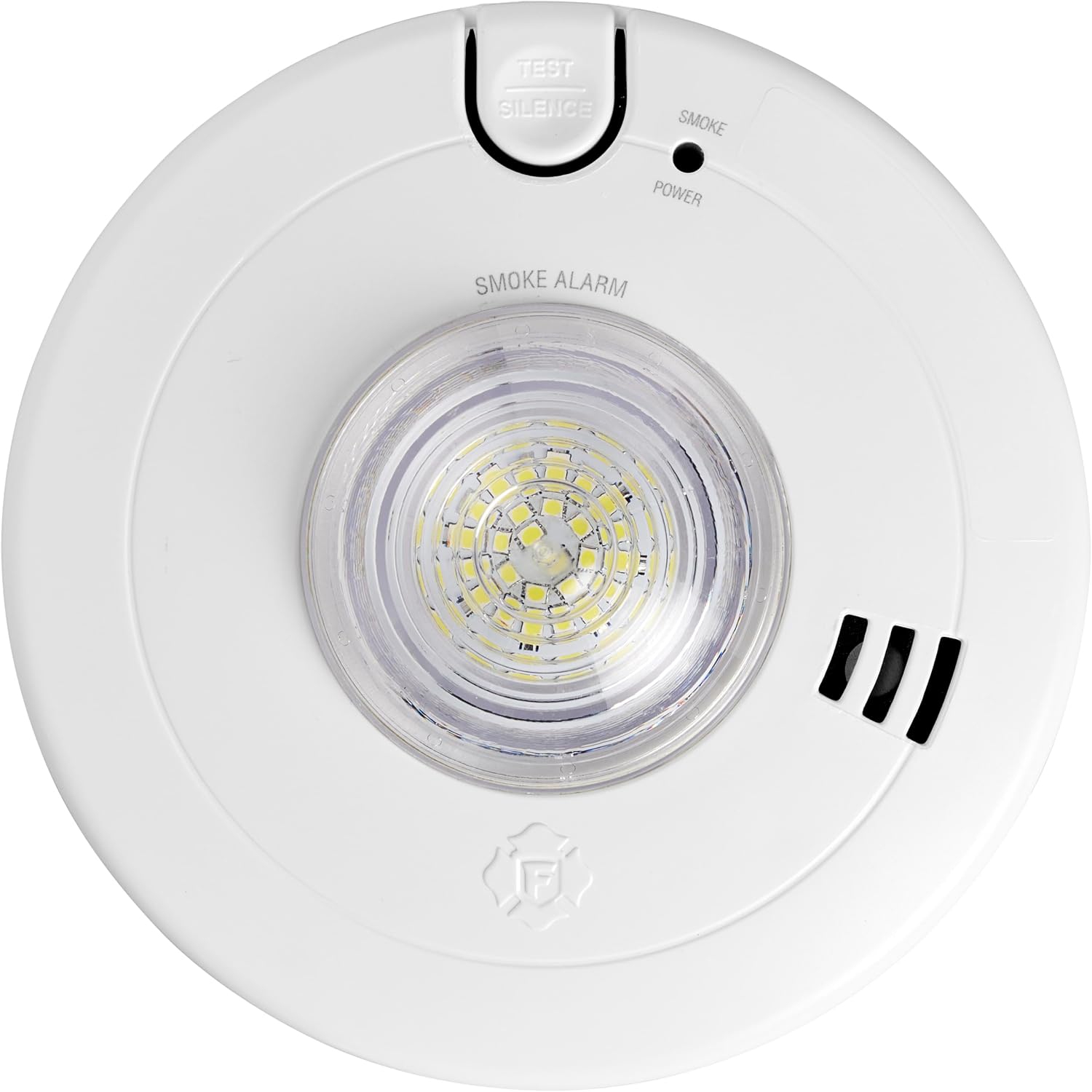
Key specs: Hardwired smoke alarm with an integrated high-intensity LED strobe; designed for households where an audible alarm alone will not wake or alert someone; supports the hardwired interconnection used across a whole house
This is the unit to build the system around. It is a hardwired smoke alarm with a high-intensity LED strobe built in, so it detects and alerts in the same device, and because it is hardwired it can sit inside the interconnected ring that the USFA recommends – which means it flashes when any alarm in the house detects smoke, not only when smoke reaches that room. That distinction is the entire point. Put one in each bedroom where someone who cannot hear a standard alarm sleeps, and treat the rest of the house’s alarms as detection feeding into it. The honest limitation is that a strobe on the ceiling is far less reliable at waking a sleeping person than it is at alerting someone awake, which is why the bed-shaker section below matters.
✅ Pros
- Detection and visual alerting in one hardwired unit
- Joins an existing interconnected ring, so it responds to any alarm
- High-intensity strobe rather than a small indicator LED
- Standard hardwired mounting, so it replaces an existing alarm position
❌ Cons
- Hardwired installation – qualified electrician territory for new wiring
- Smoke only, no carbon monoxide detection
- A ceiling strobe is unreliable at waking a deeply asleep person
- No vibration channel on its own
First Alert BRK 7030BSL Strobe Smoke and CO Alarm — when CO coverage is needed too
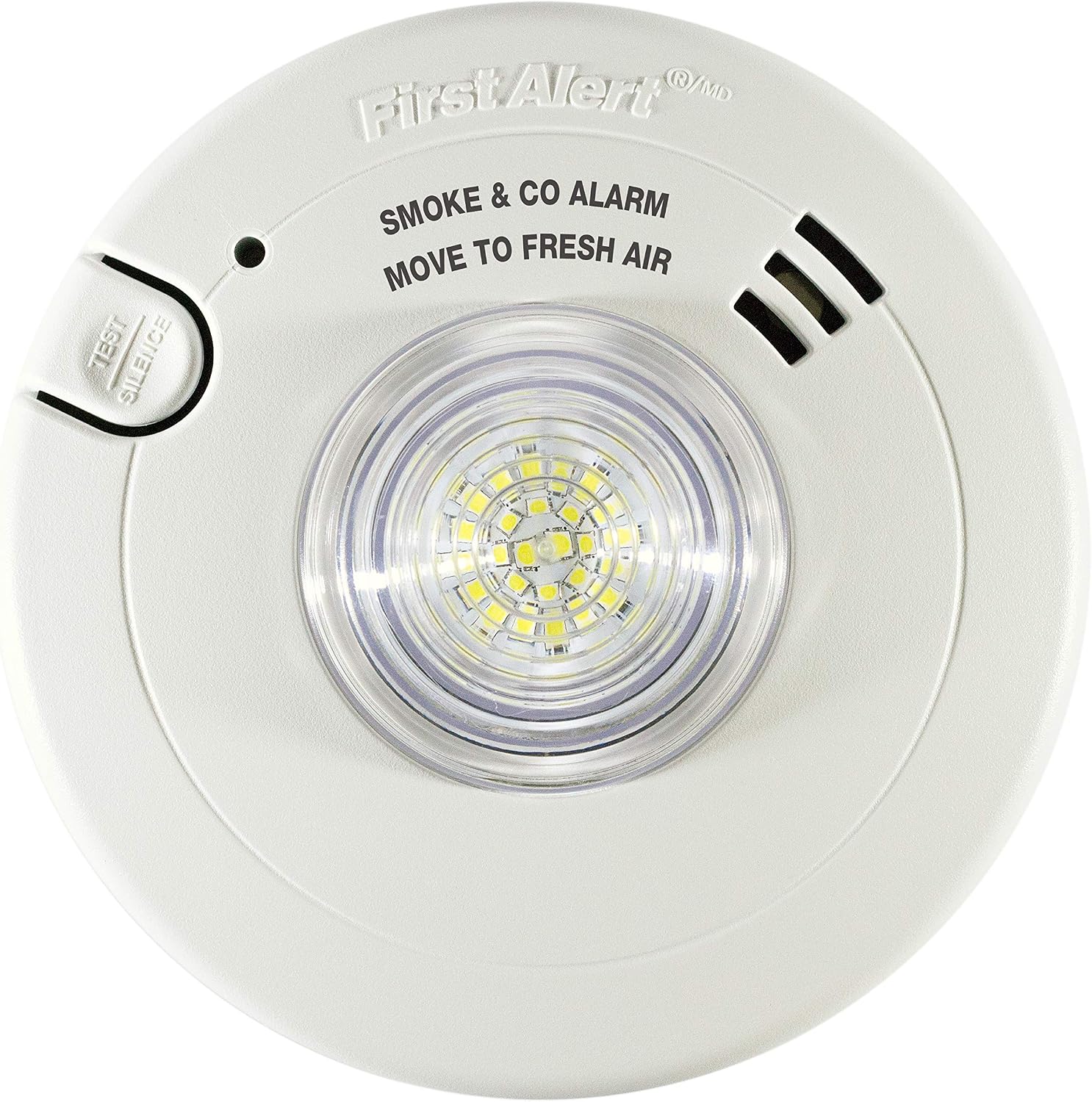
Key specs: Hardwired combination smoke and carbon monoxide alarm with an integrated LED strobe; covers both hazards from one position while providing the visual alert a standard combination unit does not
The same idea with carbon monoxide detection added, which matters more than it might seem in this specific context. Carbon monoxide gives no sensory warning at all – it is odorless and colorless – so the alarm is the only signal available, and in a household where the audible channel does not work, a CO alarm without a visual output is close to no CO alarm. This unit puts both detectors and the strobe in one hardwired position. If you are replacing a combination alarm and the household needs visual alerting, this is the direct equivalent rather than an upgrade. Our carbon monoxide detector guide and piece on what to do when a CO alarm sounds cover the CO side in more depth.
✅ Pros
- Covers smoke and CO with a visual alert on both
- Hardwired, so it interconnects with the rest of the house
- One position instead of two devices
- The right replacement for an existing combination alarm
❌ Cons
- Smaller review base than the smoke-only version
- Combination units have two end-of-life schedules to track
- Hardwired installation constraints apply
- Still a ceiling strobe, with the same waking limitation
First Alert SLED177 Hardwired Strobe Light — for filling a visual gap
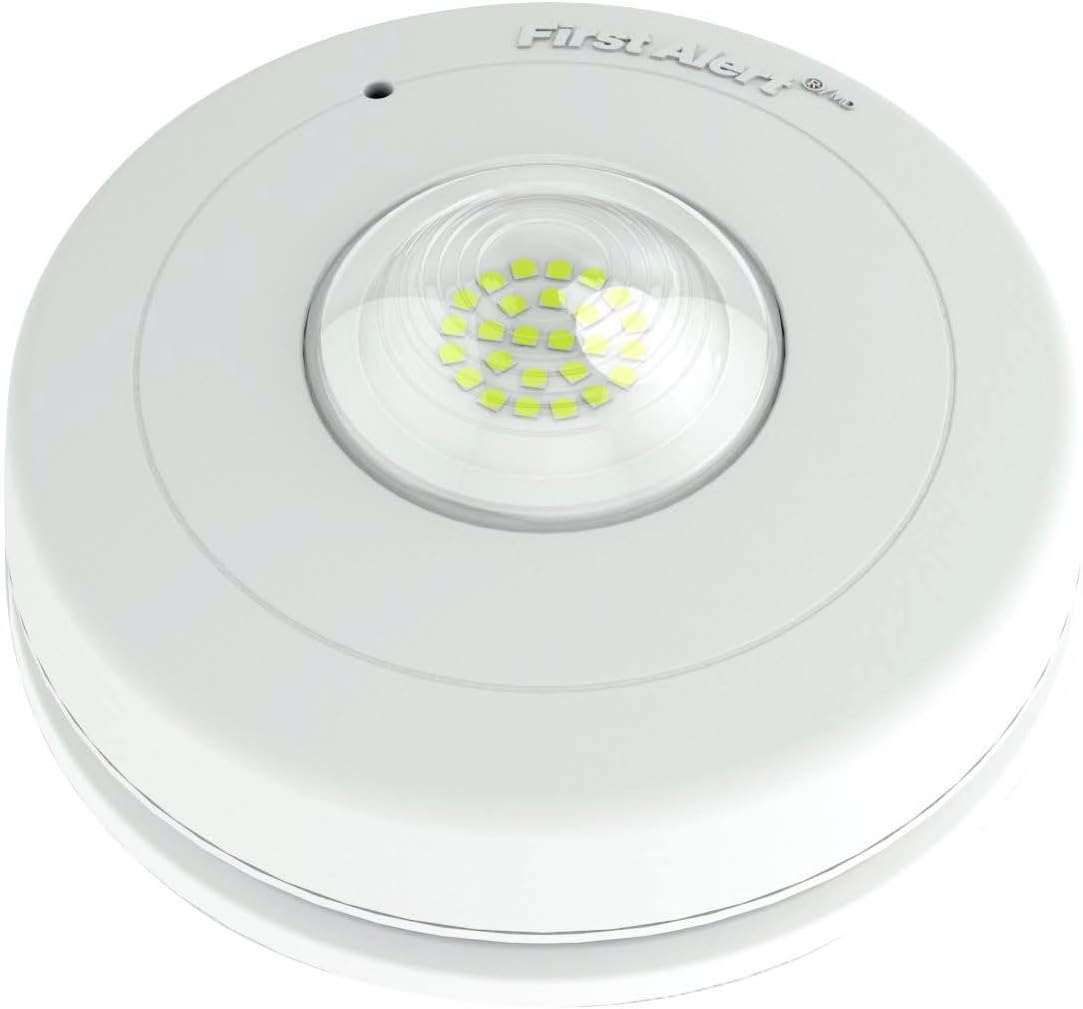
Key specs: Standalone hardwired strobe that adds a visual alert at a location where the existing alarm has none; used to extend visual coverage into rooms an alarm’s own strobe cannot reach
This one detects nothing. It is a hardwired strobe whose job is to put a visual alert somewhere an alarm’s own strobe cannot reach – a room where the alarm is around a corner, a long hallway, a basement workshop, a bathroom where somebody spends time with the door closed. Being explicit about what it is not: buying this instead of a strobe alarm leaves you with alerting and no detection at that location, which is the wrong way round. Buy it in addition to alarms, never instead of them. Used correctly it is the cheapest way to close the specific gap where somebody is reliably out of sight of every existing strobe.
✅ Pros
- Adds visual alerting to a location that has none
- Hardwired, so it responds with the interconnected system
- Cheaper than adding a whole strobe alarm to a room already covered by detection
- Useful for rooms where the alarm itself is not in line of sight
❌ Cons
- Detects nothing – it is an output device only
- Must be added to a system, never used as the system
- Hardwired installation required
- Very small review base
About Bed Shakers – Read This Before Buying One
This is where households most often spend money on the wrong thing, so it is worth being precise. Search for a bed shaker and most results are alarm clock accessories – vibrating pads that connect to a clock or a phone and wake you at a set time. They are genuinely useful products and they have nothing to do with your smoke alarm.
A bed shaker that serves a fire-safety purpose has to be triggered by the smoke alarm system, not by a clock. That means it is part of an alerting system designed for the purpose, where a detector firing anywhere in the house causes the shaker under the mattress to activate. If a shaker cannot be triggered by your alarms, it will sit there quietly during a fire and vibrate reliably at 7am the next morning.
What to check before buying any alerting device
Triggered by?
A clock or phone, or the smoke alarm system – only one of these helps
Interconnected?
Does it respond to any alarm in the house, or only one
Detection or alerting?
A strobe alone detects nothing – it needs an alarm feeding it
Bedroom covered?
The sleeping position is where a visual-only setup most often fails
The USFA describes hearing-loss alarms as using strobes that flash and vibration. Both channels, linked to detection, is the shape to aim for.
The practical recommendation, stated plainly: buy the strobe alarms first because they are straightforward and they interconnect, then source vibration alerting as part of a system built for it rather than as a consumer accessory. If you are unsure whether a specific product qualifies, the question to ask the seller is simply what triggers it.
Where the Strobes Have to Go
Start from the standard coverage requirement and then add to it. The USFA’s baseline is alarms inside every bedroom, outside each separate sleeping area, and on every level of the home including the basement, interconnected so that when one sounds they all sound. Every one of those positions needs detection. Not all of them need a strobe.
The positions that do need visual alerting are wherever the person who cannot hear the alarm spends time: their bedroom above all, then the rooms they use alone with the door closed – a bathroom, a home office, a basement workshop. A strobe in a hallway does nothing for someone behind a closed door, which is the most common layout error.
Worth knowing about closed doors generally: the USFA notes that a closed door may slow the spread of smoke, heat and fire, which is why it recommends alarms inside as well as outside sleeping areas. That same closed door is what blocks light from a hallway strobe. The door is helping and hindering at once, and the resolution is a device inside the room. Our guide to alarm lifespan covers where alarms belong generally, and our guide to sealed-battery alarms explains the sealed-battery designs you might use elsewhere in the house.
The Escape Plan Does More Work Here
Every household should have a fire escape plan; in this one it carries more weight, because the ordinary backup – somebody shouting – may not be available. The USFA’s guidance is to draw a map of the home including all doors and windows, make sure they are not blocked, and practise the drill with everyone in the home, noting that residents may have less than two minutes to escape once the alarm sounds.
Two additions worth making to a standard plan. Agree a visual or tactile signal between household members so one person can alert another without relying on sound. And decide in advance who checks on whom, because the default assumption that everyone will hear the alarm and self-evacuate does not hold.
The USFA also publishes fire-safety material aimed specifically at people with disabilities, noting that physical disability was the second leading human factor contributing to fatalities in residential buildings, at 30%%, citing its own analysis of civilian fire fatalities in residential buildings for 2017 to 2019. That statistic is about physical disability rather than hearing loss specifically, so we are not going to stretch it – but it is the clearest available evidence that alerting and evacuation planning built around individual circumstances is not an optional refinement.
Final Recommendation
Put a First Alert BRK 7020BSL strobe smoke alarm in each bedroom where someone who cannot hear a standard alarm sleeps, and wire it into the same interconnected ring as the rest of the house. The interconnection is the part that matters most: without it, a strobe over the bed only flashes if smoke reaches that specific room, which defeats the purpose.
Use the BRK 7030BSL instead wherever you also need carbon monoxide coverage, which is most positions on a level with fuel-burning appliances – a CO alarm with no visual output is close to useless in this household. Add the SLED177 only to close a specific visual gap in a room that already has detection, never as a substitute for an alarm.
What would change this: a ceiling strobe is much better at alerting someone who is awake than at waking someone who is asleep, so if the person you are protecting sleeps deeply or removes hearing aids at night, treat the strobe alarms as the foundation and add vibration alerting on top. Make sure whatever you buy for that is triggered by the smoke alarm system rather than by a clock or a phone – that single question separates a fire-safety device from an alarm-clock accessory. And if any part of this requires new wiring, the USFA’s position is that hardwired alarms are electrician work.
SafeBode does not yet run an in-house product testing program. This guide is built from manufacturer specifications, official support documentation, current retail listings and verified buyer feedback rather than hands-on testing, and we say so plainly rather than implying testing we have not done.
Frequently Asked Questions
Will a louder smoke alarm help someone with hearing loss?
Usually not. Hearing loss often affects some frequencies far more than others, so a louder version of a tone that is hard to hear is still hard to hear. The productive change is a different alerting channel – light or vibration – rather than more volume.
Does a strobe alarm wake a sleeping person?
Less reliably than people expect. A strobe is effective at alerting someone who is awake and in the room, and much weaker at waking someone from sleep. For a bedroom, vibration alerting linked to the alarm system is the channel that does that job.
Are ordinary bed shakers connected to smoke alarms?
Most are not. The bed shakers sold widely online are alarm clock accessories triggered by a clock or a phone. A shaker that serves a fire-safety purpose has to be triggered by the smoke alarm system itself, so the question to ask a seller is simply what triggers it.
Do I need a strobe alarm in every room?
No. Every room that needs detection needs an alarm, but visual alerting is only needed where the person who cannot hear the alarm actually spends time – the bedroom above all, then any room they use alone behind a closed door.
Why do these need to be hardwired?
Because they need to interconnect. Fire safety guidance is that when one alarm sounds they should all sound, and in this household that is what makes a strobe over the bed respond to a fire in the kitchen. A standalone battery strobe alarm only reacts to smoke in its own room.
Can I install these myself?
Swapping a compatible unit onto an existing harness is ordinary homeowner work. Fire safety guidance is that only qualified electricians should install hardwired smoke alarms, and adding new wiring or a new interconnect run falls on that side of the line.
Do strobe alarms still make a noise?
The combined units do both – they sound and they flash – which matters because other members of the household may rely on the audible channel. A standalone strobe is alerting only and detects nothing, so it always has to be added to a system rather than used as one.
What should the escape plan include that a standard one does not?
A visual or tactile way for household members to alert each other without relying on sound, and an agreed decision about who checks on whom. The standard assumption that everyone will hear the alarm and leave independently is the thing that does not hold here.
Sources
Show sources (4)


