Kidde Smoke Alarm Replacement Guide: Which Model Replaces the One on Your Ceiling
Affiliate Disclosure: This article contains affiliate links. If you buy through these links, we may earn a commission at no extra cost to you. Our editorial opinions are our own and are not influenced by affiliate relationships. Read our full disclosure policy →
Contents
Quick Answer
Match the power type, not the model number. If your old alarm is battery-only, the Kidde 20SD10-V with its sealed 10-year battery is the upgrade that ends battery chirps for good. If it is hardwired into a ring of interconnected alarms, you need a hardwired replacement like the 20SAR – a battery unit will not participate in the interconnection. And check the date on the back before buying anything: the U.S. Fire Administration says alarms need replacing 10 years from the manufacture date, which is usually why you are up the ladder in the first place.
First, Check Whether You Actually Need to Replace It
Most people arrive at this question through a chirp, and a chirp is usually a battery. Before you replace the unit, fit a genuinely new battery and vacuum the vents – dust in the sensing chamber is a common and entirely fixable cause. If that settles it, you have saved yourself a purchase.
What a new battery cannot fix is age. The USFA is direct about this: age matters, alarms need to be replaced 10 years from the manufacture date, and smoke alarms do not last forever. Turn the unit over – the date is printed on the back, and it is the manufacture date rather than the date you installed it. An alarm that passes its monthly test and is eleven years old still needs replacing, because the test button checks the electronics and the sounder, not whether the sensing chamber can still detect smoke.
Kidde publishes its own troubleshooting material covering how to tell if an alarm is working, the effects of humidity, and when to replace a carbon monoxide alarm. If your unit is chirping for reasons that are not obvious, that is the place to check your specific model before assuming it has failed. Our guide to when to replace a smoke alarm covers the general decision, and our reset guide walks through the reset procedure if you have not tried it yet.
Identify What You Have Before You Buy
Take the old alarm down before ordering. Three things on the back of it determine what you can fit, and all three take seconds to check once the unit is in your hand.
Check these three things
1
Power type
Is there a wiring harness plugged into the back, or only a battery compartment? This is the constraint that cannot be worked around.
2
Battery style
A replaceable 9-volt, replaceable AAs, or a sealed non-replaceable 10-year lithium cell. The USFA treats these as three distinct maintenance regimes.
3
Smoke only, or smoke and CO
A combination unit says so on the face. Replacing a combo with a smoke-only alarm silently removes your CO coverage at that location.
Photograph the back before you unclip anything. The mounting plate pattern also matters, and it is easier to compare from a photo than from memory in a shop.
That third check is the one that causes real problems. Carbon monoxide is odorless, colorless and toxic, and the EPA warns it can kill before you are aware it is in your home – removing a CO sensor by accident, because the replacement looked similar, is a genuinely consequential mistake.
Power Type Is the Constraint, Not the Model Number
Kidde sells many model numbers and most of the differences are cosmetic or convenience features. The one that actually constrains your choice is how the alarm gets its power, because that determines whether it can participate in an interconnected system.
The USFA recommends alarms be interconnected so that when one sounds, they all sound. In a house wired that way, every alarm is on a shared interconnect conductor. Fit a battery-only alarm into that ring and it will work perfectly as an individual alarm – and it will not tell the others anything, nor be told. You lose the feature that wakes people at the far end of the house.
| What you are removing | What you can fit | What you should not fit |
|---|
| Battery-only, replaceable 9V or AA | Any battery alarm; a sealed 10-year unit is the upgrade | A hardwired unit, unless you are adding wiring |
| Sealed 10-year battery unit | Another sealed 10-year unit, or any battery alarm | Nothing to avoid – this is the most flexible case |
| Hardwired with battery backup | A hardwired replacement, ideally the same interconnect family | A battery-only alarm – it will not interconnect |
| Combination smoke and CO | Another combination unit, so CO coverage is preserved | A smoke-only alarm, which silently removes CO detection |
| Hardwired combo in an interconnected ring | A hardwired combination unit | Any battery-only or smoke-only replacement |
One further note from the USFA that is worth respecting: only qualified electricians should install hardwired smoke alarms. Unplugging an existing harness and plugging in a compatible replacement is routine homeowner work; running new cable is not.
The Four Replacements Side by Side
| Model | Power | Detects | Voice alerts | Replaces |
|---|
| Kidde 20SD10-V | Sealed 10-year lithium | Smoke | Yes | Any battery-only smoke alarm |
| Kidde 20SAR (3 pack) | Hardwired plus AA backup | Smoke | No | Hardwired, interconnected smoke alarms |
| Kidde 30CUDR-V | AA battery | Smoke and carbon monoxide | Yes | A battery combination alarm |
| Kidde 10SDR | AA battery | Smoke | No | A battery alarm in a tight or awkward spot |
Kidde 20SD10-V Sealed 10-Year Alarm — best overall replacement
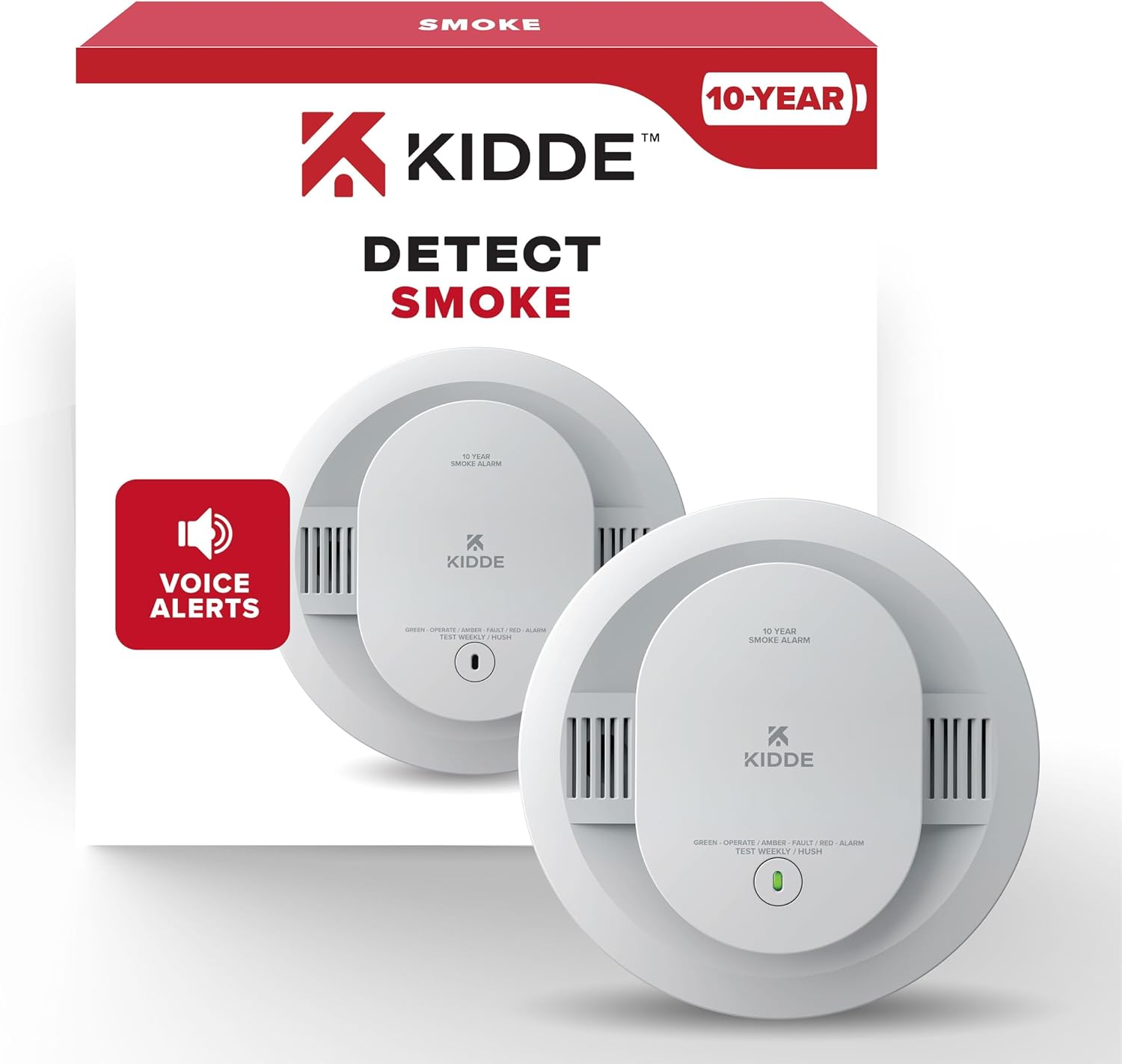
Key specs: Battery-powered smoke alarm with a sealed 10-year lithium battery and voice alerts; no battery replacement and no low-battery chirps for the life of the unit; announces the hazard rather than only sounding a tone
If your old alarm ran on a replaceable battery, this is the upgrade rather than the equivalent. The sealed 10-year lithium cell means no battery to change and no 3am low-battery chirp for the life of the unit, which matters because the USFA specifically warns that disabling an alarm or removing its battery can be a deadly mistake – and a chirping alarm at 3am is exactly the situation where people do that. The voice alerts are a genuine functional advantage rather than a gimmick: an announcement tells a half-awake household what is happening and where, which a tone cannot. The tradeoff is that when this unit reaches end of life, the whole alarm goes rather than a battery.
✅ Pros
- No battery changes and no low-battery chirps for 10 years
- Voice alerts state the hazard rather than just sounding
- Aligns neatly with the 10-year replacement rule
- Simplest possible ongoing maintenance – test monthly and leave it
- Fits any location where a battery alarm currently sits
❌ Cons
- Cannot join an existing hardwired interconnect
- Whole unit is disposable at end of life
- Smoke only – does not cover carbon monoxide
- Voice alerts are not to everyone’s taste
Kidde 20SAR Hardwired Alarm, 3 Pack — for a hardwired, interconnected house
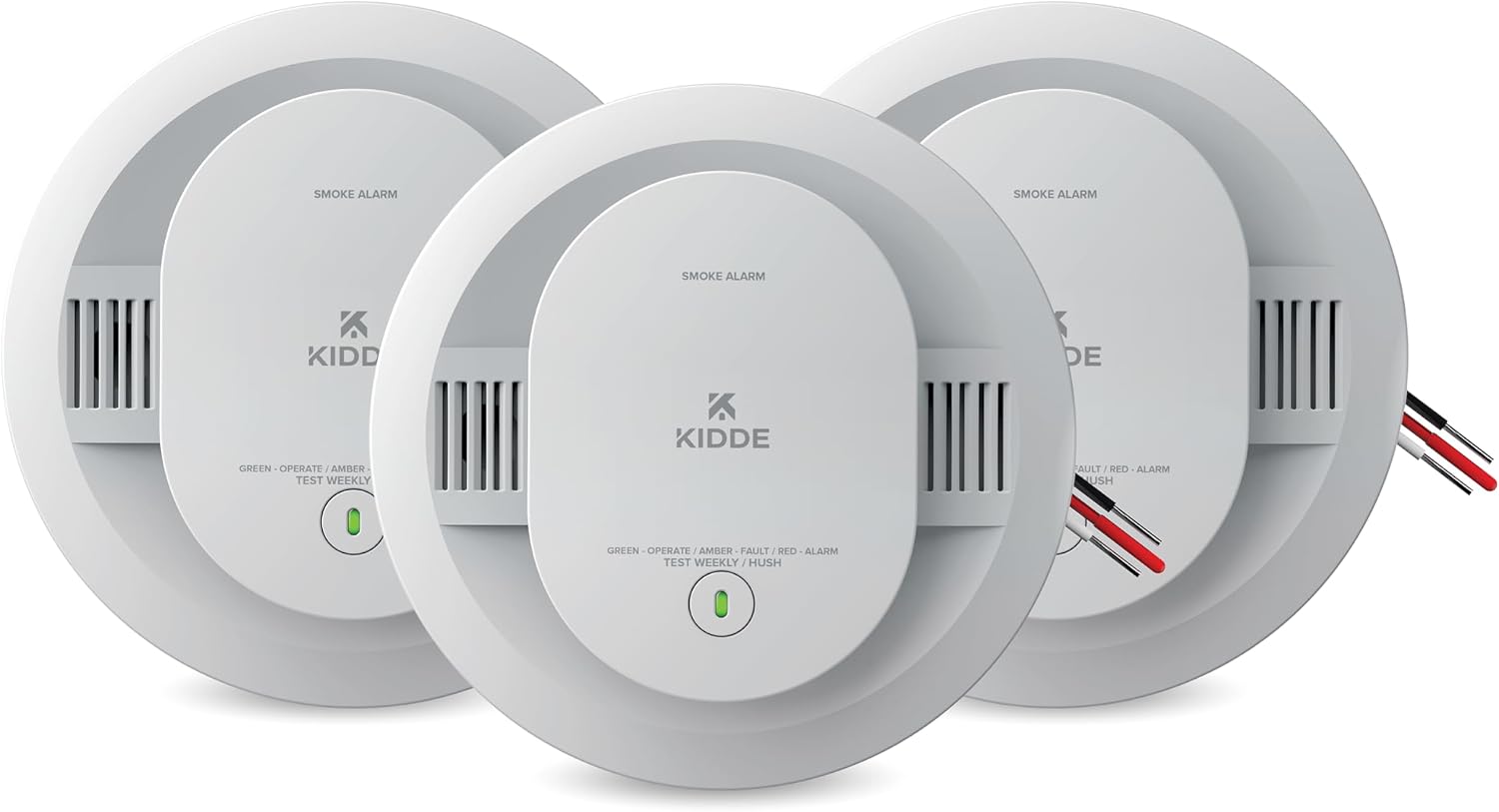
Key specs: Hardwired smoke alarm with AA battery backup, sold three to a pack; supports wired interconnection so that one alarm sounding triggers the rest; the like-for-like replacement for an existing hardwired, interconnected setup
If you pulled a wiring harness out of the back of the old alarm, this is the category you are shopping in and a battery unit is not a substitute. The 20SAR is hardwired with AA battery backup and supports wired interconnection, so one alarm detecting smoke sounds all of them – the behavior the USFA recommends. It comes three to a pack, which is the right way to buy them: alarms in a house are all the same age, so if one has reached the 10-year mark they all have, and replacing them one at a time means going back up the ladder twice more. The honest caveat is compatibility – interconnect signalling is not universal across every brand and generation, so replacing the whole ring at once avoids a problem that is tedious to diagnose.
✅ Pros
- Keeps the interconnection the USFA recommends
- AA battery backup covers a power cut
- Three per pack, matching how alarms actually age
- Direct like-for-like swap for an existing hardwired unit
❌ Cons
- Not a job for anyone uncomfortable with the wiring
- No voice alerts
- Smoke only – a combo is needed for CO coverage
- Mixing interconnect families across brands can misbehave
Kidde 30CUDR-V Smoke and CO Alarm — when you also need CO coverage
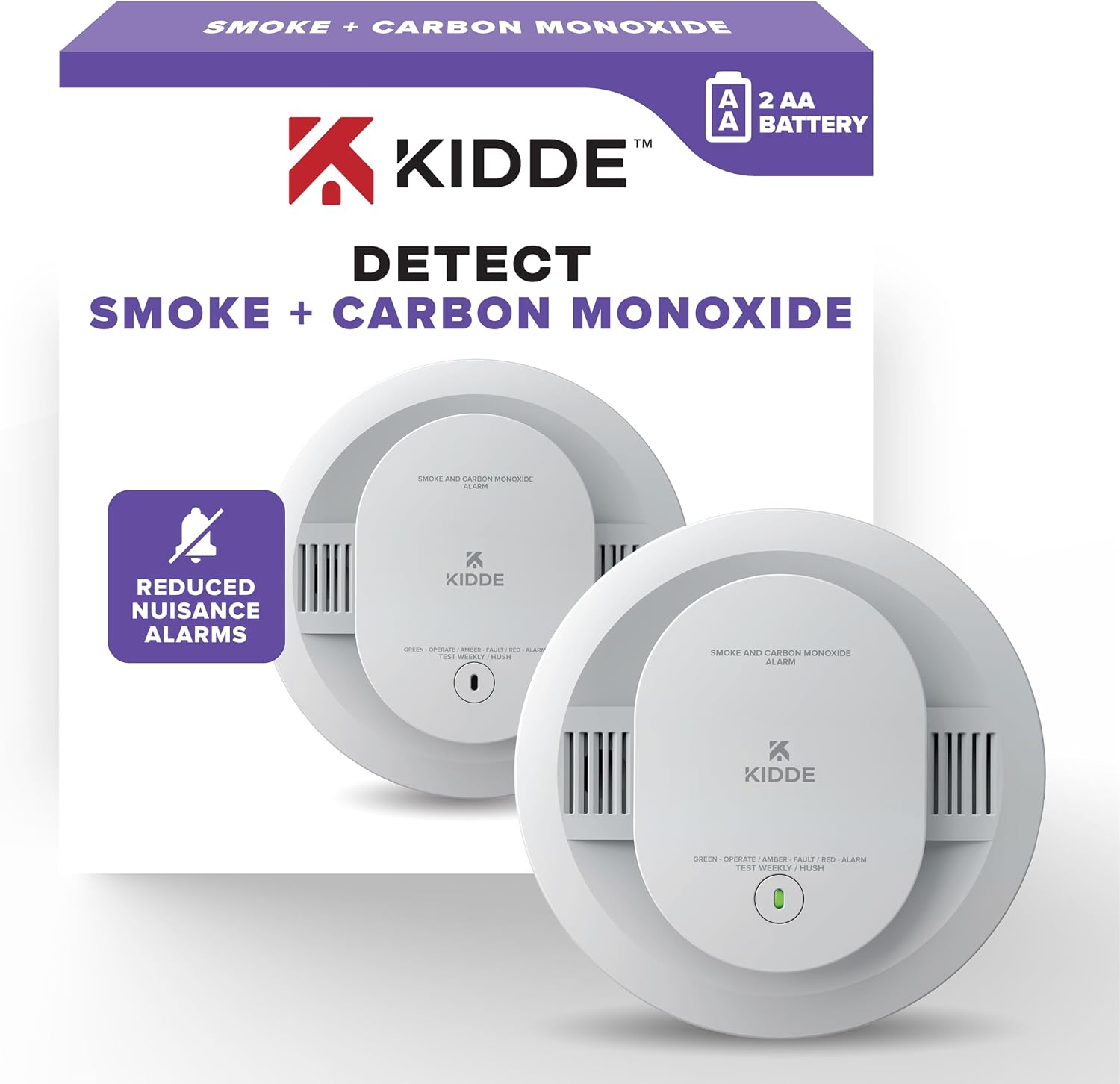
Key specs: Combination smoke and carbon monoxide alarm, AA battery-powered, with voice alerts that state which hazard was detected; covers both requirements from one mounting position
The unit to buy when the alarm you removed detected both hazards, or when you are adding CO coverage on a level that has none. It is AA battery-powered with voice alerts that state which hazard was detected – which on a combination unit is more than a convenience, because smoke and carbon monoxide call for completely different responses. Smoke means get out and check; CO means get out, call from outside, and do not go back in, since the EPA notes CO is odorless, colorless and can kill before you are aware of it. An alarm that tells you which one it found is genuinely safer than one that beeps. Kidde publishes separate end-of-life guidance for carbon monoxide alarms, worth checking for your model.
✅ Pros
- Covers both hazards from one mounting position
- Voice alerts distinguish smoke from CO – a real safety difference
- AA batteries are cheap and available anywhere
- Avoids accidentally dropping CO coverage in a swap
❌ Cons
- Replaceable batteries mean low-battery chirps return
- Battery-only, so it cannot join a hardwired interconnect
- CO sensors have their own end-of-life schedule to track
- Larger than a smoke-only unit
Kidde 10SDR Compact Alarm — for awkward spots
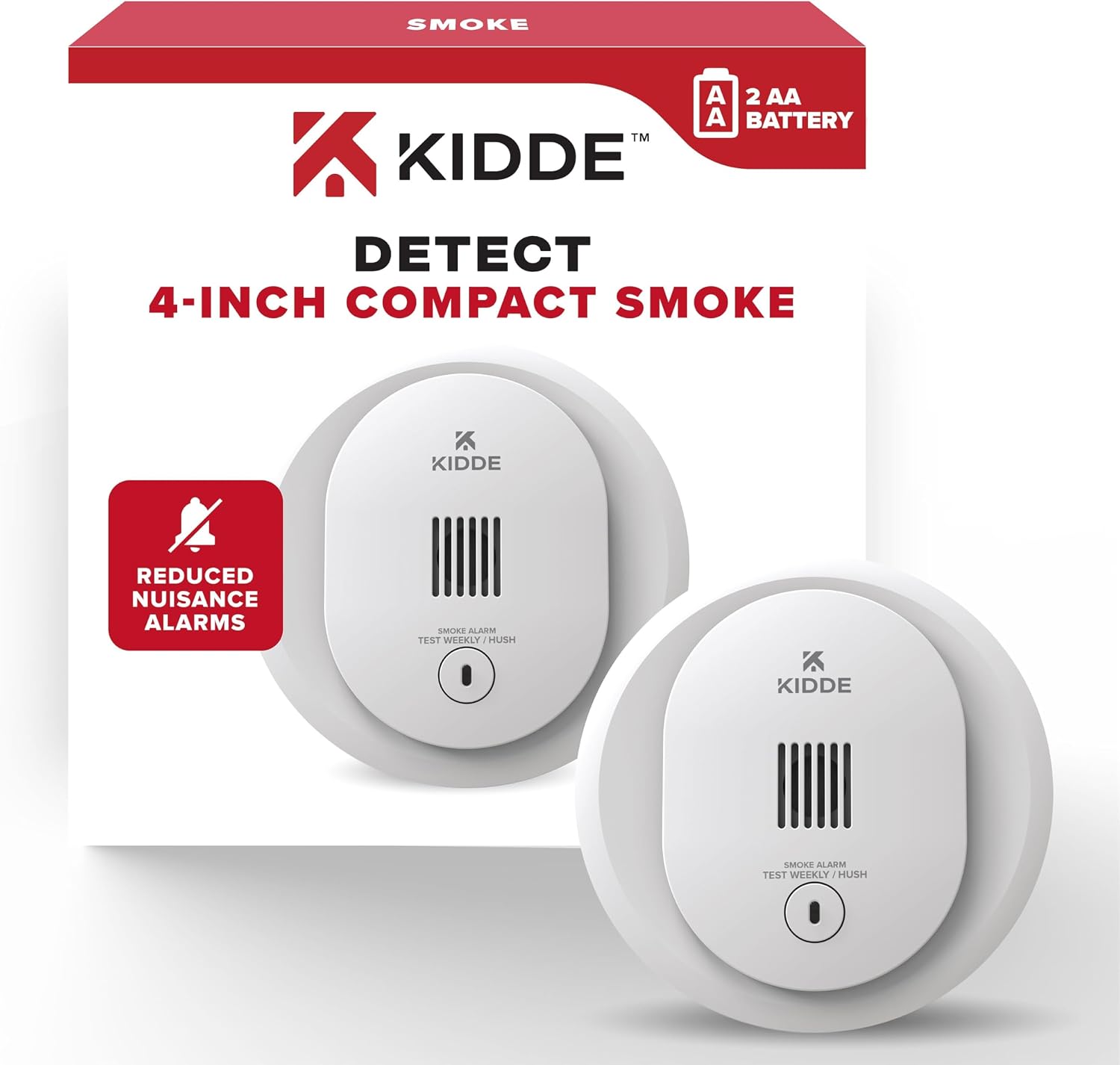
Key specs: 4-inch compact smoke alarm, AA battery-powered, with LED status lights; the smallest current Kidde residential alarm, for tight ceilings and locations where a full-size unit looks or fits badly
At four inches across this is the smallest current Kidde residential alarm, and its case is the low ceiling in a hallway, the sloped section over a stairwell, or the spot where a full-size unit looks wrong enough that somebody will be tempted not to fit one at all. It is AA-powered with LED status lights and does the core job without extras. The reason it earns a place here is not the size for its own sake – it is that the USFA’s coverage requirement is alarms inside and outside each sleeping area and on every level including the basement, and awkward locations are where that requirement quietly goes unmet.
✅ Pros
- Smallest current Kidde residential alarm at 4 inches
- Fits locations where a full-size unit will not
- LED status lights show state at a glance
- Inexpensive way to close a coverage gap
❌ Cons
- Replaceable AA batteries mean chirps eventually
- No voice alerts
- Smoke only
- Battery-only, so no interconnection
Can You Mix Brands and Models?
For battery-only alarms, yes – each unit is independent, so a Kidde in one room and another brand in the next is fine. Neither knows the other exists, which is precisely why the USFA recommends interconnection where it is possible.
For hardwired interconnected alarms, be careful. Interconnect signalling is not guaranteed compatible across brands or across generations of the same brand, and a mismatch produces a failure mode that is very hard to spot: the alarms all work individually and simply fail to trigger each other. Since you cannot easily test that without setting off a real alarm, replacing the whole interconnected set with matching units is the reliable approach.
The other mixing question is smart alarms. Adding a connected alarm to a conventional ring works, but the connected features generally only cover that unit. If phone alerts are the goal, our smart smoke detector guide covers what the connected models actually deliver, and our guide to sealed-battery alarms explains the sealed 10-year design in more detail.
While You Are Up There: Fix the Coverage
Replacing an alarm is the cheapest moment to fix a coverage gap, because the ladder is already out. The USFA’s standard is alarms inside every bedroom, outside each separate sleeping area, and on every level of the home including the basement, interconnected where possible. Most houses that meet part of that standard fail it in the basement or in a spare bedroom nobody sleeps in often.
Two more things worth doing in the same session. Test every alarm in the house, not just the new one – the USFA’s advice is monthly testing on all of them. And check the dates on the rest while you are there, because alarms installed at the same time reach the end of their life at the same time. Our placement and interconnection guide covers where each one belongs.
Finally, the alarm is only half the system. The USFA’s escape-planning guidance is to draw a map of the home including all doors and windows, keep them unblocked, and practise the drill with everyone in the household, noting that residents may have less than two minutes to escape once the alarm sounds. A house full of new alarms and no plan is still a house where people will hesitate.
Final Recommendation
If you are replacing a battery alarm, buy the Kidde 20SD10-V. The sealed 10-year battery matches the 10-year replacement rule exactly, so the unit’s life and its battery’s life end together and there is nothing to maintain in between. That removes the low-battery chirp, which is the single most common reason people disable an alarm – something the USFA explicitly warns can be a deadly mistake.
If you pulled a wiring harness out of the ceiling, buy the 20SAR three-pack and replace the whole interconnected set rather than one unit, because they are all the same age and mixed interconnect families fail silently. Buy the 30CUDR-V wherever the alarm you removed also detected carbon monoxide, or on any level that currently has no CO coverage – and take the voice alerts seriously, because smoke and CO require genuinely different responses. Keep the 10SDR for the awkward location that has been going without an alarm.
What would change this: if your house is wired for interconnection, no sealed battery unit is the right primary answer regardless of how convenient it is, because you would be trading away the feature that wakes the far end of the house. And if the alarm you are replacing is under ten years old and simply chirping, put a new battery in and vacuum the vents first – replacing a working alarm is a common and avoidable purchase.
SafeBode does not yet run an in-house product testing program. This guide is built from manufacturer specifications, official support documentation, current retail listings and verified buyer feedback rather than hands-on testing, and we say so plainly rather than implying testing we have not done.
Frequently Asked Questions
How do I know when a Kidde alarm needs replacing?
Check the manufacture date printed on the back of the unit. Fire safety guidance is to replace an alarm 10 years from that date regardless of how it behaves, because the test button confirms the electronics and sounder rather than the sensing chamber.
Can I replace a hardwired alarm with a battery one?
Physically yes, but you lose interconnection – the feature where one alarm sounding sets them all off. In a house wired for it, that is a significant downgrade and the reason to buy a hardwired replacement instead.
Do I have to replace all my alarms at once?
Not required, but usually sensible. Alarms installed together reach the end of their life together, and on an interconnected system replacing the whole set avoids compatibility problems between brands and generations that fail silently.
What is the advantage of a sealed 10-year battery alarm?
There is no battery to change and no low-battery chirp for the unit’s life, and its life matches the 10-year replacement rule. The tradeoff is that the whole alarm is disposable when the battery is done.
Should I buy a combination smoke and CO alarm?
If the alarm you are removing detected both, yes – fitting a smoke-only replacement quietly removes your carbon monoxide coverage at that spot. Carbon monoxide gives no sensory warning at all, so losing a sensor by accident is a genuine risk.
Are voice alerts worth it?
On a combination unit, meaningfully so, because smoke and carbon monoxide call for different responses and an announcement tells a half-awake household which one it found. On a smoke-only alarm it is a convenience rather than a safety feature.
Can I mix Kidde alarms with another brand?
For battery-only alarms, yes – they are independent devices. For hardwired interconnected alarms, do not, unless you have verified compatibility. A mismatch leaves each alarm working individually while failing to trigger the others, which is very hard to notice.
Where do I need alarms?
Inside every bedroom, outside each separate sleeping area, and on every level of the home including the basement, interconnected where possible. Replacement day is the cheapest time to close any gaps, since the ladder is already out.
Sources
Show sources (4)


