Best Fireproof Document Bags 2026: What the Temperature Rating Means
Affiliate Disclosure: This article contains affiliate links. If you buy through these links, we may earn a commission at no extra cost to you. Our editorial opinions are our own and are not influenced by affiliate relationships. Read our full disclosure policy →
Contents
Quick Answer
Buy the Andyer 15 x 11 inch bag for passports, deeds, birth certificates and the folder of paperwork you would struggle to replace. But read the temperature claims correctly before you rely on one: figures like 2,200°F or 5,200°F describe what the material tolerates, not a tested period of protection for the contents. None of these listings states a time-at-temperature protection rating, which is exactly how a certified fire safe is specified. A bag is a cheap, portable, meaningful improvement over a drawer — and it is not a safe.
What Those Temperature Numbers Actually Describe
Scroll this category and you will see numbers that look like specifications: 2,000°F, 2,200°F, 5,200°F. They are doing less work than they appear to.
Read what the listings actually claim. ENGPOW describes three-layer silicone-coated fiberglass withstanding temperatures up to 2,200°F, and separately states that the material passed the UL94 V-0/5VA flame-retardant test. ROLOWAY cites UL94 V-0 for its dual-layered fiberglass. DocSafe states that its eight layers of silicone-coated fireproof cotton and aluminum foil withstand approximately 5,200°F.
Every one of those is a statement about the fabric, not about the contents. A material can tolerate a very high temperature while the air inside a bag made from it still reaches a temperature that chars paper — the two are different questions, and the second one is the one you actually care about.
Two Kinds of Claim That Look Alike
🧵 What these listings state
- A temperature the material tolerates
- A flammability classification for the fabric
- Water resistance from coatings and sealed closures
- Layer counts and construction detail
⏱️ What a fire safe states instead
- A tested duration at a specified furnace temperature
- A protection class for the contents, not the shell
- An independently verified test rather than a material property
- A defined pass condition for what is inside afterwards
This is not an accusation that the bags do not work. It is a statement about what has been measured. If the question you are asking is “will my passport survive a house fire in this,” no number on any of these listings answers it directly, and it is better to know that than to assume a large figure implies a long protection window.
A Bag Is Not a Small Safe
The obvious comparison is a fire-rated document safe, and the honest answer is that they are different tools with different strengths rather than better and worse versions of one thing.
| Fireproof bag | Fire-rated safe |
|---|
| Protection claim | Material temperature tolerance | Tested duration at temperature |
| Theft resistance | Essentially none — it is a bag | Weight, bolt-down and a real lock |
| Portability | Grab it and go, which is the point | Deliberately hard to move |
| Water | Coated fabric and sealed closures | Varies by model; many are not water-rated |
| Cost | A small fraction of a safe | Substantially more, plus installation |
The portability row is the one that gets undersold. In an evacuation you have very little time — possibly under two minutes once a smoke alarm sounds — and a bag is something a person can pick up on the way out while a safe is not. That is a genuine advantage a safe cannot offer, and it is a better reason to buy one than the temperature figure is.
The theft row is the one that gets oversold. A fireproof bag offers no meaningful resistance to being taken. If what you are protecting has theft value rather than replacement difficulty, the answer is a fire-rated safe or, for cash specifically, the approach covered in our cash storage guide. A common and sensible arrangement is both: a bag inside a safe, so the documents get a second layer and remain grabbable if you have time.
What Belongs in One, and What Does Not
Sort by replacement difficulty rather than by value. The right test is not “what is this worth” but “how bad is my week if this is gone.”
Sorting the Drawer
✅ Worth putting in the bag
- Passports, birth and marriage certificates, naturalization papers
- Property deeds, vehicle titles, wills and powers of attorney
- Insurance policies and the inventory photos you would claim against
- Backup drives, recovery keys, and a written list of critical accounts
❌ Better somewhere else
- Large amounts of cash — theft, not fire, is the risk
- Jewelry and small high-value items, for the same reason
- Anything you need daily, which will end up left out
- Firearms, which have their own storage requirements entirely
One item deserves specific mention because people forget it: a copy of your home inventory and insurance details. After a fire, the claim is the thing that determines how the next year goes, and photographs of what a room contained are difficult to reconstruct once the room is gone. That is arguably the highest-value paper in the bag.
For anything where concealment matters more than fire, this is not the product — diversion safes solve that differently, by not looking like a container at all.
The Four Picks Side by Side
| Product | Size / format | Stated material claim | Lock | Best for |
|---|
| Andyer 2-Pocket Fireproof Document Bag | 15 x 11 in, 2 pockets | Heat-insulating materials, sealed zippers | No | The main document bag for a household |
| ROLOWAY Small Fireproof Bag | 5 x 8 in pouch | UL94 V-0 fiberglass, silicone coated | No | Cash, cards, small valuables |
| DocSafe Fireproof Document Organizer Box | Hard-shell box | 8 layers, stated to ~5,200°F | Yes | Wanting structure and a lock |
| ENGPOW Fireproof Accordion File Organizer | 13-pocket accordion | 3 layers, stated to 2,200°F, UL94 V-0/5VA | No | Filing, when the drawer is the real problem |
Andyer 2-Pocket Fireproof Document Bag — the default document size
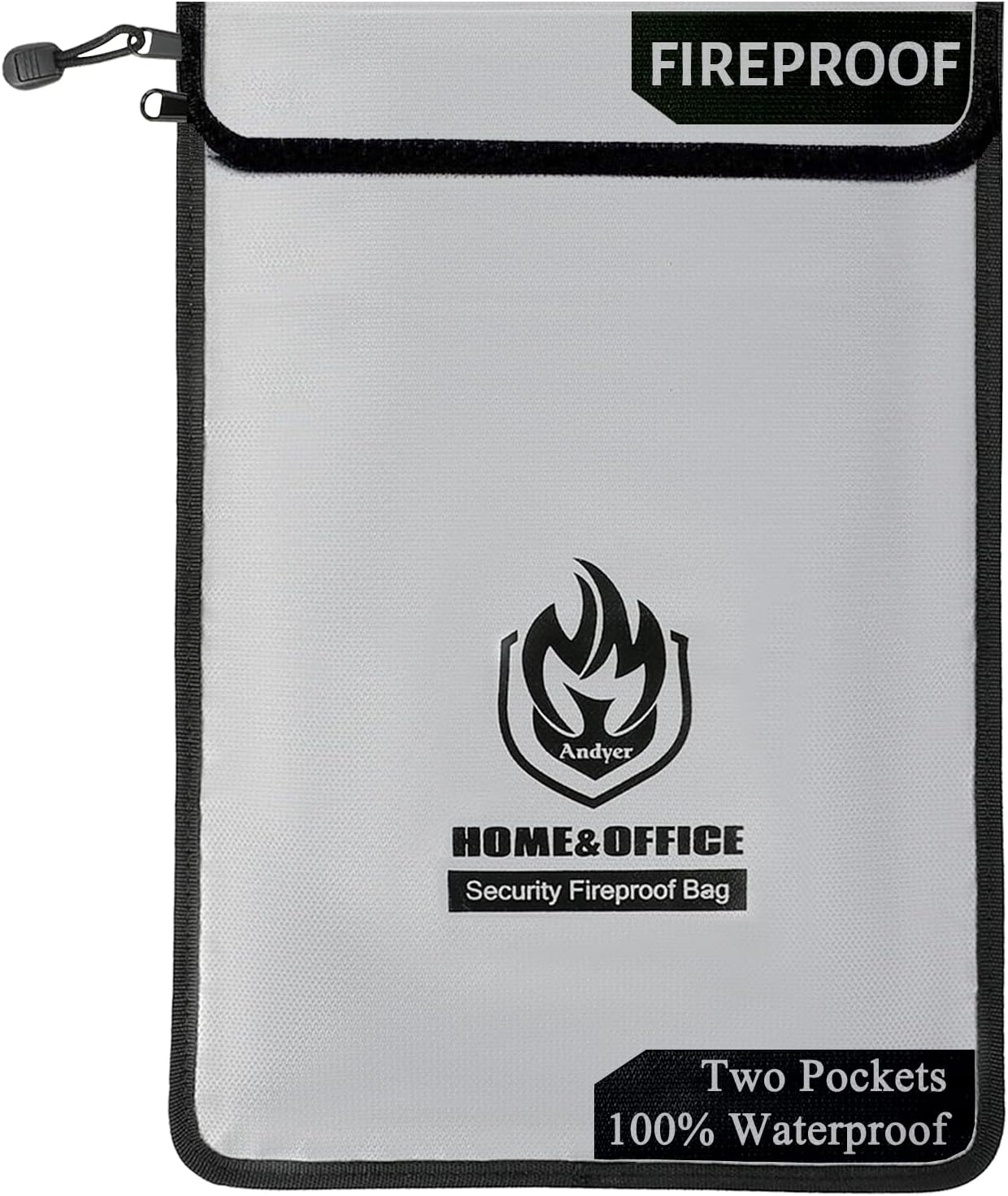
Key specs: 15 x 11 inch bag with two pockets, built from fire-resistant heat-insulating materials; sealed zippers the manufacturer describes as waterproof against a firefighter’s hose; sized for standard documents and folders
The right first purchase for most households, and the reason is simply dimensions: 15 by 11 inches takes standard documents and folders flat, without folding a deed or a certificate. Two pockets is enough to separate the paperwork you might need from the paperwork you hope never to need. The manufacturer’s water claim is the more concretely useful one here — sealed zippers described as surviving the spray of a firefighter’s hose — because water damage from firefighting is a genuinely common way documents are lost, and it is a claim about the closure rather than about the fabric.
✅ Pros
- 15 x 11 in takes documents flat, unfolded
- Two pockets for separating types of paperwork
- Sealed zippers aimed at water as well as fire
- Very large review base for this category
❌ Cons
- The listing’s “UL certified” wording names no standard number
- No stated time-at-temperature protection rating
- No lock — zero theft resistance
- A large bag is easy to overfill, which stops the closure sealing
ROLOWAY Small Fireproof Bag — for cash and small valuables
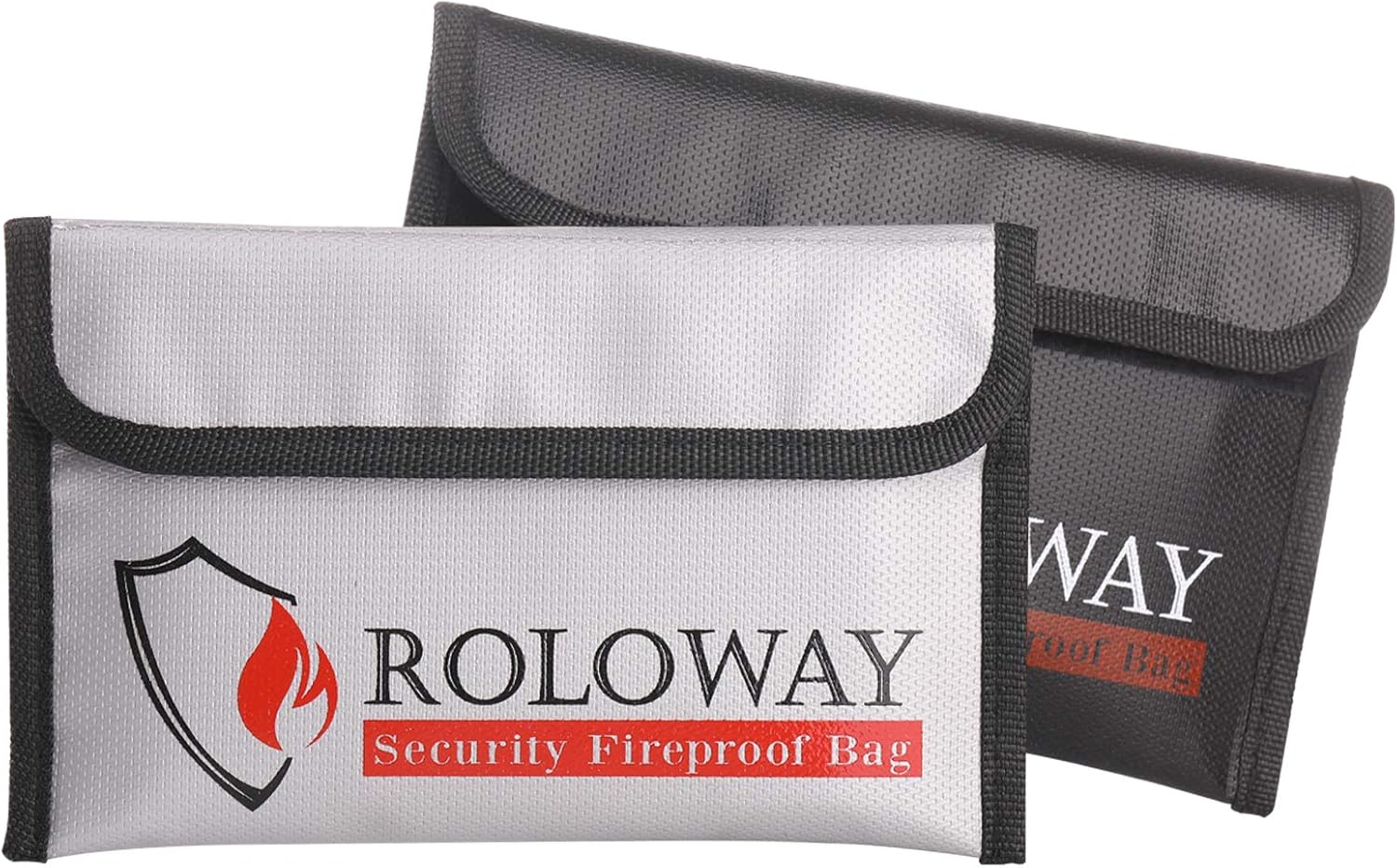
Key specs: 5 x 8 inch pouch in dual-layered fiberglass rated UL94 V-0 for material flammability; silicone-coated layers with a hook-and-loop closure for water resistance; sized for cash, cards and small valuables
Buy this alongside the large bag rather than instead of it. At 5 by 8 inches it is a pouch for cash, cards, keys and a backup drive, and the small size is the point — it fits inside a safe, inside a drawer, or inside the larger document bag. Its construction is dual-layered fiberglass with a stated UL94 V-0 material rating plus silicone-coated layers and a hook-and-loop closure for water resistance. Note the closure type: hook-and-loop is faster to use than a zipper and seals less completely, which is a real trade rather than a detail.
✅ Pros
- Pouch size fits inside a safe or a larger bag
- Stated UL94 V-0 material rating
- Silicone-coated layers for water resistance
- Non-itchy lining, which matters more than it sounds on fiberglass
❌ Cons
- Hook-and-loop seals less thoroughly than a sealed zipper
- UL94 V-0 is a material flammability class, not a protection rating
- Too small for documents without folding them
- No lock, so no theft resistance at all
DocSafe Fireproof Document Organizer Box — when you want a lock too
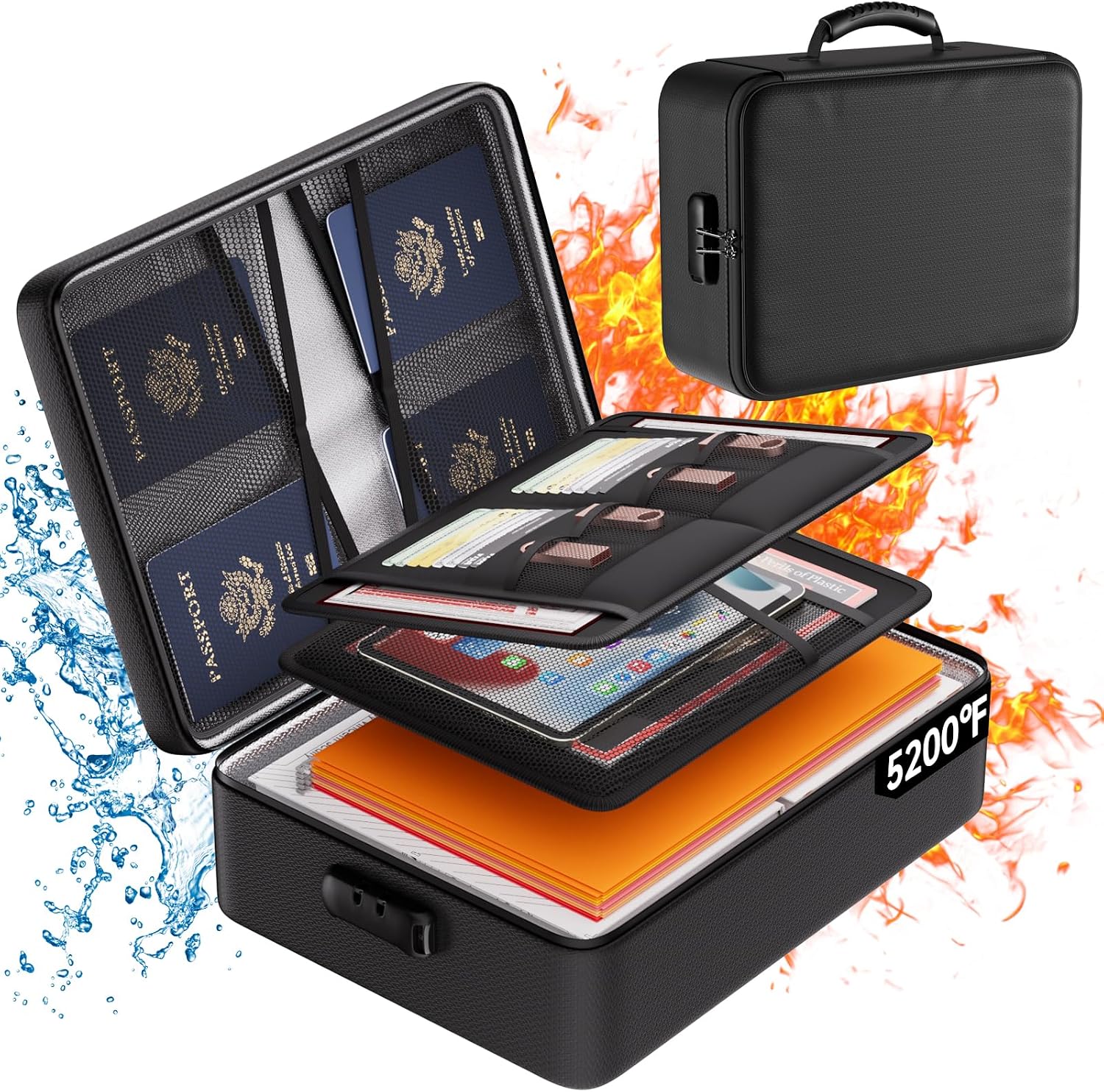
Key specs: Hard-shell organizer box with a lock, built from silicone-coated fireproof cotton and aluminum foil in eight layers; manufacturer states the layers withstand temperatures up to approximately 5,200°F
The one to choose if you want the contents to have a shape and a modest barrier to casual access. It is a hard-shell organizer box with a lock, which changes the product’s character — documents stay flat and sorted rather than sliding into a heap, and a curious houseguest cannot simply open it. Construction is stated as eight layers of silicone-coated fireproof cotton plus aluminum foil, described as withstanding approximately 5,200°F. Treat that figure the way this article has treated all of them: it is a material claim, and the lock is a deterrent rather than security.
✅ Pros
- Hard shell keeps documents flat and organized
- Includes a lock, unlike the bags
- Eight-layer construction with an aluminum foil lining
- Large review base
❌ Cons
- A small locked box is more attractive to a thief, not less
- The lock is a deterrent, not meaningful security
- Bulkier and less grabbable than a soft bag
- Still no stated time-at-temperature protection rating
ENGPOW Fireproof Accordion File Organizer — if organization is the real problem
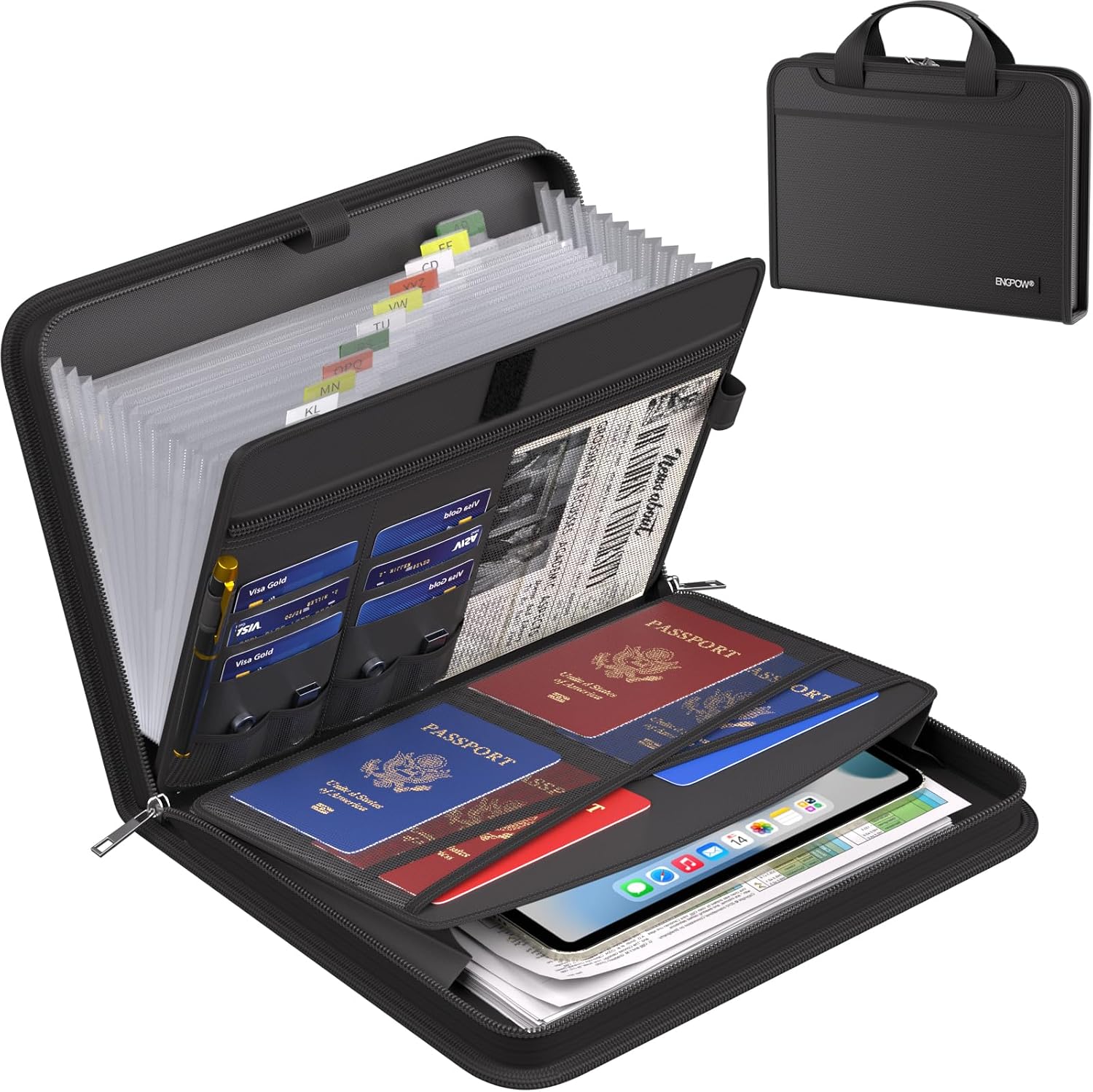
Key specs: Expanding accordion file with 13 pockets in three-layer silicone-coated fiberglass; manufacturer states material tolerance up to 2,200°F and passing of the UL94 V-0/5VA flame-retardant test; fire and water resistant
Some people do not have a fire problem, they have a filing problem, and this pick is honest about serving that. Thirteen pockets in an expanding accordion file means the paperwork is actually sorted, which in practice is what determines whether the thing gets used at all. Materially it is three-layer silicone-coated fiberglass, stated to 2,200°F and to have passed the UL94 V-0/5VA flame-retardant test — a lower stated tolerance than the DocSafe’s, which is worth knowing even though neither figure translates directly into protection time.
✅ Pros
- 13 sorted pockets, so it gets used rather than stuffed
- Stated UL94 V-0/5VA flame-retardant test result
- Fire and water resistant construction
- Accordion format expands as the paperwork grows
❌ Cons
- Lower stated material tolerance than the DocSafe
- Three layers rather than eight
- No lock
- An accordion file left partly open does not seal at all
Where to Keep It, Which Matters More Than the Rating
Placement does more for the outcome than any specification on this page, and it is free.
Getting the Placement Right
1
Low, not high
Heat and smoke rise. A bag on a high shelf sits in the hottest part of the room; the same bag in a low cupboard or on a floor is in a materially cooler one.
2
On an escape route, not off it
Somewhere you pass on the way out, so grabbing it costs no detour. Under two minutes is not time for a detour.
3
Not in the kitchen or garage
Cooking is the leading cause of home fires and garages hold fuels and chargers. Keep the bag away from where a fire is most likely to start.
4
Tell someone else where it is
A bag only one person can find is a bag that gets left behind when that person is not home.
A cheaper bag in the right place beats a better one in the wrong place.
One more habit worth building in: put a reminder in the bag itself to review the contents annually. Documents expire, policies change, and the account list you wrote three years ago is missing half of what matters now. Tie it to the same routine as testing smoke detectors and running the escape plan drill, since all three protect against the same event.
Final Recommendation
Buy the Andyer 15 x 11 inch bag and keep it low, on your way out. It takes documents flat, its sealed-zipper water claim addresses a failure mode that is at least as common as heat, and the placement decision will matter more than any temperature figure you compare.
Add the ROLOWAY pouch for cash, cards and a backup drive. It is small enough to live inside the big bag or inside a safe, which is the right place for anything with theft value.
Choose the DocSafe box instead of the Andyer if you want documents to stay flat and sorted behind a lock, accepting that it is heavier and less grabbable. Choose the ENGPOW accordion if the honest problem is that your paperwork is unsorted — a filing system you use beats a bag you do not.
What would change our answer: if the contents have real theft value rather than real replacement difficulty, none of these is the right product. A safe chosen against the threat you actually face is, and a bag then becomes the thing you keep inside it.
SafeBode does not yet run an in-house product testing program. This guide is built from manufacturer specifications, official support documentation, current retail listings and verified buyer feedback rather than hands-on testing, and we say so plainly rather than implying testing we have not done.
Frequently Asked Questions
Are fireproof document bags actually fireproof?
They are fire resistant, and the figures on the listings describe what the material tolerates rather than how long the contents stay protected. That distinction matters: none of the products here states a tested time-at-temperature protection rating the way a certified fire safe does.
What does UL94 V-0 mean on a fireproof bag?
It is a flammability classification for the material itself, cited by two of the products here. It describes how the fabric behaves when exposed to flame, which is a different kind of claim from a rating for how long the contents inside are protected.
Is a fireproof bag better than a fire safe?
Neither is better; they differ. A bag is portable and cheap, which means you can grab it on the way out. A safe offers theft resistance and a tested protection rating a bag does not. Many households sensibly use both, with the bag inside the safe.
What should I keep in a fireproof document bag?
Sort by how hard something is to replace rather than what it is worth: passports, birth certificates, deeds, titles, wills, insurance policies and a backup drive. Cash and jewelry are better in something that resists theft, because that is their actual risk.
Do fireproof bags protect against water?
Most claim water resistance from coated fabric and sealed closures, and this matters more than people expect — firefighting water damages documents that survived the heat. Sealed zippers generally seal better than hook-and-loop closures.
Where should I store a fireproof document bag?
Low rather than high, since heat and smoke rise, and somewhere on your way out of the house rather than off to one side. Avoid the kitchen and garage, which are where fires most often start.
Can I put a hard drive or USB stick in one?
You can, and it is worth doing for a backup you would otherwise lose entirely. Be aware that electronics and media are damaged at far lower temperatures than paper chars, so a bag whose claims are built around paper is a weaker guarantee for a drive.
Do the bags have a lock?
Most do not — only the hard-shell organizer box here does. Treat any lock at this price as a deterrent against casual access rather than as security, since the container itself is small and portable.
How often should I check what is inside?
Once a year is sensible, tied to something you already do like testing smoke alarms. Documents expire and account lists go stale, and a bag full of superseded paperwork protects nothing useful.
Sources
Show sources (5)
- [1] U.S. Fire Administration — “Learn About Fire”, www.usfa.fema.gov/prevention/home-fires/learn-about-fire
- [2] Andyer — 2 Pockets Fireproof Document Bag, current retail listing specifications (ASIN B08K34LMXP)
- [3] ROLOWAY — Small Fireproof Bag, current retail listing specifications (ASIN B07WVC24BP)
- [4] DocSafe — Fireproof Document Organizer Box, current retail listing specifications (ASIN B0CRR524VK)
- [5] ENGPOW — Fireproof Accordion File Organizer, current retail listing specifications (ASIN B0CNKHZG41)


