Video Doorbell vs. Smart Lock: Which Should You Buy First? (2026)
Affiliate Disclosure: This article contains affiliate links. If you buy through these links, we may earn a commission at no extra cost to you. Our editorial opinions are our own and are not influenced by affiliate relationships. Read our full disclosure policy →
Table of Contents
Quick Verdict
Editorial note: There is no universal right answer here, and anyone who tells you otherwise is selling something. If you’re worried about porch piracy or want to see who’s at the door before you open it, start with a video doorbell. If your real headache is losing keys, re-keying for roommates, or a lockout at 11pm, start with a smart lock.
Most households eventually want both. But if you’re working with a single-item budget this month, the honest tie-breaker is: a video doorbell mostly gives you information, while a smart lock mostly gives you convenience and control. Buy the one that matches the problem you actually have — not the one with the scarier marketing.
At a Glance: Doorbell vs. Lock
| Ring Battery Video Doorbell | Wyze Lock Bolt |
|---|
| Solves | “Who’s at my door / porch?” | “How do I get in without a physical key?” |
| Subscription required for core function | No (live view free); cloud recording needs Ring Home plan | No — fully local, no monthly fee |
| Install time | 20–30 min, no wiring required | 15–20 min, replaces existing deadbolt |
| Renter-friendly | Yes, with a no-drill mount | Yes — most models reuse the existing strike plate and hole pattern |
| Proven crime deterrent? | Evidence is thin — see below | Not marketed as a deterrent; solves access, not surveillance |
What a Video Doorbell Actually Solves
The honest crime-deterrence picture: Ring has claimed its cameras reduce burglaries by 50–55% in some markets, but that figure comes from the company itself. Three independent studies have gone looking for a real-world crime-reduction effect — none of them found one:
- Los Angeles (MIT Media Lab): Researchers built the first comprehensive map of smart doorbell camera use across the continental U.S. and zeroed in on LA, home to one of the highest concentrations of Ring cameras and one of the earliest police partnerships with the company. They found no significant correlation between Ring camera density and property crime rates. Co-author Dan Calacci put it plainly: there’s no strong evidence that doorbell cameras reduce crime, even though most owners believe they do.
- Newark, NJ (MIT Technology Review): A pilot-program analysis found that citywide burglary reductions were actually largest outside the neighborhoods where Ring cameras were installed — which undercuts the idea that the cameras caused the improvement.
- Akron, Ohio: Police handed out 460 free Ring units to high-crime neighborhoods, and officials acknowledged the cameras hadn’t directly helped solve specific cases.
 Left: Ring’s own unverified crime-deterrence claim. Right: the benefit that’s actually backed by data — catching porch pirates and package theft on camera.
None of that means a video doorbell is a bad purchase. It means the honest reason to buy one isn’t “it’ll scare off burglars” — it’s the two things it demonstrably does well: it lets you see and talk to whoever is at your door without opening it, and it gives you a timestamped video record after the fact.
“There’s no strong evidence” that video doorbells reduce crime — MIT Media Lab researcher Dan Calacci
Where the evidence is stronger — package theft: Package theft is a real and common problem, and this is where a video doorbell earns its keep. In an independent Security.org survey, 38% of respondents said they had personally been a victim of package theft and over 80% said they were concerned about it — nearly a third had installed or planned to install a doorbell camera specifically to fight it. In a separate survey window during a high package-theft period, 65% of homeowners with a doorbell camera or security system filed a police report after a stolen package, compared with only 27% of homeowners without one. That’s not proof the camera prevented the theft, but it does show the footage makes people meaningfully more likely to actually report it — which matters for insurance claims and for retailers investigating theft patterns in a neighborhood.
What a Smart Lock Actually Solves
A smart lock isn’t trying to be a surveillance device, and it isn’t marketed on crime-prevention promises the way a doorbell camera is — its job is simpler: get you in the door without a physical key, and let you control who else can.
 Left: giving up the physical key. Right: what replaces it — fingerprint and keypad entry, no key required.
Physical security holds up in independent testing. Consumer Reports evaluates smart locks the same way it evaluates traditional deadbolts — kick-in resistance, lock-picking resistance, and drilling resistance — and found that smart locks from brands like Eufy, Kwikset, and Yale matched standard deadbolts on kick-ins and picking while adding drilling resistance the older mechanical models lacked. In plain terms: going smart doesn’t mean giving up physical security, as long as you pick a lock from a brand that still builds a real deadbolt underneath the electronics.
The real upside is control, not deterrence. A smart lock lets you issue and revoke digital keys for roommates, dog walkers, or short-term guests without re-keying the whole door, see a log of exactly when the door was locked and unlocked, and get in without patting down your pockets for a key you left inside. If your household’s actual pain point is “we’ve re-keyed twice because someone lost a key” or “I need to let the dog walker in at 1pm and I’m at work,” a smart lock solves that on day one — a doorbell camera doesn’t touch that problem at all.
There’s also a real (if modest) insurance angle. Several major insurers offer discounts for verified smart-home security devices, smart locks included, though the size of the discount varies by carrier and by what else is installed. It’s worth a five-minute call to your insurance agent before you buy either device, since the discount can offset a meaningful chunk of the purchase price over a year or two.
Cost & Subscriptions, Head-to-Head
This is where the two categories genuinely diverge. Most video doorbells, Ring included, work as a live-view intercom for free — but recording and reviewing clips after the fact typically requires a cloud subscription, priced depending on plan and number of devices. Skip the subscription and you still get the doorbell/live-view function, just no saved footage. See our wireless video doorbell guide for a full breakdown of which doorbells require a subscription and which don’t.
Smart locks are the opposite: once you’ve paid for the lock itself, there is no ongoing fee for the core Wi-Fi/Bluetooth/keypad functionality on nearly every consumer smart lock on the market today, including the Wyze Lock Bolt featured below. If your budget is the deciding factor and you want to avoid a new recurring bill, that tips the scale toward the lock — you get the full feature set for a one-time cost.
Renter-Friendliness, Head-to-Head
Both categories can be renter-friendly, but the type of renter-friendly is different. Most modern video doorbells (including the Ring Battery Doorbell below) mount with an adhesive or no-drill wedge kit, so they go up and come down without touching your existing hardware or your lease’s damage clause. Most smart deadbolts, including the Wyze Lock Bolt, are designed to reuse your door’s existing strike-plate holes and bore, so installation doesn’t require any new drilling either — you’re replacing the interior/exterior lock hardware, not modifying the door itself. Either way, keep your original hardware in a labeled bag so you can put it back before move-out.
We go much deeper on the no-drill, deposit-safe installation angle — including what actually counts as damage under most leases — in our full guide to DIY home security systems for renters, if that’s the piece of this decision you’re most worried about.
Smart Home Ecosystem Fit
If you’re already invested in one smart home ecosystem, let that break the tie. Ring’s doorbell lineup integrates natively with Alexa and works reasonably well with Google Assistant; Wyze’s doorbell and lock lineup both work with Alexa and Google Assistant as well, and Wyze’s own app ties devices together if you’d rather not juggle two apps. Neither the Ring doorbell nor the Wyze lock featured in this guide is natively Apple HomeKit compatible — if HomeKit is a hard requirement for your household, that’s worth checking against the specific model before you buy either one.
Meet the Picks
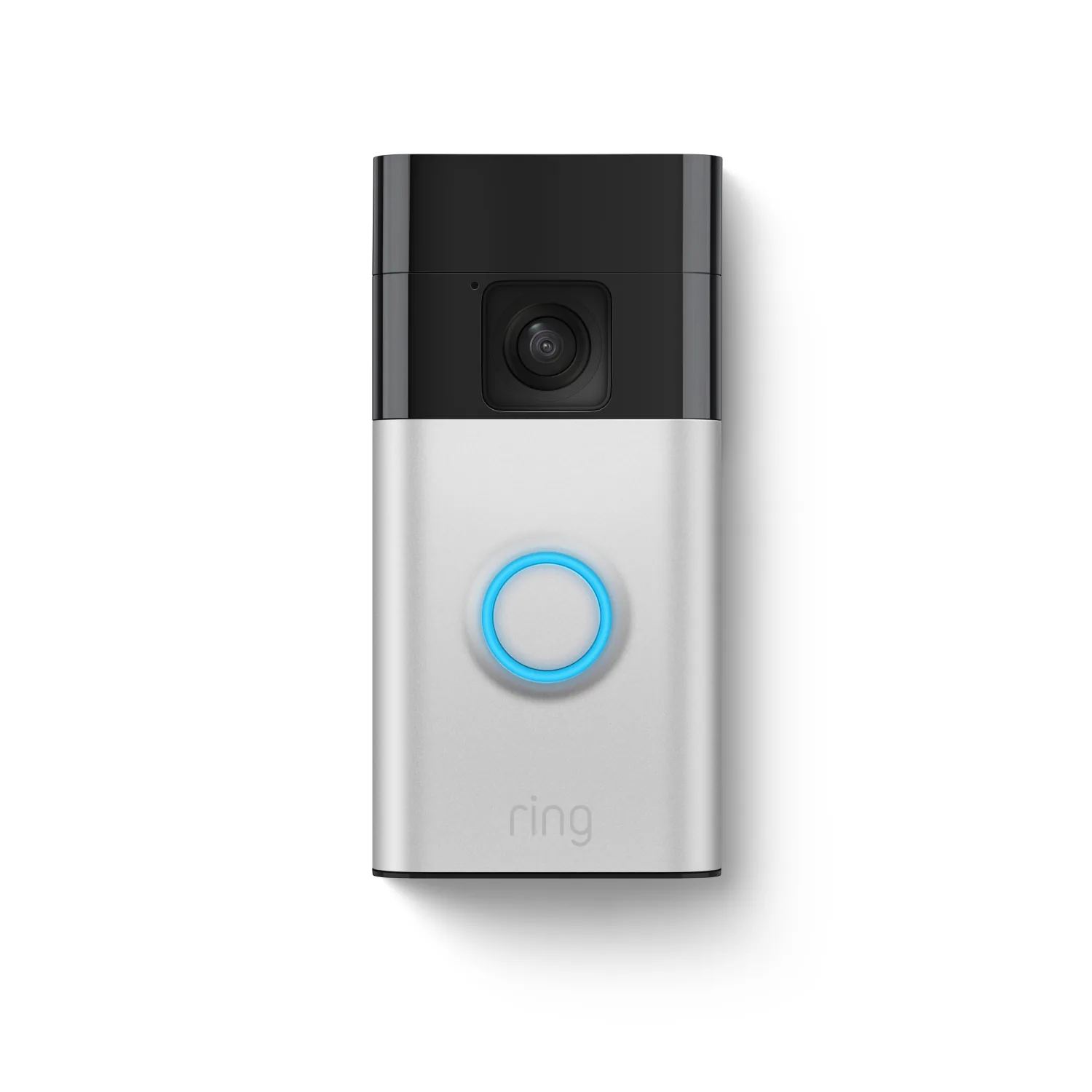 Photo: Ring
Video Doorbell Pick: Ring Battery Doorbell
The Ring Battery Doorbell is the most broadly reviewed video doorbell on Amazon by a wide margin, with a 4.5-star average across more than 52,000 ratings. It’s battery-powered (no existing doorbell wiring required), so it’s genuinely a same-afternoon renter install, and it supports two-way talk and motion alerts out of the box. Live view and two-way talk work without any subscription; you only need the paid Ring Home plan if you want recorded clips saved and reviewable after the fact.
Alternative: If you’d rather stay in the same ecosystem as the lock pick below, the Wyze Wireless Video Doorbell Pro offers 1440p video and head-to-toe framing at a similar price point, with Wyze’s local-storage option reducing how much you’re pushed toward a subscription.
 Photo: Wyze
Smart Lock Pick: Wyze Lock Bolt
The Wyze Lock Bolt is a fingerprint-and-keypad deadbolt that installs into your existing door prep in about 15–20 minutes, runs roughly 8 months on battery, and — like nearly every mainstream smart deadbolt — has no monthly fee for any of its core functions. It’s rated IP53 for outdoor weather exposure and includes physical backup keys for when the battery does eventually die.
Alternative: If you want a lock from a brand with a longer manufacturing track record in traditional door hardware, the Kwikset Halo Touch adds a fingerprint reader to Kwikset’s well-established SmartKey deadbolt platform, at a somewhat higher price point. Already have a Kwikset lock and just need to wipe it and start over? See our step-by-step Kwikset reset guide.
Which Should YOU Buy First?
| Your situation | Buy first | Why |
|---|
| You’ve had packages stolen or are worried about porch piracy | Video doorbell | Lets you see deliveries arrive and file a report with actual footage if something goes missing |
| You’ve re-keyed your locks more than once for lost keys or roommate turnover | Smart lock | Solves recurring access-control headaches a camera can’t touch |
| You want to let in a dog walker, cleaner, or guest while you’re not home | Smart lock | Temporary digital keys beat hiding a spare under the mat |
| You live alone and want to see/talk to whoever’s at the door before opening it | Video doorbell | Direct answer to a safety/privacy concern a lock doesn’t address |
| You’re on a strict single-purchase budget and want zero new monthly bills | Smart lock | No subscription required for full functionality; doorbell’s recording feature typically needs one |
| You’re renting and most worried about your security deposit | Either — both have no-drill options | See our renter-specific guide linked above for the full deposit-safety breakdown |
Can You Just Get Both?
If your budget allows it, buying both at once is reasonable — a Ring Battery Doorbell and a Wyze Lock Bolt together are a modest combined purchase, and they solve genuinely different problems rather than overlapping. If you can only manage one purchase this month, use the table above rather than defaulting to whichever product has the scarier ad campaign.
Final Recommendation
For most single-purchase households, we lean toward the Wyze Lock Bolt as the first buy — it solves a daily, provable inconvenience (physical keys), adds real drilling resistance over a standard deadbolt per Consumer Reports’ own testing, and carries no ongoing subscription cost. But if package theft or porch-side peace of mind is your actual concern, the Ring Battery Doorbell is the better first purchase for you specifically, crime-deterrence marketing claims aside — the package-theft reporting data is real even where the burglary-deterrence data isn’t.
Weighing this against other options? See our Smart Locks hub and Video Doorbells hub for a full breakdown by situation.
FAQ
Do video doorbells actually stop burglaries?
The evidence doesn’t support that specific claim. MIT Media Lab researchers found no significant correlation between Ring camera density and property crime rates in Los Angeles, and Ring’s own 50-55% burglary-reduction figures haven’t been independently verified. Video doorbells are well-supported for package-theft reporting and for seeing/talking to visitors — just not as a proven burglary deterrent.
Do I need a subscription for a video doorbell to work?
No. Live view and two-way talk typically work without any subscription on most modern doorbells, including the Ring Battery Doorbell. A subscription (Ring Home, in Ring’s case) is only required if you want recorded clips saved for later review.
Are smart locks less secure than traditional deadbolts?
Consumer Reports’ testing found smart locks from major brands match traditional deadbolts on kick-in and lock-picking resistance, while adding drilling resistance older mechanical deadbolts often lack. The electronics add convenience without giving up the physical security layer, as long as you choose an established brand.
Will installing either device void my lease or cost me my security deposit?
Not if you choose no-drill/adhesive-mount doorbells and locks that reuse your existing strike-plate holes, and keep your original hardware to reinstall at move-out. We cover this in detail, including what legally counts as “damage” under most leases, in our renter-focused DIY security guide.
Can a smart lock and a video doorbell work together?
Yes, and many households eventually run both — they solve different problems (access control vs. visual/audio awareness) rather than duplicating each other. Ring and Wyze devices can both live in the same Alexa or Google Assistant routine even though the two brands aren’t the same app.
Does a smart lock or video doorbell lower my homeowners insurance?
Possibly. Several major insurers offer discounts for verified smart-home security devices, smart locks included, though the size varies by carrier. Call your insurance agent before buying either device to confirm what your specific policy rewards.
A note on our research approach: SafeBode has not purchased or installed the doorbells and locks compared in this guide. Every spec above comes from each manufacturer’s own product pages, cross-checked against independent coverage and testing from outlets like Consumer Reports and SafeHome.org (cited throughout, with sources listed below).
Sources
Show sources (4)
[1] MIT Media Lab doorbell camera crime analysis, as reported by Scientific American, “Do Video Doorbells Really Prevent Crime?”
[2] Security.org, “The 2026 Complete Guide to Video Doorbell Cameras” (package theft and doorbell-camera survey data)
[3] Consumer Reports, “Best and Worst Door Locks of 2026, Lab-Tested and Reviewed”
[4] NerdWallet, “Smart-Home Devices Could Save You Money on Home Insurance”


