Level Lock Review 2026: The Invisible Smart Lock, Honestly Assessed
Affiliate Disclosure: This article contains affiliate links. If you buy through these links, we may earn a commission at no extra cost to you. Our editorial opinions are our own and are not influenced by affiliate relationships. Read our full disclosure policy →
Contents
Quick Answer
Level makes the only smart locks that are genuinely invisible — the electronics live inside the door, and the outside keeps the hardware you already have. If that is what you want, nothing else competes, and the Level Bolt is the most sensible entry because it changes nothing about your keys or your door’s appearance. Two things to go in knowing: customer ratings across Level’s current range sit noticeably below the category norm, and the keypad is a separate purchase — so the way most people expect to use a smart lock costs extra here.
The Pitch: A Smart Lock Nobody Can See
Almost every smart lock announces itself. A large illuminated keypad outside, a chunky motor housing inside, and a door that visibly says “this is a smart lock.” Level’s entire proposition is the opposite.
The technology sits inside the door bore itself. Level states the Lock Pro is 62% smaller than other smart locks with no bulky interior or exterior hardware, and the Lock+ is described as integrating with existing door hardware with no visible technology inside or outside. The Bolt goes furthest: it replaces only the deadbolt mechanism, so your keys, your exterior hardware and the appearance of your door all stay exactly as they are.
Why Invisibility Is a Real Feature
✅ Where it genuinely matters
- Period properties and doors with specific hardware
- HOAs or landlords with rules about door appearance
- Not advertising that the door is electronically operated
- Keeping the keys everyone in the household already carries
⚖️ What you give up for it
- No keypad unless you buy one separately
- Nothing outside to indicate the lock’s state
- A smaller ecosystem than the mainstream brands
- Everything is inside the door, so servicing means removing it
That third bullet on the left is underrated. A visible keypad tells anyone at the door that entry is code-based, which is information. There is a reasonable argument that a door that looks entirely conventional is a door nobody thinks about, and Level is the only brand offering that. It is the mirror image of the reasoning in our keyless entry guide, where visible keypads are treated as the norm rather than a choice.
The Honest Problem With Level’s Ratings
This is the part of a brand review that has to be said plainly, and it is the reason this article is not a straightforward recommendation.
Across Level’s current range on the U.S. Amazon catalog, customer ratings sit meaningfully below what comparable smart locks from ULTRALOQ, Schlage, Yale and Kwikset achieve. We are not quoting specific figures, because ratings drift and a number in an article goes stale. What matters is the pattern: it is consistent across multiple Level products rather than isolated to one model or one production run.
How to Read That Signal
Consistent
the pattern spans several products, not one
Category
peer brands rate higher on comparable locks
Design
hiding hardware inside a door is genuinely hard
Not fatal
a lower rating is a risk signal, not a verdict
We have not tested these locks; this is what the public record shows.
It is worth being precise about what that does and does not tell you. It is not a finding that these locks fail — we have not tested them, and we say so throughout this site. It is a signal that a meaningful share of buyers were unhappy, in a category where the failure modes people complain about are usually connectivity, battery life and mechanical reliability. On a lock, those are not cosmetic complaints.
There is also a plausible engineering reason rather than a dismissive one. Fitting a motor, radio and battery entirely inside a door bore is a harder constraint than mounting them in a housing on the interior face. Level is attempting something genuinely difficult, and the tighter the packaging, the less margin there is. That does not excuse a reliability problem, but it does explain why this brand and not others.
Our practical advice: buy from a seller with a straightforward return process, and test the lock hard during the return window — repeated lock and unlock cycles, app response from away, and the physical key. That advice applies to any lock, and it applies more here.
The Keypad Is a Separate Purchase, and That Matters
This is the single most common misunderstanding about Level, and it changes the price comparison against every competitor.
Because the lock is invisible, there is nothing on the outside of the door to type a code into. Level sells a separate weatherproof keypad with LED backlighting that works with any Level smart lock or the Level Bolt. Its own positioning is telling: it is aimed at rental homes and at people who frequently come and go — dog walkers, babysitters, contractors, cleaners — offering access without key sharing.
Read that carefully and the structure becomes clear. A mainstream competitor bundles the keypad because a keypad is how most households actually use a smart lock. Level unbundles it because the whole product line is built around not having one. If you want code access, you are buying two products, and the honest comparison against a conventional keypad lock has to include both.
And note what adding the keypad does to the core proposition: you now have a visible device on the outside of your door. It is smaller and tidier than an integrated keypad lock, but the door is no longer invisible. If code access is your requirement, be honest with yourself about whether you are still buying Level for the reason Level exists.
The Level Range Side by Side
| Product | What it replaces | Visible outside? | Standout | Best for |
|---|
| Level Bolt | The deadbolt only | Nothing at all | Keeps your keys and hardware | Making an existing lock smart |
| Level Lock Pro | The whole lock | Conventional hardware | 62% smaller, Matter over Thread | A full replacement that stays hidden |
| Level Lock+ (Wi-Fi) | The whole lock | Conventional hardware | Tap to unlock, finish choices | Wanting Wi-Fi and several finishes |
| Level Smart Keypad Accessory | Nothing — it adds | Yes, this is the visible part | Works with any Level lock | Code access for visitors and cleaners |
Level Bolt — the one that makes the most sense
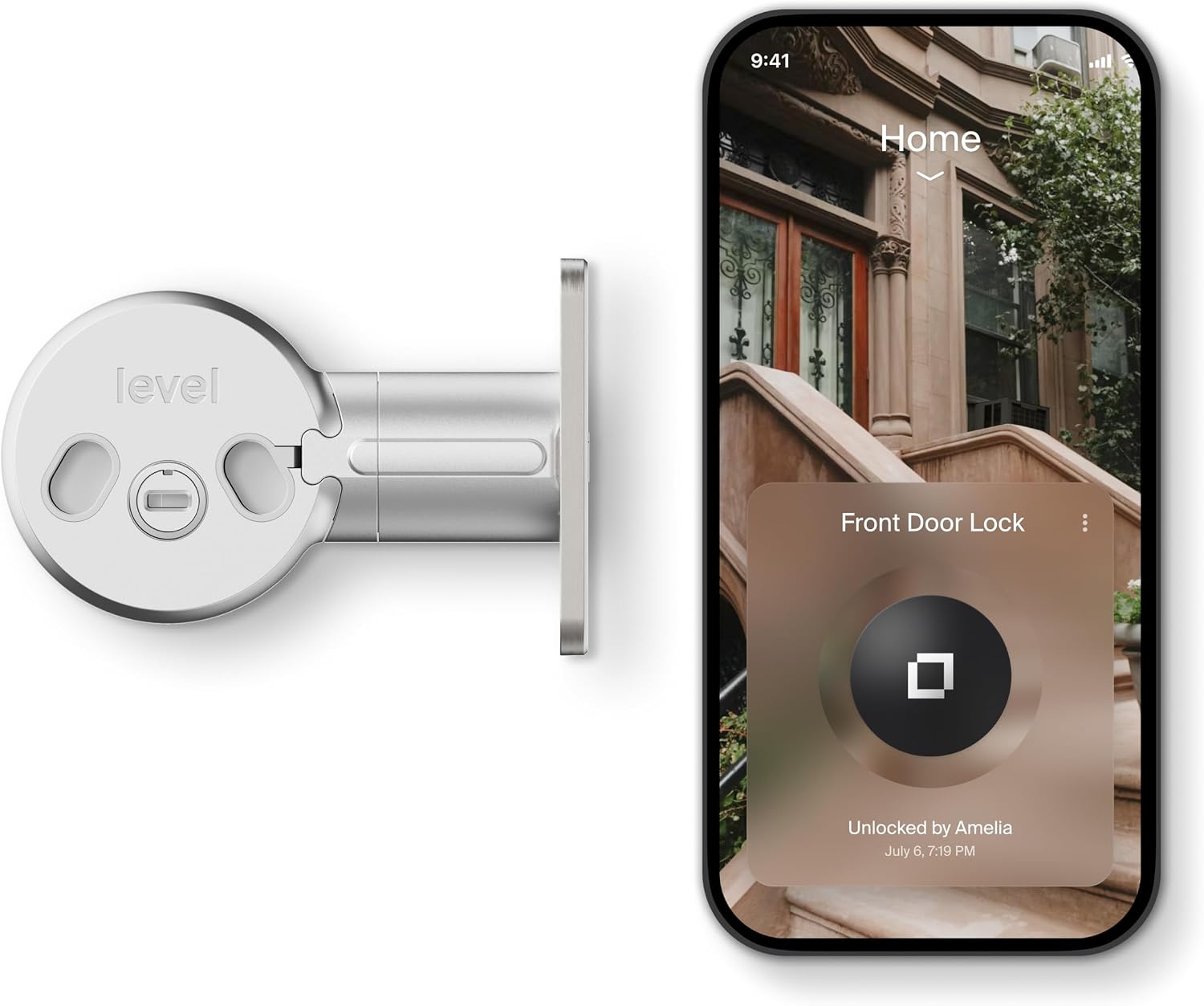
Key specs: Replaces only the deadbolt inside the door, turning an existing lock smart without changing keys, exterior hardware or the look of the door; Matter interoperability
If Level appeals to you at all, start here. The Bolt replaces the deadbolt mechanism inside the door and nothing else — your keys keep working, your exterior hardware stays, and the door looks identical afterwards. That is the purest expression of what Level is for, and it is also the lowest-commitment way in: if you dislike it, the original deadbolt goes back and nobody can tell it was ever there. Matter interoperability means it is not locked to one ecosystem’s future. For a household that likes its door, already has keys everyone carries, and wants app control added rather than a lock replaced, this is the correct product.
✅ Pros
- Keeps existing keys and exterior hardware exactly as they are
- Completely invisible from both sides
- Fully reversible, so it is a low-risk experiment
- Matter interoperability across platforms
- Cheapest route into the Level range
❌ Cons
- Lower customer ratings than category peers, as across the range
- No keypad unless you add the separate accessory
- Depends on your existing deadbolt hardware being suitable
- Nothing outside indicates the lock’s state
Level Lock Pro — the flagship
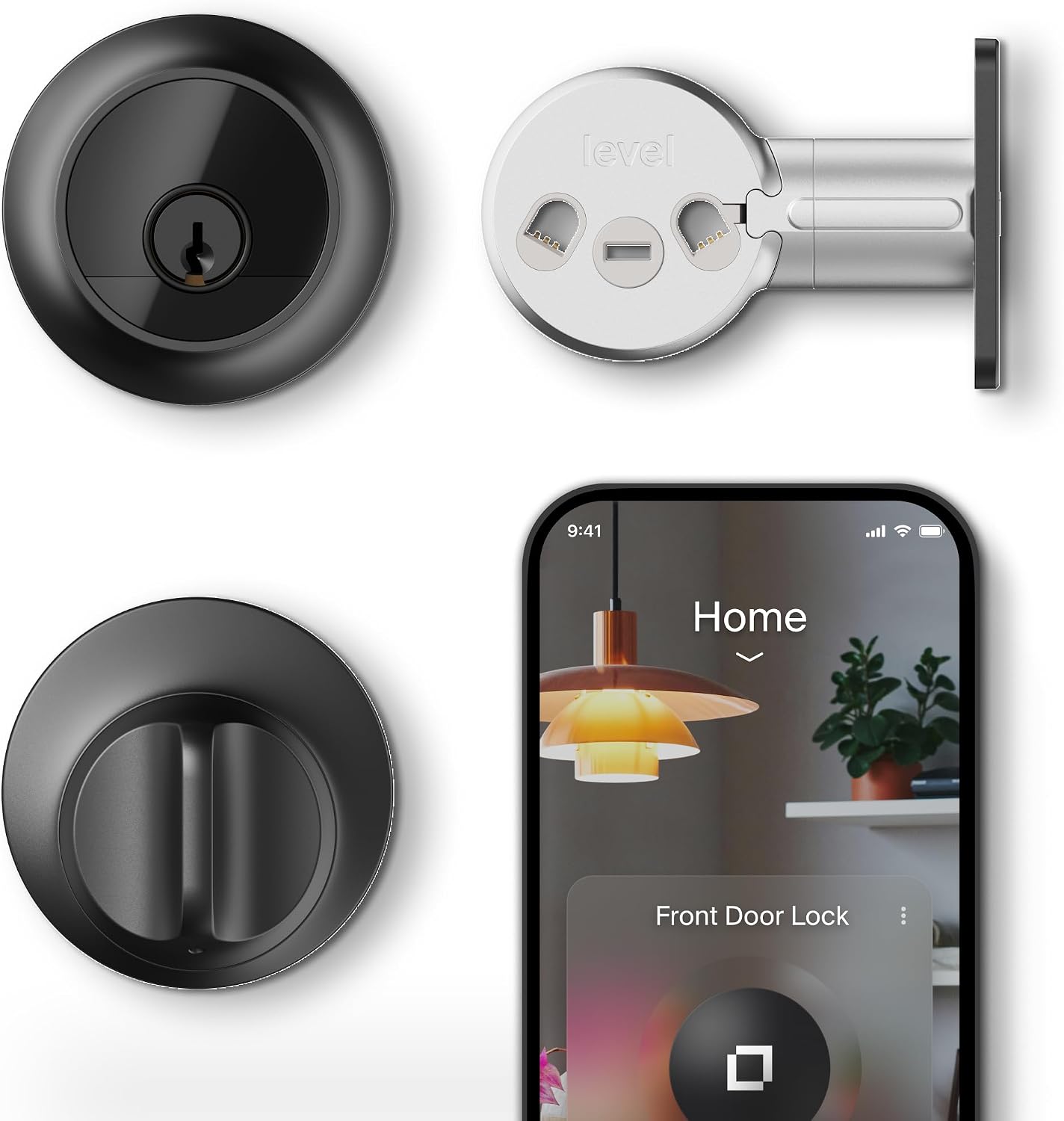
Key specs: Smart lock technology fully hidden inside the door; Level states it is 62% smaller than other smart locks with no bulky interior or exterior hardware; door status sensing; Matter over Thread
The most capable of the range, and the one to choose if you are replacing the lock anyway rather than upgrading one you like. Level states it is 62% smaller than other smart locks, with no bulky interior or exterior hardware, and it adds door status sensing — genuinely useful, because knowing the deadbolt is thrown is not the same as knowing the door is shut. Matter over Thread is the right connectivity choice for a lock: low power, mesh-capable, and not tied to a single manufacturer’s cloud. It ships as complete hardware, so unlike the Bolt you are choosing the exterior finish rather than keeping your own.
✅ Pros
- Smallest form factor Level makes
- Door status sensing, not just bolt position
- Matter over Thread for cross-platform longevity
- Complete lock, so no dependence on existing hardware
❌ Cons
- The most expensive way into the range
- Thread benefits need a border router in the home
- Same rating pattern as the rest of the line
- Still no keypad without the separate accessory
Level Lock+ (Wi-Fi) — the Wi-Fi middle
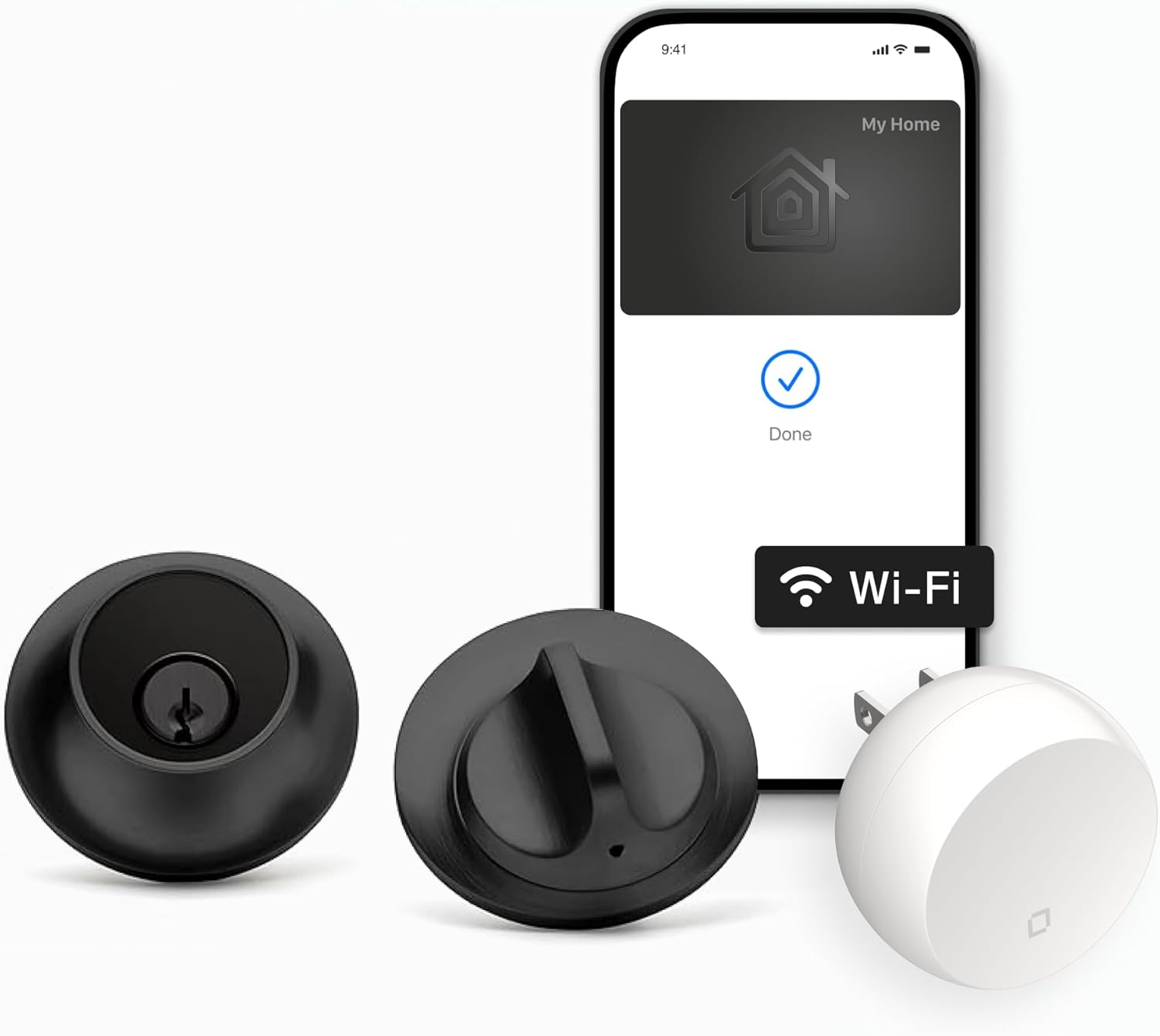
Key specs: Integrates with existing door hardware with no visible technology inside or outside; tap-to-unlock; available in several finishes; Wi-Fi deadbolt
Sits between the Bolt and the Pro. It integrates with existing door hardware with no visible technology inside or outside, offers tap-to-unlock, and comes in several finishes. Wi-Fi rather than Thread is the main structural difference from the Pro, and which you prefer depends on your home: Wi-Fi needs no border router and works out of the box, while Thread uses less power and meshes with other devices. The finish choice matters more here than it would on a visible lock, because on a Level the exterior hardware is the entire aesthetic.
✅ Pros
- No visible technology inside or outside
- Tap to unlock, without reaching for a phone
- Several finishes to match existing door hardware
- Wi-Fi works without a Thread border router
❌ Cons
- Wi-Fi draws more battery than Thread
- Same rating pattern as the rest of the range
- Keypad still separate
- Overlaps closely with the Pro, which can make the choice confusing
Level Smart Keypad Accessory — budget for it from the start
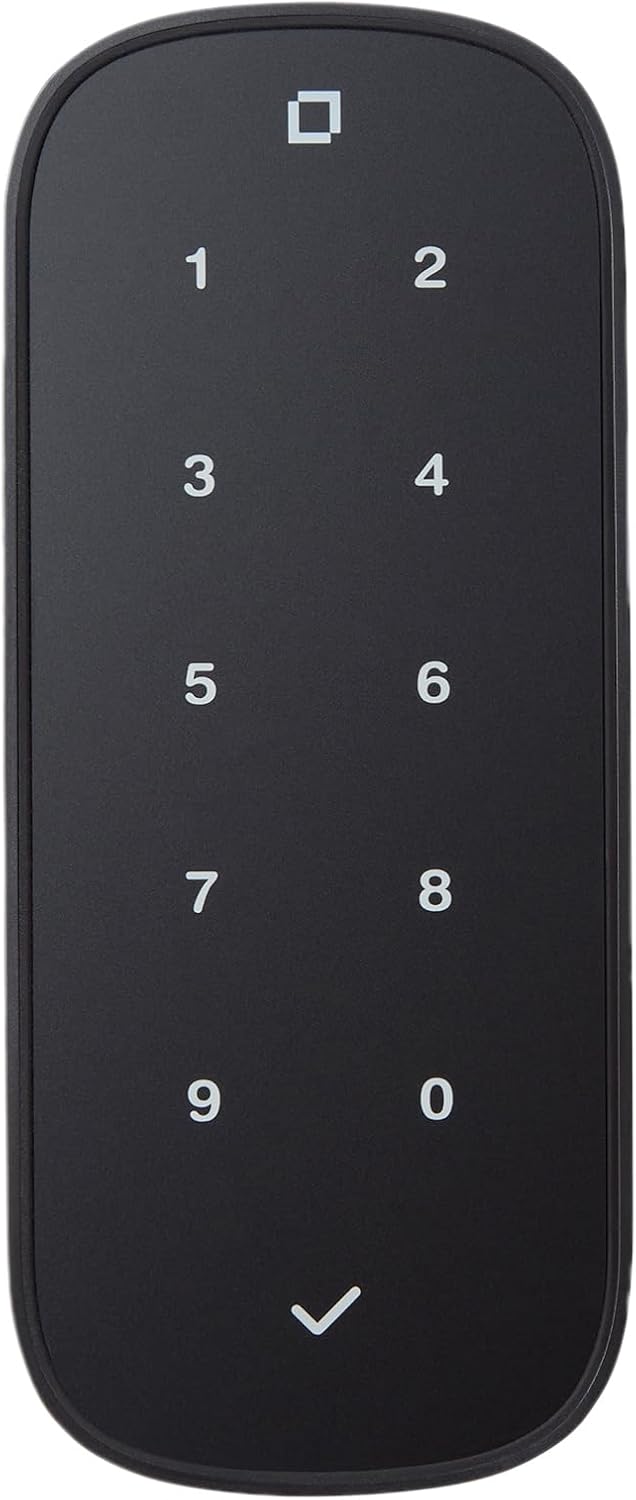
Key specs: Separate weatherproof keypad with LED backlighting, usable with any Level smart lock or Level Bolt; positioned for rental homes and for visitors who come and go such as dog walkers, babysitters, contractors and cleaners
Not optional in practice for most households, which is why it is in this roundup rather than a footnote. It is a weatherproof, LED-backlit keypad that works with any Level smart lock or the Level Bolt, and Level positions it explicitly for rental homes and for the dog walkers, babysitters, contractors and cleaners who need access without being given a key. That is the realistic use case for code access in most homes. Add its cost to whichever lock you are considering before comparing Level against anything else, because competitors include this function in the price.
✅ Pros
- Works with any Level lock, including the Bolt
- Weatherproof with LED backlighting
- Enables code access without key sharing
- Can be added later rather than at purchase
❌ Cons
- A separate purchase where competitors bundle it
- Adds a visible device, undoing the invisibility
- One more battery-powered device to maintain
- Rated below the locks themselves by buyers
Who Level Is Genuinely For
This is a brand with an unusually specific audience, and it is worth being direct about whether you are in it.
The Honest Fit Test
✅ Level is right for you if
- The appearance of your door genuinely matters to you
- You want to keep the keys everyone already carries
- An HOA or landlord restricts visible door hardware
- App and voice control are enough; codes are secondary
❌ Look elsewhere if
- A keypad is how you actually expect to unlock the door
- You want the strongest reliability track record available
- You are equipping a rental with heavy guest turnover
- Fingerprint access is on your requirement list
That last exclusion is worth expanding. For a short-term rental, the requirement is remote code management with plenty of code slots and an access log, and the mainstream keypad locks are simply better suited — which is what our Airbnb smart lock guide concludes. Level can do it with the keypad accessory, but you are working against the product’s grain rather than with it.
Conversely, if you have a door you like, keys the household already carries, and you simply want to add app control and auto-lock without changing anything visible, Level’s Bolt is close to unique. No mainstream competitor offers that, and the no-subscription smart locks we cover elsewhere all involve visibly replacing hardware. Whichever you choose, the physical security still rests on the bolt and strike rather than the electronics — how lock grading works is the part that does not change when a lock becomes smart.
Final Recommendation
If invisibility is why you are here, buy the Level Bolt. It keeps your keys, your hardware and your door’s appearance, it is the cheapest way into the range, and it is fully reversible — which given the rating pattern across this brand is exactly the risk profile you want on a first purchase.
Budget for the keypad accessory at the same time if you want code access, and compare that combined cost against a conventional keypad lock rather than comparing the lock alone. That is the comparison most Level reviews quietly avoid.
Choose the Lock Pro over the Bolt only if you are replacing the whole lock anyway and want door status sensing and Matter over Thread. Choose Lock+ if you want Wi-Fi without needing a Thread border router.
What would change our answer: if a keypad is how you actually intend to open the door, buy a conventional keypad lock instead. You would be paying Level’s premium for invisibility and then bolting a visible keypad to the door, which is the worst of both propositions — and the mainstream alternatives have a stronger reliability record on the public evidence available. Our no-subscription smart lock roundup and our keypad lock guide both cover options with a longer track record.
SafeBode does not yet run an in-house product testing program. This guide is built from manufacturer specifications, official support documentation, current retail listings and verified buyer feedback rather than hands-on testing, and we say so plainly rather than implying testing we have not done.
Frequently Asked Questions
What makes Level locks different?
The electronics fit entirely inside the door, so nothing about the door’s appearance changes. The Bolt goes furthest and replaces only the deadbolt mechanism, keeping your existing keys and exterior hardware. No mainstream competitor offers that.
Does a Level lock have a keypad?
Not built in. Level sells a separate weatherproof keypad accessory that works with any Level lock, which is the main way the pricing differs from competitors that include one. Add its cost before comparing.
Are Level locks reliable?
We have not tested them, so we will not claim either way. What the public record shows is that customer ratings across Level’s current range sit below comparable locks from peer brands, consistently rather than on one model. Buy somewhere with easy returns and test hard within the window.
Can I keep my existing keys with a Level lock?
With the Level Bolt, yes — it replaces only the deadbolt inside the door, so your keys and exterior hardware are unchanged. The Lock Pro and Lock+ are complete locks, so those replace the hardware.
Level Bolt or Level Lock Pro?
The Bolt if you like your existing door hardware and want to add smart control to it. The Pro if you are replacing the whole lock anyway and want door status sensing and Matter over Thread.
Is Level good for an Airbnb?
It can work with the keypad accessory, but it is working against the product’s design. Short-term rentals need remote code management, plenty of code slots and an access log, and mainstream keypad locks are better suited to that job.
Does Level work with Apple Home, Alexa and Google?
The current range uses Matter, which is designed for exactly this cross-platform compatibility. Check the specific model’s stated support before buying if one particular ecosystem is essential to you.
Is an invisible smart lock less secure?
Not inherently — the bolt and strike do the physical work either way, and those are unchanged. There is an argument that a door with no visible keypad attracts less attention as an electronically operated door, though that is a deterrence point rather than a resistance one. The physical strength of any smart lock still comes down to the bolt, the strike and the door, which is what lock grading measures.
What happens if the batteries die?
The mechanical key still works, which is one of the advantages of the Bolt in particular since you keep the keys you already have. As with any smart lock, replace batteries on a schedule rather than waiting for a warning.
Sources
Show sources (4)
- [1] Level — Lock Pro, current retail listing specifications (ASIN B0FKLBYHD2)
- [2] Level — Bolt Smart Deadbolt, current retail listing specifications (ASIN B0F8RC3YRF)
- [3] Level — Lock+ Wi-Fi Deadbolt, current retail listing specifications (ASIN B0D2PNT3RN)
- [4] Level — Smart Keypad Accessory, current retail listing specifications (ASIN B0D49ZY5S3)


