Front Door Camera: Video Doorbell, Standalone Camera, or Both?
Affiliate Disclosure: This article contains affiliate links. If you buy through these links, we may earn a commission at no extra cost to you. Our editorial opinions are our own and are not influenced by affiliate relationships. Read our full disclosure policy →
Contents
Quick Answer
For most homes the answer is a video doorbell, and the Ring Battery Doorbell 2K is the default because it needs no wiring — which is the constraint that eliminates half the market before features matter. Choose the Reolink wired doorbell instead if you have a working doorbell circuit and want local storage rather than a subscription. Choose the Ring Peephole Cam if you rent and cannot drill. A standalone camera is a different product solving a different problem: it watches an approach rather than answering a door.
One Search Term, Four Different Products
“Front door camera” is one of those phrases that describes an intention rather than a product. People typing it want to see who is at the door and what happens to their packages. The results mix at least four genuinely different devices, and the differences are not cosmetic.
A video doorbell is a camera plus a button plus an intercom. Someone presses it, you get a call, you talk to them. It is mounted at doorbell height, framed for a person standing at your door, and its whole design assumes an interaction.
A standalone outdoor camera has no button and no intercom role. You mount it where you like, aim it where you like, and it records what passes. It sees more ground and announces nothing.
A peephole camera replaces the existing peephole in the door itself, which means no drilling into the frame or wall. And a wired doorbell is the same product as the battery kind but powered from your existing doorbell circuit, which removes charging and usually improves responsiveness. Price spreads wider than product type here, too — TP-Link’s budget entry undercuts every mainstream pick, and our Tapo video doorbell guide covers what that lower price does and does not give up.
The Two Questions That Decide It
Almost every buying guide starts with resolution and features. Both matter far less than two practical constraints that eliminate most of the options before you compare anything.
Answer These First
🔌 What can you physically install?
- Existing doorbell wiring → a wired doorbell is available to you
- No wiring, but you can drill → battery doorbell
- Renting, cannot drill → peephole camera
- Nothing at the door itself → standalone camera elsewhere
👁️ What do you actually need to see?
- Who is at the door, and talk to them → doorbell
- Packages on the ground → a doorbell with a tall vertical view
- The whole approach, driveway or path → standalone camera
- Both → genuinely both, and that is a common answer
The wiring question is worth resolving before you shop rather than after. If you do have a doorbell circuit, it is worth checking what it can actually power — transformer output matters, and our doorbell transformer voltage guide covers the check. A wired doorbell fitted to an underpowered transformer is the single most common reason these installations misbehave. If the doorbell you already have is misbehaving right now — silent chime, dead button, constant hum — our doorbell troubleshooting guide works through the diagnosis in order before you replace anything.
Field of View Is the Spec That Actually Differs
Here is the technical difference that decides whether you are happy, and it is not resolution. Doorbell cameras and general outdoor cameras are shaped differently on purpose.
A general outdoor camera uses a wide, landscape-shaped frame — good for covering a driveway or a yard, because the interesting things happen side to side. A video doorbell increasingly uses a tall frame instead. Reolink describes its wired doorbell’s view as 4:3 wide, and the reason that aspect matters is that it shows a visitor’s face and the ground directly in front of the door in the same shot.
Why Shape Beats Resolution Here
Tall
doorbell framing shows the face and the package
Wide
standalone framing shows an approach or a driveway
Height
doorbell mounting height is fixed by the door
Aim
a standalone camera can be pointed anywhere
A sharper camera pointed at the wrong shape of scene is still the wrong camera.
This is why “my doorbell does not show my packages” is such a common complaint, and why it is a framing problem rather than a quality problem. If parcels on the step are the thing you care about, prioritize the vertical field of view over the megapixel count. The wider principle — decide what the camera must see before choosing the camera — is the same one in our camera placement walkthrough.
The Four Options Side by Side
Ring Battery Doorbell 2K — the default answer
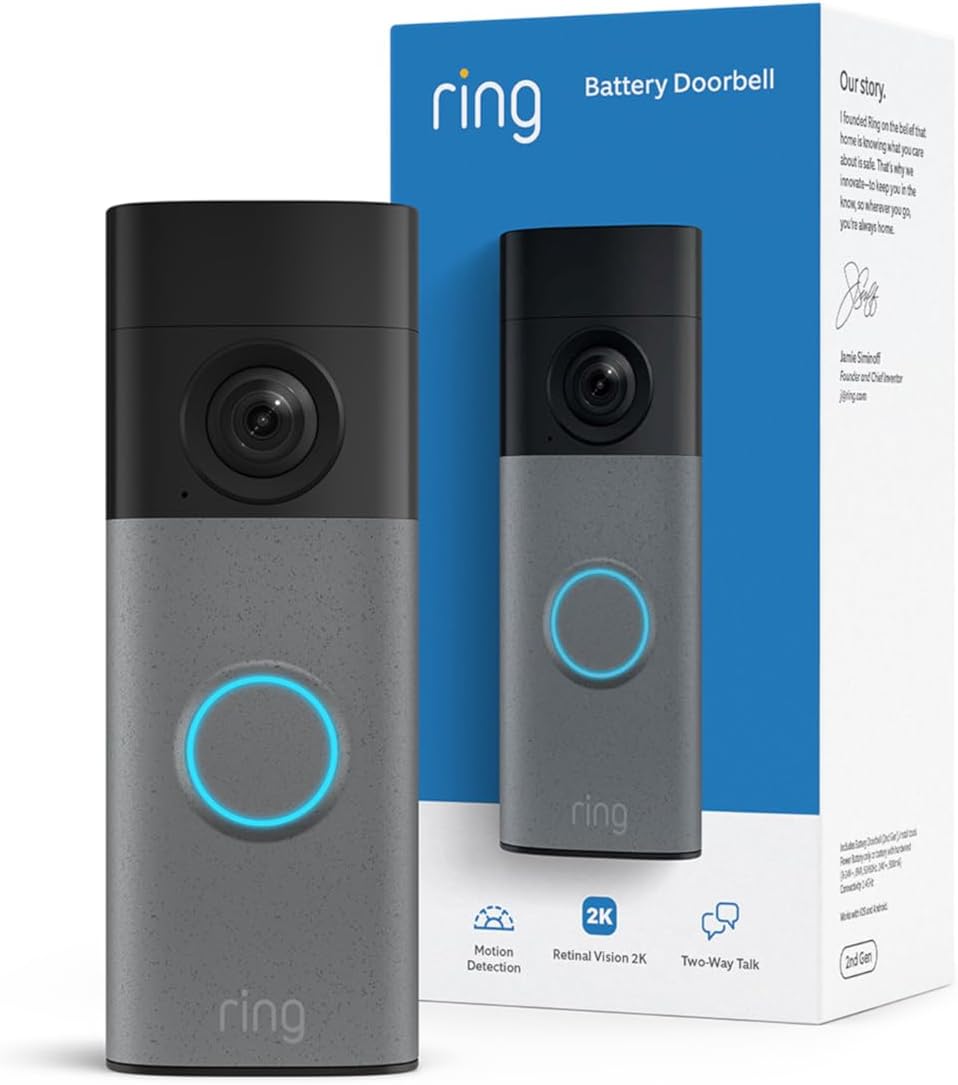
Key specs: Battery-powered video doorbell with Ring’s 2K sensor and a wide-angle view; no wiring required, so it can be fitted where no doorbell circuit exists
This is the recommendation for most households, and the reason is the install rather than the sensor. A battery doorbell needs no doorbell circuit at all, which matters because a large share of homes either have no working doorbell wiring or have a transformer that cannot drive a modern one. Ring’s ecosystem is the largest in the category, which is genuinely relevant if you already own or might add other Ring devices — one app, one set of notifications. The trade you are accepting is recurring cost for meaningful cloud recording, and a battery to recharge periodically.
✅ Pros
- No wiring required, so it fits almost any door
- Ring’s 2K sensor with a wide-angle view
- Largest ecosystem and app in the category
- Straightforward mounting on the door frame
❌ Cons
- Battery needs periodic recharging, unlike a wired unit
- Meaningful recording features sit behind a subscription
- Drilling into the frame rules it out for many renters
- Fixed at doorbell height, so it cannot cover a driveway
Reolink Video Doorbell WiFi (Wired) — if you have wiring and hate subscriptions
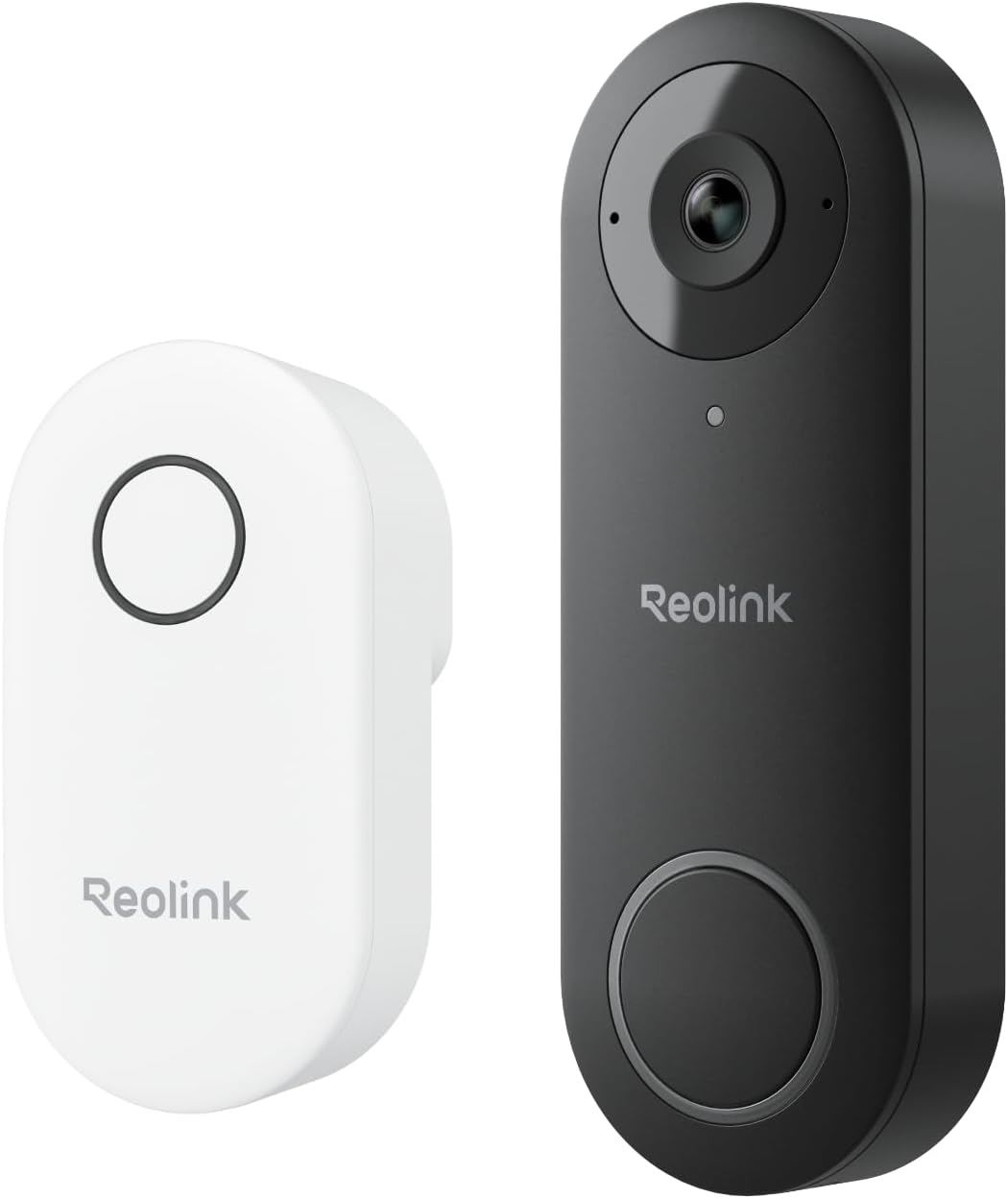
Key specs: Wired 2K video doorbell with a 4:3 wide vertical view that shows a visitor and the ground in front of the door in one frame; local storage rather than a required cloud subscription
The pick for anyone with a working doorbell circuit who does not want another monthly payment. Two things distinguish it. It stores locally rather than requiring a cloud subscription, which over the life of the device is the largest single cost difference in this whole comparison. And its 4:3 wide vertical view is explicitly shaped to get a visitor and the ground in front of the door into one frame — which is the specific complaint people have about doorbells that show a face and nothing below it. Being wired also removes the recharging chore entirely.
✅ Pros
- Local storage rather than a required subscription
- 4:3 tall view frames the visitor and the doorstep together
- Wired power means no battery to recharge
- 2K resolution
❌ Cons
- Requires an existing doorbell circuit that can power it
- Smaller ecosystem than Ring if you own other devices
- Wiring work is a barrier for renters and for homes without a circuit
- Local storage means you manage retention rather than the cloud doing it
Ring Peephole Cam 2K — if you cannot drill
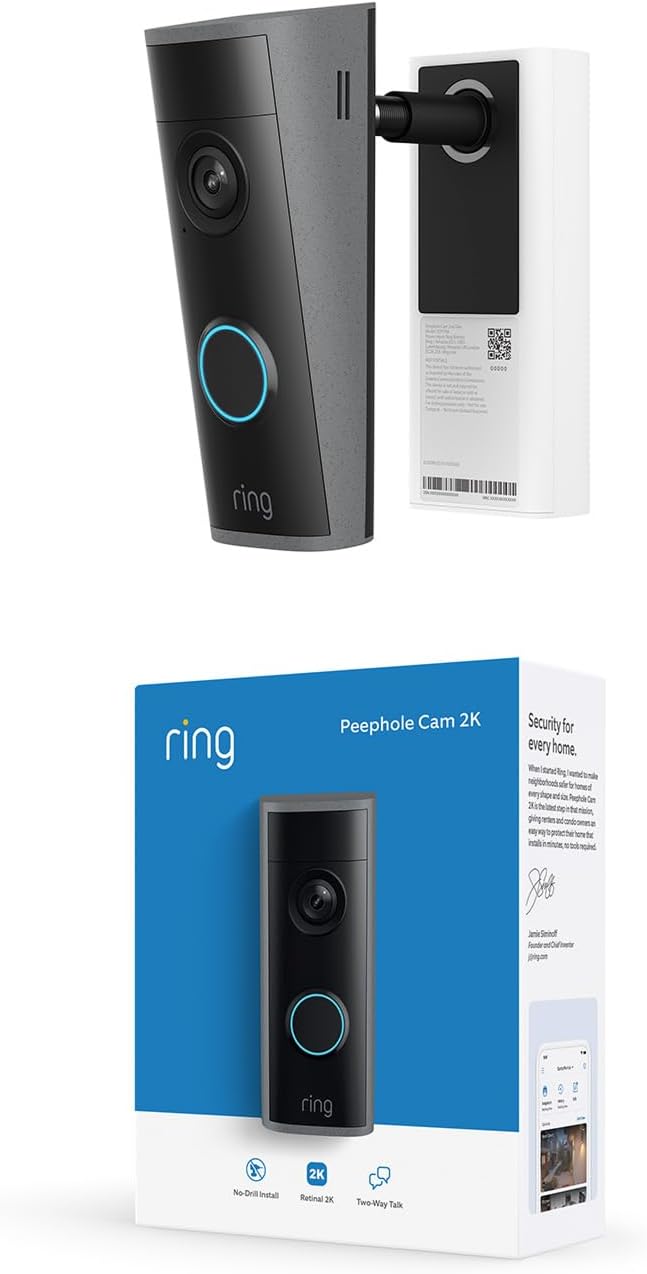
Key specs: Video doorbell that replaces an existing door peephole rather than mounting to the frame; renter-friendly installation with no drilling into the wall or door frame
The renter’s answer, and a genuinely clever one: it replaces the peephole already in your door rather than mounting to the frame, so installation involves no drilling into the wall or frame. That single property makes it viable in apartments where a conventional doorbell would breach a lease, and it is reversible when you move — the original peephole goes back. The trade is framing: you are stuck with the height and position of an existing peephole, which is set for an adult’s eye level rather than for seeing parcels on the ground.
✅ Pros
- No drilling into the door frame or wall
- Reversible, so it suits a rented apartment
- 2K sensor, same generation as Ring’s current doorbells
- Nothing visible protruding from the frame to be stolen
❌ Cons
- Framing is fixed by the existing peephole height
- Requires the door to have a peephole of a compatible size
- Poor at showing packages on the ground
- Same subscription considerations as other Ring devices
Ring Outdoor Cam (Stick Up Cam) — when the doorbell is not the point
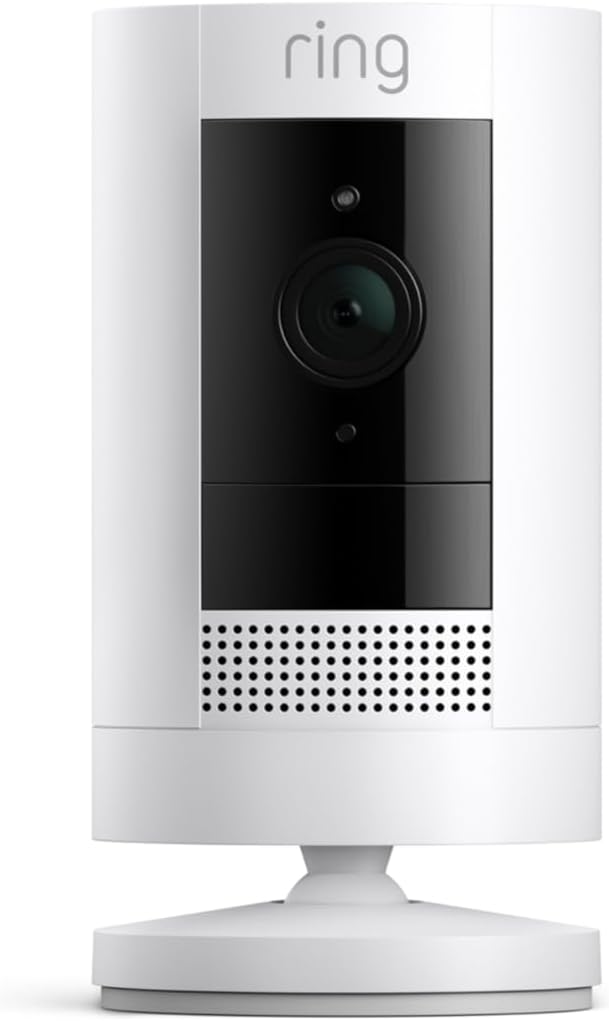
Key specs: Weather-resistant standalone outdoor camera for home or business; mounts where you choose rather than at doorbell height, and can be aimed at an approach rather than at a visitor
Include this one when what you actually want is coverage rather than an intercom. A weather-resistant standalone camera can be mounted where you choose and aimed where you choose, which is exactly what a doorbell cannot do — a doorbell lives at the door, at door height, pointed at the person standing there. If your real concern is the path, the driveway, or a side approach, this is the correct product and a doorbell is not. It does not announce visitors, so for most homes it is an addition rather than a replacement.
✅ Pros
- Mount and aim it anywhere, unlike a doorbell
- Covers an approach or driveway rather than one doorstep
- Weather-resistant for genuine outdoor placement
- Fits the same Ring app as the doorbells above
❌ Cons
- No doorbell button, so it does not replace one
- Landscape framing is poor for the doorstep itself
- Needs power or recharging wherever you mount it
- Placement freedom means placement mistakes are yours to make
When the Answer Is Genuinely Both
This is not a hedge. For a meaningful number of homes the correct setup is a doorbell plus one standalone camera, and it is worth knowing the signs before you spend twice.
The clearest indicator is a gap between where people knock and where the risk is. A long driveway, a side gate, a garage that opens away from the front door, a porch that a doorbell cannot see the end of. A doorbell frames the visitor; the second camera covers the approach they took to get there and the parts of the property nobody rings a bell to reach.
The second indicator is packages. If parcels are left somewhere the doorbell’s frame does not reach — around a corner, behind a planter, on a porch bench — no doorbell resolution fixes that, and a small camera aimed at the actual drop spot does. If you already run Ring hardware, our guide to which Ring camera fits covers the second-camera choice; for the doorbell side specifically, our wireless doorbell roundup goes deeper on the battery models.
Final Recommendation
Buy the Ring Battery Doorbell 2K if you can drill and have no doorbell wiring. It fits the largest number of houses, the app and ecosystem are the most developed, and the no-wiring install removes the constraint that stops most people.
Buy the Reolink wired doorbell if you have a working doorbell circuit. Local storage instead of a subscription is the biggest long-run difference on this page, and the tall 4:3 frame solves the package-visibility complaint that drives most doorbell regret.
Buy the Ring Peephole Cam if you rent and drilling is not an option. Accept the framing limits — it is the price of an installation you can reverse when you move.
What would change our answer: if the thing you actually want to watch is not the doorstep, stop looking at doorbells entirely. A standalone camera aimed at the driveway or the side approach answers that need properly, and a doorbell aimed at it never will — because a doorbell has to live where the button goes. And if the wired route is the one you land on, our wired doorbell roundup compares the current options in more depth than this page can.
SafeBode does not yet run an in-house product testing program. This guide is built from manufacturer specifications, official support documentation, current retail listings and verified buyer feedback rather than hands-on testing, and we say so plainly rather than implying testing we have not done.
Frequently Asked Questions
Do I need a video doorbell or a security camera?
A doorbell if you want to see and speak to whoever is at the door; a camera if you want coverage of an approach, driveway or yard. They are not competing versions of the same product — a doorbell is fixed at the door, a camera can be aimed anywhere.
Why can’t my doorbell see packages on the ground?
It is a framing issue rather than a resolution one. Doorbells mount at door height and many use a frame shaped for a person standing there. Models with a tall vertical view, like Reolink’s 4:3 framing, are designed specifically to show the visitor and the doorstep together.
Can I install a video doorbell if I rent?
Usually not the frame-mounted kind, since it means drilling. A peephole camera replaces the existing peephole with no drilling into the door frame or wall, which is why it exists as a product category.
Is a wired doorbell better than a battery one?
Wired removes recharging and generally improves responsiveness, but it requires an existing doorbell circuit that can power the device. If you have that circuit, wired is usually the better long-term choice; if you do not, battery is what makes the install possible at all.
Do all video doorbells need a subscription?
No. Cloud recording on most of the big ecosystems is a paid feature, but some doorbells store footage locally instead — the Reolink pick here is one. Over several years that is the single largest cost difference between otherwise similar devices.
Can a standalone camera replace a doorbell?
It can cover the same area, but it will not announce a visitor or let them ring anything. If you want to know somebody is at the door in the moment rather than to review it later, you want a doorbell.
What resolution do I actually need at a front door?
Less than the marketing suggests. At doorbell distance, framing and lighting matter more than the sensor — a 2K camera pointed at the wrong shape of scene is still pointed at the wrong scene.
Should I get both a doorbell and a camera?
It is a common and reasonable setup when the risk is not at the doorstep — a long driveway, a side gate, a garage away from the front door, or parcels left somewhere the doorbell cannot see.
Will a doorbell work if my doorbell wiring is dead?
A battery model will, because it does not use the circuit at all. A wired model will not — and before assuming the wiring is dead, it is worth checking the transformer output, since an underpowered transformer behaves like a fault.
Sources
Show sources (4)
- [1] Ring — Battery Doorbell 2K, current retail listing specifications (ASIN B0FHJ7TKZM)
- [2] Ring — Outdoor Cam (Stick Up Cam), current retail listing specifications (ASIN B0C5QRZ47P)
- [3] Ring — Peephole Cam 2K, current retail listing specifications (ASIN B0GLJ8NM1W)
- [4] Reolink — Video Doorbell WiFi, current retail listing specifications (ASIN B0B7S3JSG7)


